Actualizado el: 14 de enero de 2026
Durante siglos, la gente construyó con materiales locales como arcilla, madera y piedra. Estos simples recursos dieron forma a la arquitectura vernácula, donde los edificios crecieron naturalmente desde su entorno y necesidades cotidianas.
Antes de las teorías modernas de diseño, los constructores practicaban la sostenibilidad a través de la experiencia. La arquitectura vernácula muestra cómo el clima, la cultura y el lugar se equilibraban instintivamente en el diseño de edificios.
Este blog explora los orígenes y la relevancia continua de la arquitectura vernácula. Examina cómo la geografía, el clima y la cultura moldean el diseño, y cómo el conocimiento tradicional respalda la arquitectura sostenible hoy en día.
¿Qué es la Arquitectura Vernácula?
La arquitectura vernácula se refiere a un estilo arquitectónico moldeado por el conocimiento local, los materiales y las tradiciones constructivas en lugar de la teoría arquitectónica formal o el diseño profesional. Se desarrolla gradualmente cuando las comunidades responden a sus condiciones ambientales y sociales, resultando en una arquitectura estrechamente conectada al lugar.
Este estilo arquitectónico es construido por la gente local usando conocimiento compartido y técnicas tradicionales. El diseño se enfoca en necesidades básicas, permitiendo que las formas evolucionen naturalmente con el tiempo.
La arquitectura vernácula se define por su respuesta al lugar, el uso eficiente de materiales y su significado cultural. Refleja la vida cotidiana y ofrece lecciones para un diseño sostenible y resiliente.
Historia de la Arquitectura Vernácula
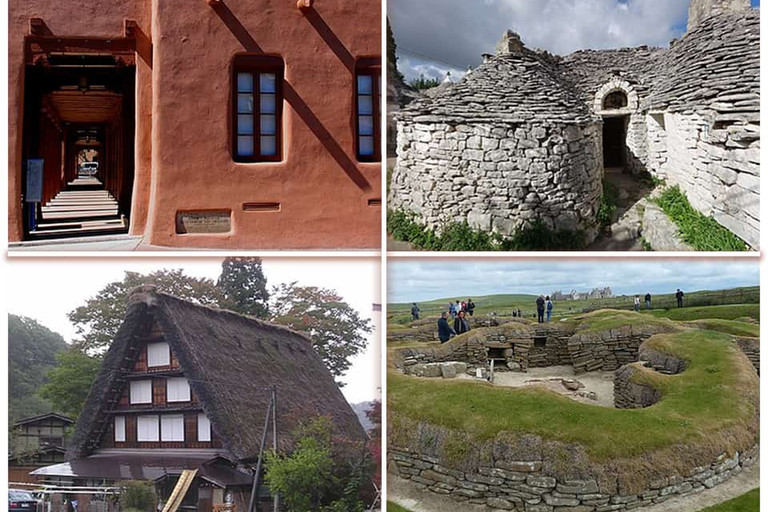
La historia de la arquitectura vernácula se remonta a los primeros asentamientos humanos, alrededor de 10 000 a.C., cuando la gente comenzó a construir refugios permanentes. Los primeros ejemplos pueden verse en las viviendas neolíticas de Çatalhöyük, en la actual Turquía, uno de los asentamientos urbanos más antiguos conocidos, ocupado entre c. 7400 y 6200 a.C. Estas viviendas fueron construidas principalmente con muros de adobe recubiertos de yeso y sostenidas por elementos de madera.
De manera similar, Skara Brae en Escocia, que data de alrededor de 3180 a 2500 a.C., presenta casas construidas en piedra hábilmente adaptadas al clima duro y ventoso de las Islas Orcadas.
A medida que las sociedades se desarrollaban en diferentes regiones, surgieron formas arquitectónicas distintas en respuesta a la geografía local y los recursos disponibles. En Egipto y Mesopotamia, los constructores levantaron casas de adobe secado al sol bien adaptadas a condiciones áridas. En contraste, las estructuras de madera en el norte de Europa y las viviendas de bambú en Asia reflejaban entornos ricos en bosques.
A lo largo de los siglos, estas tradiciones constructivas evolucionaron hacia sistemas de construcción cada vez más complejos, profundamente arraigados en la práctica cultural y la adaptación ambiental.
Características de la Arquitectura Vernacular
Los edificios vernaculares comparten varios rasgos distintivos que los diferencian de los estilos modernos e industrializados. Surgen de necesidades prácticas, recursos disponibles y experiencia cultural colectiva, más que de teorías arquitectónicas formales. Estos edificios encarnan la adaptación ambiental, la estructura social y la artesanía de una manera que refleja el espíritu del lugar.
Funciones principales
La arquitectura vernacular se define por el uso de materiales de origen local como arcilla, piedra, bambú y madera, elegidos por su disponibilidad y adecuación al entorno.
La construcción se basa en técnicas de construcción simples que se aprenden, practican y transmiten en las comunidades a lo largo de generaciones.
Los edificios se adaptan cuidadosamente al clima local y las necesidades sociales, proporcionando comodidad y practicidad sin sistemas mecánicos.
La arquitectura vernacular mantiene una fuerte conexión con la naturaleza, permitiendo que los edificios se integren naturalmente en el paisaje circundante.
Sirve como forma de expresión cultural, visible en distribuciones espaciales, formas, patrones y detalles decorativos.
El proceso de construcción a menudo implica participación comunitaria, con viviendas construidas colectivamente en lugar de individualmente.
Los edificios vernaculares utilizan estrategias ambientales pasivas, como luz natural, ventilación y masa térmica, para regular las condiciones interiores.
Materiales de Construcción Utilizados en Edificios Vernaculares
La disponibilidad local juega un papel determinante en la selección de materiales utilizados en arquitectura vernacular. Las comunidades históricamente han confiado en lo que la tierra proporcionaba, adaptando técnicas de construcción para adecuarse al clima y la geografía. Cada material cuenta una historia sobre identidad regional, adaptación ambiental y eficiencia de recursos.
Materiales Comunes y Sus Contextos Regionales

Adobe (Ladrillos de Tierra Secada al Sol)
Se utiliza ampliamente en regiones áridas como el norte de África, Oriente Medio y América Latina. El adobe retiene el calor durante el día y lo libera por la noche, lo que lo hace ideal para climas desérticos. Civilizaciones como los antiguos egipcios y los incas perfeccionaron este método para crear viviendas duraderas y receptivas al clima.

Tierra Compactada
Utilizada en China, el norte de África y partes del sur de Europa, esta técnica consiste en comprimir capas de tierra húmeda dentro de marcos de madera para formar muros densos y duraderos. Ofrece una gran inercia térmica y aislamiento acústico. Secciones de la Gran Muralla de China, especialmente los tramos anteriores de las dinastías Han Occidental y Ming, junto con las casas bereberes tradicionales de Marruecos, ilustran la durabilidad del método y su adaptación regional.

Madera y Bambú
Común en regiones ricas en bosques y zonas tropicales como Japón, Escandinavia y el sudeste asiático. La madera permite flexibilidad y resiliencia frente a terremotos, mientras que el bambú, por su ligereza y rápido crecimiento, es una opción sostenible en climas húmedos. Las minka japonesas y las casas largas indonesias demuestran la adaptabilidad de estos materiales.

Cantería
Predominante en terrenos montañosos o rocosos como los Alpes, el Himalaya y el Mediterráneo. La piedra ofrece durabilidad, resistencia al fuego y un aislamiento fuerte. Se observa en viviendas de las islas griegas, monasterios tibetanos y cabañas rurales europeas, donde los materiales se extrajeron localmente.

Paja y Hojas de Palma
Utilizados en ambientes tropicales y costeros, especialmente en África, sudeste asiático e islas del Pacífico. Estos materiales ligeros y transpirables son ideales para climas cálidos y húmedos. Aparecen en chozas polinesias y viviendas rurales africanas, ofreciendo ventilación natural y construcción rápida.

Piedra de Coral y Caliza de Concha
Encontrada en asentamientos costeros como Zanzíbar y la Península Arábiga. Estos materiales porosos regulan la humedad y proporcionan un ambiente interior fresco, muy adecuado para climas costeros. La arquitectura de la costa de Suahili demuestra bellamente esta técnica.

Tierra y Adobe
Común en la Europa rural, Asia del Sur y partes de África. Una mezcla de tierra, paja y estructura de madera crea muros asequibles y fáciles de reparar. Las cabañas medievales europeas y las casas de pueblos indios frecuentemente presentan esta forma de artesanía.
¿Cómo la Geografía Forma la Arquitectura Vernacular?
Clima
El clima forma directamente la arquitectura vernacular al influir en la forma constructiva y la organización espacial. Los edificios responden a condiciones de temperatura, viento y radiación solar a largo plazo utilizando estrategias pasivas en lugar de sistemas mecánicos.
Muros gruesos y patios aparecen en regiones áridas y cálidas, mientras que formas compactas dominan los climas fríos. En zonas cálidas y húmedas, los pisos elevados y la ventilación natural mejoran el confort térmico.
Topografía
La topografía determina cómo los edificios se relacionan con el terreno. La pendiente, la elevación y las condiciones del suelo influyen en la disposición del asentamiento y en las decisiones estructurales.
En regiones montañosas, los edificios de piedra escalonados proporcionan estabilidad. En terrenos inclinados, las formas escalonadas permiten que la arquitectura se adapte con modificación mínima del terreno.
Materiales Locales
La arquitectura vernacular depende de materiales disponibles localmente encontrados en el entorno inmediato. Esto resulta en métodos constructivos que son tanto económicos como eficientes ambientalmente.
La madera, la tierra y la piedra se utilizan según la disponibilidad regional. Con el tiempo, estos materiales moldean las tradiciones constructivas locales y la identidad arquitectónica.
Peligros Naturales
Los peligros naturales influyen fuertemente en las formas constructivas vernáculas. Las soluciones arquitectónicas se desarrollan a través de experiencia colectiva en lugar de ingeniería formal.
Las estructuras flexibles son comunes en zonas sísmicas, mientras que los edificios elevados responden al riesgo de inundaciones. Las formas de cubierta y los detalles constructivos suelen abordar vientos fuertes y tormentas.
Geografía y Cultura
La geografía y la cultura interactúan estrechamente en la arquitectura vernácula. Las condiciones ambientales moldean la vida cotidiana, que luego se refleja en la organización espacial.
Como señaló Paul Oliver, los edificios vernáculos expresan tanto adaptación ambiental como valores culturales vinculados al lugar.
El Papel de la Cultura en el Diseño Vernáculo
La cultura define el carácter y el significado de la arquitectura vernácula. Cada edificio refleja costumbres compartidas, creencias y valores sociales que determinan cómo las personas diseñan, utilizan y experimentan el espacio. La arquitectura se convierte en una expresión tangible de identidad, conectando generaciones a través de la forma y la función.
Influencias Culturales Clave en el Diseño Vernáculo
Organización Social y Vida Familiar
La distribución espacial a menudo refleja la estructura social. En siheyuan chino y havelis indios, los patios centrales reúnen a las familias y apoyan la vida comunitaria. En casas árabe-islámicas, los patios orientados hacia el interior garantizan privacidad mientras mantienen interiores sombreados y cómodos adecuados para la vida centrada en la familia.
Simbolismo y Sistemas de Creencias
Las formas y materiales de construcción a menudo llevan significado simbólico. Las chozas redondas africanas, los tipis de los nativos americanos y las casas de té japonesas expresan armonía con la naturaleza y conexión espiritual. Muchos grupos indígenas siguen rituales durante la construcción, tratando la edificación como un acto tanto técnico como sagrado.
Artesanía y conocimiento colectivo
La construcción vernácula depende de habilidades compartidas y tradiciones transmitidas a través de generaciones. En comunidades andinas, técnicas precisas de cantería evolucionaron para resistir terremotos. En pueblos de África Occidental, los muros de tierra tallados a mano muestran patrones y símbolos que cuentan historias familiares o relatos culturales.
Expresión material e identidad local
El uso de materiales regionales refuerza la pertenencia cultural. El bambú en el Sudeste Asiático, la piedra en los Alpes y el adobe en el norte de África no solo satisfacen necesidades ambientales, sino que también encarnan la artesanía local desarrollada durante siglos.
Adaptación y continuidad cultural
Las tradiciones culturales evolucionan con el tiempo pero conservan su esencia. En Japón, las casas de madera minimalistas inspiraron una arquitectura moderna que aún refleja simplicidad y equilibrio. Las casas de patio de Oriente Medio influyen en diseños sostenibles contemporáneos que responden al calor, la luz y la privacidad.
Comunidad y ritual
La construcción es frecuentemente una actividad comunitaria, que simboliza la cooperación y la pertenencia. El trabajo compartido fortalece los lazos sociales mientras incorpora significado cultural en la forma construida. El proceso de construcción se convierte en algo culturalmente tan importante como el edificio en sí.
La arquitectura vernácula, moldeada por la cultura, es más que una respuesta a necesidades físicas. Encarna memoria, creencia e identidad, mostrando cómo la gente transforma su visión del mundo en forma arquitectónica duradera.
Diferencias entre arquitectura vernácula y arquitectura moderna
La arquitectura vernácula y la moderna difieren en origen, propósito y relación con sus entornos. El diseño vernáculo evoluciona naturalmente del contexto local, reflejando geografía, clima y cultura. La arquitectura moderna, sin embargo, frecuentemente sigue principios de diseño universal impulsados por tecnología, eficiencia y estética.
Aunque los métodos modernos permiten la innovación y la escala, a veces pueden pasar por alto la armonía cultural y ambiental que define las tradiciones vernáculas.
Aspecto | Arquitectura Vernácula | Arquitectura Moderna |
Origen | Surge orgánicamente de tradiciones y necesidades locales | Basada en teorías formales y movimientos de diseño global |
Materiales | Utiliza materiales naturales disponibles localmente como arcilla, piedra y madera | Se basa en materiales industriales como acero, vidrio y hormigón |
Proceso de Diseño | Conformada por el conocimiento comunitario y la artesanía | Desarrollada por arquitectos e ingenieros profesionales |
Respuesta Ambiental | Se adapta naturalmente al clima y la geografía local | A menudo depende de sistemas mecánicos para el control del confort |
Expresión Estética | Refleja la identidad regional y el simbolismo cultural | Enfatiza la forma, la función e innovación visual |
Método de Construcción | Construido con mano de obra manual y técnicas tradicionales | Construido con maquinaria avanzada y sistemas estandarizados |
Escala y Función | Pequeña escala, centrado en el ser humano y orientado a la comunidad | Gran escala, urbano y frecuentemente con propósito comercial |
Sostenibilidad | Inherentemente sostenible a través de la reutilización de materiales y el diseño pasivo | Sostenibilidad lograda a través de tecnología o regulación añadida |
Rol Cultural | Expresa patrimonio, creencias y estilo de vida local | Representa progreso, modernidad e influencia global |
¿Cómo la Arquitectura Local Inspira el Diseño Moderno?
La arquitectura moderna a menudo se inspira en tradiciones vernáculas para crear edificios sostenibles y contextualizados. Al reinterpretar la sabiduría local, los arquitectos cierran la brecha entre la tradición y la innovación, preservando la identidad mientras abordan las necesidades contemporáneas.
Formas en que el Diseño Vernacular Inspira la Arquitectura Moderna
Enfriamiento Pasivo y Ventilación: Los sistemas de flujo de aire tradicionales como las torres de viento y los patios inspiran estrategias modernas de enfriamiento natural.
Uso de Materiales Locales: Los arquitectos revitalizan materiales regionales como la arcilla, el bambú y la piedra para reducir el impacto ambiental.
Diseño Responsivo al Clima: Los principios de orientación, sombreado e aislamiento de edificios vernáculos informan diseños energéticamente eficientes.
Continuidad Cultural: Los motivos locales, distribuciones espaciales y técnicas artesanales se integran para mantener la identidad regional.
Simplicidad y funcionalidad: Las formas minimalistas enraizadas en la eficiencia tradicional guían la estética arquitectónica contemporánea.
Comunidad y participación: Los proyectos modernos adoptan procesos de construcción colaborativos y basados en la comunidad, encontrados en las sociedades tradicionales.
Lecciones de sostenibilidad: Las lecciones de estructuras vernáculas de bajo costo y reparables influyen en los estándares de construcción ecológica y vivienda sostenible.
Esta fusión de lo antiguo y lo nuevo demuestra que el progreso en la arquitectura no significa abandonar la tradición, sino reimaginarla para el futuro.
Ejemplos famosos de arquitectura vernácula en todo el mundo
La arquitectura vernácula se encuentra en todas partes del mundo, moldeada por la geografía, el clima y la cultura. Cada ejemplo cuenta una historia de adaptación, mostrando cómo las personas construyeron de manera sostenible con recursos locales mientras expresaban su identidad social y espiritual. A continuación se presentan siete ejemplos icónicos que representan esta inteligencia arquitectónica perdurable.
1. Casas de adobe de Nuevo México, EE.UU.
Las casas de adobe de Nuevo México trazan sus orígenes a las comunidades ancestrales de los pueblos del suroeste estadounidense, mucho antes del contacto europeo. Estos pueblos indígenas desarrollaron técnicas avanzadas de construcción con ladrillos de barro (adobe) adecuadas al clima desértico árido. Sus viviendas, a menudo de varios pisos y agrupadas alrededor de plazas centrales, proporcionaban tanto confort térmico como protección comunitaria.
Con la llegada de los colonos españoles en el siglo XVI, la arquitectura de adobe evolucionó a través del intercambio cultural, fusionando tradiciones de construcción de los nativos americanos con influencias coloniales españolas como techos planos, vigas (vigas de madera) y patios cerrados. Los gruesos muros de tierra almacenan calor durante el día y lo liberan por la noche, creando un clima interior naturalmente estable.
Con el tiempo, esta fusión dio origen al estilo Pueblo Revival, que continúa definiendo la identidad arquitectónica del suroeste de Estados Unidos hoy en día.
2. Casas Minka japonesas, Japón
Minka, que significa "casas del pueblo", evolucionó durante siglos y alcanzó sus formas regionales más refinadas durante el periodo Edo de Japón (1603-1868), cuando las variaciones en la distribución y estructura se desarrollaron completamente. Construidas principalmente con madera, bambú, paja y papel, estas viviendas se adaptan naturalmente a los veranos húmedos e inviernos nevados de Japón.
Los pisos elevados mejoran la ventilación, mientras que los tejados de pronunciada pendiente evacuan la lluvia y la nieve eficientemente. Influenciada por la filosofía zen y la artesanía local, la arquitectura minka encarna la simplicidad, la flexibilidad y la armonía con la naturaleza. Estos valores continúan guiando el diseño residencial japonés actual.
3. Casitas de piedra del campo inglés, Reino Unido
Las casitas de piedra tradicionales de la Inglaterra rural surgieron durante la Edad Media como humildes viviendas agrícolas. Construidas con caliza, arenisca o granito extraídos localmente, sus muros gruesos y pequeñas ventanas retienen el calor en climas fríos y húmedos. Los techos bajos y las chimeneas hacen que los interiores sean acogedores y eficientes. Estas casitas reflejan tanto la necesidad como la identidad local, combinando la escala humana con la artesanía, una cualidad que continúa inspirando la arquitectura rural en toda Europa.
4. Casas con patio de Marruecos, África del Norte
Las casas riads de Marruecos se desarrollaron durante el período Medieval Islámico, moldeadas por las tradiciones arquitectónicas magrebí y andaluza entre los siglos XII y XV, enfatizando patios interiores, simetría y privacidad. Construidas con adobe, yeso de cal y azulejo decorativo, estas viviendas reflejan la sofisticación técnica y artística de su época.
Organizan los espacios de vida alrededor de un patio central sombreado que promueve la ventilación e intimidad familiar. La distribución responde tanto a los valores culturales islámicos como a las necesidades climáticas de las ciudades del norte de África. Los muros exteriores cerrados protegen los interiores de la luz solar intensa y el polvo, mientras que los jardines interiores crean espacios de calma y confort espiritual.
5. Casas de bambú del Sudeste Asiático
En regiones tropicales como Indonesia, Tailandia y Filipinas, las casas tradicionales se construyen principalmente con bambú, madera y hojas de palma. Conocidas localmente como rumah panggung en Indonesia y bahay kubo en Filipinas, estas viviendas están elevadas sobre pilotes para prevenir inundaciones y mejorar la circulación del aire bajo el piso.
Sus estructuras ligeras y flexibles funcionan bien ante terremotos y vientos monzónicos. A menudo construidas mediante trabajo comunitario, reflejan tradiciones profundamente arraigadas de artesanía, resiliencia y armonía con la naturaleza.
6. Casas Trulli de Alberobello, Italia
Las casas Trulli de Alberobello en la región de Puglia en el sur de Italia surgieron principalmente durante el siglo XVII, aunque sus métodos de construcción se remontan a técnicas prehistóricas más antiguas de piedra seca. Construidas completamente con piedra caliza local sin mortero, sus muros circulares gruesos y techos cónicos proporcionan excelente aislamiento y ventilación adecuados para el clima mediterráneo.
Originalmente construidas por agricultores, supuestamente para evitar el pago de impuestos sobre estructuras permanentes, las trulli evolucionaron de refugios pragmáticos a una identidad arquitectónica distintiva. Continúan simbolizando el ingenio regional, la artesanía y la adaptación a necesidades tanto ambientales como sociales.
7. Mezquitas de tierra de Mali, África Occidental
La Gran Mezquita de Djenné, construida originalmente en el siglo XIII durante el Imperio Mali, se erige como uno de los mejores ejemplos de arquitectura sudanosaheliana. La estructura actual data de 1907, cuando fue reconstruida bajo la administración colonial francesa, dirigida por Ismaila Traoré, maestro albañil del gremio de constructores de Djenné (barey ton), en colaboración con artesanos locales.
Construida con adobe secado al sol (banco) y revestida con yeso de arcilla, sus enormes muros de tierra regulan naturalmente la temperatura interior, manteniendo el espacio fresco bajo el sol del desierto.
Las vigas de madera toron que sobresalen de la fachada cumplen propósitos tanto decorativos como funcionales, actuando como andamios durante el festival de mantenimiento anual de la mezquita, el Crépissage de la Grande Mosquée. Este evento liderado por la comunidad asegura la preservación mientras refuerza la unidad social.
Hoy en día, la mezquita sigue siendo un monumento vivo de fe, artesanía e identidad colectiva, encarnando un diálogo centenario entre el pueblo, el ambiente y la tradición.
¿Por qué la arquitectura vernácula sigue importando hoy?
La arquitectura vernácula sigue importando porque nos recuerda que los edificios no necesitan luchar contra la naturaleza para funcionar bien. Al usar materiales locales y estrategias de diseño pasivo, ofrece lecciones prácticas en sostenibilidad y resiliencia que son especialmente relevantes en tiempos de cambio climático y escasez de recursos.
También juega un papel importante en la preservación de la identidad cultural y la conexión social. Los edificios vernáculos reflejan cómo viven, se reúnen y expresan sus valores las comunidades. En un mundo que globaliza rápidamente, estas tradiciones ayudan a mantener el carácter regional y un sentido de pertenencia.
Lo más importante es que la arquitectura vernácula anima a los arquitectos a ir despacio y aprender del lugar y la experiencia. Demuestra que la innovación significativa a menudo surge de comprender el pasado. Cuando el conocimiento local se combina con la tecnología moderna, la arquitectura puede ser tanto responsable como profundamente humana.
Conclusiones clave
La arquitectura vernácula surge de la cultura local, el ambiente y los materiales para satisfacer las necesidades reales de la comunidad.
Ejemplos antiguos como Çatalhöyük y la Gran Mezquita de Djenné muestran cómo los constructores antiguos lograron el equilibrio ambiental y la resiliencia a través del diseño adaptativo.
Los rasgos clave incluyen el uso de materiales regionales, diseño pasivo y artesanía alineada con las condiciones ambientales.
La geografía y el clima guían la forma del edificio, la orientación y los materiales en cada región del mundo.
Los valores culturales moldean el diseño, la decoración y la función, convirtiendo los edificios en reflejos de identidad y tradición.
La arquitectura moderna contrasta con las formas vernáculas pero puede integrar sus principios para lograr equilibrio y contexto.
Los arquitectos contemporáneos reinterpretan las ideas vernáculas para la sostenibilidad y la continuidad cultural.
Ejemplos icónicos como minka japonés, riads marroquíes y trulli italianos revelan el vínculo creativo entre la gente y el lugar.
Aprender de la sabiduría vernácula ayuda a desarrollar enfoques de diseño ecoamigables, basados en la comunidad y responsivos al clima.
La arquitectura vernácula sigue siendo vital hoy como modelo para hábitats humanos significativos, resilientes y sostenibles.
Preguntas frecuentes
¿Qué es la arquitectura vernácula?
La arquitectura vernácula es un tipo de construcción realizada por personas locales utilizando métodos tradicionales y materiales locales. Refleja el entorno, la cultura y la vida cotidiana de la comunidad.
¿Cuándo comenzó la arquitectura vernácula?
La arquitectura vernácula comenzó alrededor del 10.000 a.C., cuando la gente empezó a construir hogares permanentes. Los primeros ejemplos incluyen Çatalhöyük en Turquía y Skara Brae en Escocia.
¿Qué hace especiales los edificios vernáculos?
Los edificios vernáculos son especiales porque funcionan en armonía con su entorno. Utilizan materiales locales, métodos de construcción simples y soluciones basadas en el clima.
¿Qué materiales son comunes en la arquitectura vernácula?
Los materiales comunes incluyen tierra, adobe, madera, bambú, piedra, paja y piedra de coral. Estos materiales se eligen porque son fáciles de encontrar y prácticos de usar.
¿Cómo afecta la geografía a la arquitectura vernácula?
La geografía influye en dónde y cómo construye la gente. Las montañas, costas, bosques y desiertos afectan la forma del edificio, la distribución y la elección de materiales, creando diferencias regionales.
¿Cómo influye el clima en la arquitectura vernácula?
El clima afecta el diseño del edificio de muchas maneras. Las regiones cálidas utilizan muros gruesos y patios, las regiones frías utilizan formas compactas y techos inclinados, y las regiones húmedas se centran en la ventilación.
¿Cómo es diferente la arquitectura vernácula de la arquitectura moderna?
La arquitectura vernácula surge de las necesidades y condiciones locales, mientras que la arquitectura moderna a menudo utiliza diseños estándar y materiales industriales.
¿Cómo se utilizan las ideas vernáculas hoy?
Hoy en día, los arquitectos aplican ideas vernáculas como materiales naturales, diseño pasivo y conciencia climática para crear edificios más sostenibles.