Aggiornato il: 19 dicembre 2025
Il realismo visivo nelle immagini digitali dipende fortemente da come la luce viene modellata, controllata e percepita all'interno di una scena. Il modo in cui l'illuminazione definisce la forma, la profondità e la gerarchia determina se un'immagine risulta convincente o artificiale. Nella visualizzazione architettonica, nel product rendering e nei flussi di lavoro cinematografici, le decisioni di illuminazione influenzano direttamente la credibilità e la chiarezza spaziale.
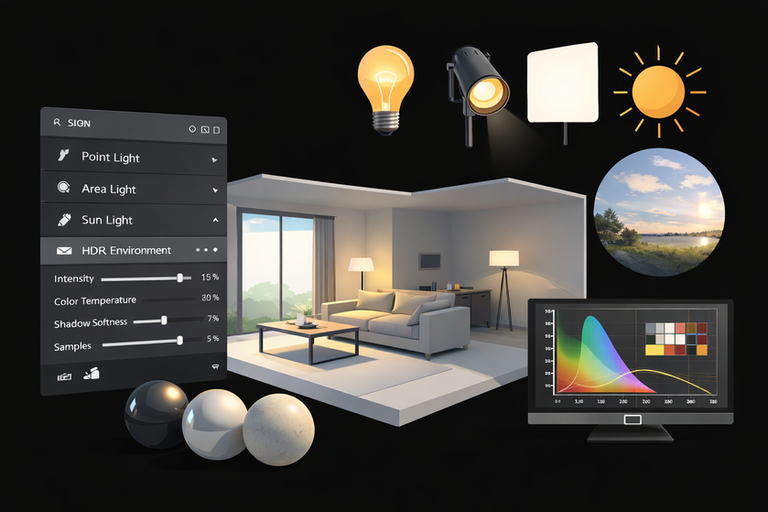
Il rendering di illuminazione si colloca all'intersezione tra l'intento artistico, il design dell'illuminazione e l'accuratezza fisica. Controllando il comportamento della luce, influenzi direttamente il realismo, l'equilibrio visivo e la gerarchia della scena. Un flusso di lavoro di illuminazione strutturato riduce le congetture e supporta risultati visivi coerenti.
Le sezioni seguenti affrontano i principi fondamentali dell'illuminazione e i tipi di luce, seguiti dall'illuminazione globale e dal comportamento delle ombre. L'esposizione, l'illuminazione HDRI e la gestione del colore vengono quindi affrontate nel contesto di un output realistico. L'articolo esamina anche la logica del design dell'illuminazione e il modo in cui l'illuminazione di Archivinci razionalizza la configurazione della scena, prima di concludere con le considerazioni di ottimizzazione e qualità.

Che cos'è il Rendering di Illuminazione?
Il rendering di illuminazione è il processo di simulazione di come la luce interagisce con oggetti, materiali e spazio in una scena digitale per produrre un'immagine visivamente realistica.
Definisce come le sorgenti luminose illuminano le superfici, come si formano le ombre e come i materiali rispondono attraverso la riflessione e la diffusione.
Combinando i principi del design dell'illuminazione con il comportamento fisico della luce, il rendering di illuminazione controlla il realismo, la profondità e la gerarchia visiva. È un componente fondamentale della visualizzazione architettonica, del product rendering e delle immagini cinematografiche.
Concetti Fondamentali di Illuminazione nelle Scene 3D
Un'installazione di illuminazione funziona meglio quando l'intento del design dell'illuminazione e l'esecuzione tecnica rimangono chiaramente separati. L'intento definisce cosa la scena deve comunicare, come il focus, la gerarchia o l'atmosfera. L'esecuzione determina quali tipi di luce e quali parametri supportano tale intento. La coerenza tra scala, materiali e unità rimane critica per il realismo.
Il falloff della luce descrive come l'illuminazione diminuisce con la distanza. Per le sorgenti luminose simili a punti, la legge del quadrato inverso spiega che l'intensità diminuisce rapidamente all'aumentare della distanza. Pertanto, le piccole luci creano un forte contrasto locale, mentre le fonti più grandi producono gradienti più morbidi. Comprendere questo comportamento aiuta a controllare l'equilibrio visivo.
Scegliere i Giusti Tipi di Luce
Ogni tipo di luce svolge un ruolo specifico all'interno di un sistema di design dell'illuminazione. In altre parole, le luci dovrebbero risolvere problemi spaziali e percettivi piuttosto che semplicemente aumentare la luminosità.
La selezione orientata allo scopo migliora la leggibilità della scena:
Luce puntiforme per emettitori compatti come lampadine
Luce direzionale per la luce solare e l'illuminazione esterna su larga scala
Luce spot per il controllo focalizzato e l'illuminazione d'accento
Luce d'area o luce rettangolare per sorgenti morbide come finestre
Luce emissiva per superfici luminose che contribuiscono all'illuminazione
Luce volumetrica per fasci visibili all'interno di nebbia o foschia
La morbidezza dell'ombra dipende dalla dimensione apparente della sorgente luminosa piuttosto che dall'intensità sola. Le sorgenti più grandi producono regioni di penombra più ampie, il che porta a ombre più naturali. Questo principio gioca un ruolo chiave nella progettazione dell'illuminazione architettonica.
Tecniche di illuminazione nel rendering architettonico
Le tecniche di illuminazione nel rendering descrivono come la luce viene simulata matematicamente, campionata e trasportata all'interno di una scena digitale. Queste tecniche operano a livello di rendering e algoritmico, influenzando direttamente il realismo, la performance e la stabilità visiva. Nella visualizzazione architettonica, sono comunemente divise in approcci offline e real-time.
Tecniche di illuminazione offline (rendering ad alta fedeltà)
Le tecniche offline si concentrano sulla correttezza fisica e accuratezza visiva. Sono utilizzate principalmente per le immagini architettoniche finali dove il tempo di rendering è meno critico del realismo.
Path Tracing
Path tracing è un algoritmo basato su Monte Carlo che simula il trasporto luminoso tracciando percorsi casuali dalla fotocamera attraverso la scena. Produce naturalmente illuminazione globale, ombre morbide, riflessioni e color bleeding, ma richiede un campionamento sufficiente per ridurre il rumore.
Esempio: Un interno di soggiorno con grandi finestre, dove la luce naturale entra nello spazio, rimbalza sulle pareti bianche, illumina dolcemente gli angoli e crea gradienti luminosi realistici senza fill light manuali.
Bidirectional Path Tracing
Il bidirectional path tracing traccia percorsi luminosi sia dalla fotocamera che dalle sorgenti luminose. Questo migliora la convergenza in scene dove la luce entra attraverso piccole aperture o percorre cammini indiretti complessi.
Esempio: Una stanza interna profonda illuminata principalmente da un piccolo lucernario, dove l'illuminazione indiretta deve raggiungere le aree inferiori dello spazio.
Monte Carlo Integration
L'integrazione Monte Carlo approssima le equazioni di illuminazione attraverso il campionamento casuale e forma la base matematica della maggior parte dei moderni renderer offline. Il comportamento del rumore è direttamente correlato al numero e alla distribuzione dei campioni.
Esempio: Calcolo delle interazioni luminose indirette in un ufficio open-plan con pavimenti lucidi, pareti in vetro e soffitti opachi.
Photon Mapping
Il photon mapping memorizza l'energia luminosa emessa dalle sorgenti prima del rendering finale. È particolarmente efficace per caustics e percorsi luminosi focalizzati, anche se meno comune nei workflow completamente path-traced.
Esempio: La luce solare che passa attraverso una facciata in vetro, creando motivi luminosi concentrati sui pavimenti interni.
Irradiance Mapping
Irradiance Mapping precomputa l'illuminazione indiretta in punti superficie selezionati e interpola tra loro. Riduce il tempo di render mantenendo un'illuminazione di bounce liscia e stabile in scene statiche.
Esempio: Un interno di appartamento completamente arredato renderizzato da più angoli di camera con illuminazione indiretta coerente.
Light Cache
Light Cache fornisce un'approssimazione veloce della distribuzione della luce indiretta nella scena. Viene spesso utilizzato per stabilizzare l'illuminazione globale negli ambienti interni.
Esempio: Un interno con più stanze collegate, dove la luce fluisce naturalmente tra gli spazi senza ricalcolare il GI completo ogni volta.
Volumetric Lighting
Volumetric Lighting simula la dispersione della luce attraverso media partecipanti come nebbia o polvere, rendendo visibili i percorsi luminosi e aggiungendo profondità.
Esempio: Raggi solari visibili in una grande hall, che entrano attraverso finestre alte e attraversano l'aria leggermente polverosa.
Tecniche di Illuminazione Real-Time (Rendering Interattivo)
Le tecniche real-time prioritizzano performance e responsività e sono utilizzate per anteprime, walkthroughs ed esperienze architettoniche interattive.
Hybrid Ray Tracing
Hybrid Ray Tracing combina rasterizzazione con ray tracing per effetti di illuminazione selezionati come riflessioni o ombre. Bilancia realismo e performance nei moderni engine real-time.
Esempio: Una visita virtuale interattiva dell'appartamento con riflessioni del pavimento con ray tracing e comportamento accurato degli specchi.
Screen Space Global Illumination (SSGI)
SSGI stima l'illuminazione indiretta utilizzando solo la geometria visibile sullo schermo. Migliora la percezione della profondità ma non può tenere conto degli oggetti fuori schermo.
Esempio: Un anteprima interattiva degli interni in cui le pareti si illuminano leggermente in base alle superfici vicine durante il movimento della telecamera.
Light Baking
Light baking precomputa l'illuminazione statica in texture o mappe di illuminazione. Fornisce un'illuminazione di alta qualità durante l'esecuzione con costo prestazionale minimo.
Esempio: Un interno di museo con illuminazione fissa, ottimizzato per una navigazione in tempo reale fluida.
Illuminazione Globale e Comportamento dell'Illuminazione Indiretta
L'illuminazione globale simula come la luce rimbalza tra le superfici dopo il contatto diretto. Include effetti come color bleeding e riflessione diffusa. Senza illuminazione indiretta, le scene spesso appaiono piatte e visivamente disconnesse. GI ripristina la coerenza spaziale modellando il trasporto luminoso secondario.
Diversi algoritmi risolvono questo problema utilizzando approcci distinti. La radiosity si concentra su scambio di energia diffusa ed è adatta agli ambienti statici. Photon mapping traccia i percorsi della luce dalle sorgenti e ricostruisce l'illuminazione statisticamente. Path tracing stima il trasporto luminoso attraverso campionamento stocastico, offrendo maggiore precisione a costi computazionali aumentati.
Approcci Real-Time Versus Offline
Il rendering in tempo reale tipicamente combina la rasterizzazione con ray tracing selettivo. Deferred rendering e forward rendering bilanciano la complessità dei materiali e le prestazioni. L'illuminazione screen space aggiunge dettagli locali ma rimane limitata alla geometria visibile. Di conseguenza, gli oggetti fuori schermo non possono influenzare l'illuminazione correttamente.
Il rendering offline si basa maggiormente sul ray tracing o sul path tracing completo. Queste tecniche gestiscono riflessioni complesse, ombre morbide e luce indiretta in modo più affidabile. Tuttavia, richiedono un numero di campioni più elevato e tempi di rendering più lunghi per gestire il rumore in modo efficace.
Workflow Fotorealistici con Rendering dell'Illuminazione
Un workflow di rendering dell'illuminazione prevedibile dipende dalla coerenza fisica. L'illuminazione basata su principi fisici, i materiali PBR e uno spazio colore lineare devono funzionare insieme. Se un elemento si rompe, i riflessi e le ombre perdono credibilità. I problemi tipici includono highlights ritagliati, neri schiacciati o colore instabile.
Il rendering fisicamente basato si affida alla conservazione dell'energia e ai modelli BRDF realistici. Un BRDF definisce come una superficie riflette la luce in ingresso. La rugosità controlla la diffusione del riflesso, la metallicità influisce sulla riflettività e i valori di albedo devono rimanere plausibili. Questi parametri plasmano direttamente la risposta del materiale nella visualizzazione architettonica e nel rendering di prodotto.
Controllo dell'Esposizione e dell'HDR nel Rendering dell'Illuminazione
Il controllo dell'esposizione definisce come la luminanza della scena si trasferisce alla luminosità dell'immagine finale. Nelle pipeline CG, l'esposizione spesso segue la logica basata sulla fotocamera utilizzando apertura, velocità dell'otturatore e sensibilità. Il rendering HDR preserva ampie gamme di luminanza, consentendo agli esterni luminosi e agli interni leggibili di coesistere. L'illuminazione HDRI fornisce anche direzione ambientale realistica e riflessioni.
Il tone mapping comprime i valori dell'ampia gamma dinamica in un output visualizzabile. ACES è un sistema di gestione del colore indipendente dal dispositivo progettato per la coerenza. Se combinato con il corretto bilanciamento del bianco e la correzione gamma, stabilizza il colore su scatti e piattaforme.
Ombre, Occlusione e Indizi di Profondità
La shadow mapping genera ombre eseguendo il rendering della profondità dal punto di vista della luce. Le ombre tracciate da raggi calcolano la visibilità attraverso l'intersezione di raggi, migliorando l'accuratezza del contatto. Le ombre morbide richiedono il campionamento di luci di area o approssimazioni che simulano la dimensione finita della luce. La scelta dipende dai vincoli di prestazione e dagli obiettivi visivi.
L'occlusione ambientale scurisce le aree in cui la luce ambientale ha un accesso limitato. SSAO approssima questo effetto utilizzando la profondità dello spazio dello schermo. Migliora l'ancoraggio alle intersezioni ma non può rappresentare l'occlusione dalla geometria fuori dalla telecamera.
Controlli Pratici di Profondità per Scene di Interni
L'illuminazione di interni spesso fallisce quando gli indizi di profondità entrano in conflitto. Semplici controlli mantengono la chiarezza spaziale:
Mantenere le ombre primarie allineate con la direzione della luce principale
Evitare un occlusione ambientale eccessiva che crea bande scure artificiali
Preferire l'illuminazione indiretta alle luci di riempimento nascoste
Abbinare gli highlight riflessi alle fonti luminose visibili
Queste pratiche impediscono agli oggetti di apparire staccati e supportano risultati coerenti tra le diverse viste.
Errori comuni di illuminazione nel rendering architettonico
Anche scene tecnicamente accurate possono apparire irrealistiche quando i fondamenti dell'illuminazione vengono applicati in modo scorretto. Nel rendering architettonico, piccole decisioni di illuminazione hanno spesso un grande impatto sulla chiarezza spaziale e sul realismo. Comprendere gli errori comuni aiuta a identificare i problemi più rapidamente e previene iterazioni non necessarie durante la produzione.
Uno degli errori più comuni nel rendering architettonico è l'uso eccessivo di illuminazione ambientale o di riempimento. L'illuminazione di base eccessiva riduce il contrasto e elimina la gerarchia visiva, causando l'apparire di interni piatti e non strutturati. Le scene bilanciate si basano su una luce chiave ben definita supportata da un'illuminazione indiretta controllata piuttosto che da una luminosità uniforme.
Un altro problema frequente è ignorare la scala fisica e l'attenuazione della luce. Una scala della scena errata compromette il comportamento del quadrato inverso, il che porta a una distribuzione dell'intensità irrealistica e a una morbidezza delle ombre non coerente. Di conseguenza, l'illuminazione può sembrare accettabile da un angolo ma incoerente da altre viste.
La disallineamento della direzione dell'ombra è anche un problema ricorrente. Le ombre che non corrispondono alla fonte luminosa principale indeboliscono la credibilità spaziale. Nelle scene architettoniche, una logica coerente delle ombre è essenziale per leggere la profondità, l'orientamento e il contatto dei materiali.
Molti render soffrono di un'eccessiva dipendenza dalla post-elaborazione invece di un'illuminazione corretta. Una forte compensazione dell'esposizione, aumenti di contrasto o color grading pesante spesso mascherano configurazioni di illuminazione deboli piuttosto che correggerle. Questo approccio di solito porta a risultati instabili tra le diverse telecamere.
Un altro errore coinvolge dimensione e posizionamento errati della luce d'area. Le luci d'area posizionate troppo vicino alle superfici o ridimensionate in modo irrealistico creano highlight duri e transizioni d'ombra innaturali. Le luci d'area dovrebbero rappresentare superfici che emettono luce plausibili, come finestre o apparecchi di illuminazione.
Trascurare la risposta materica durante la configurazione dell'illuminazione causa diagnosi errate dei problemi di illuminazione. Valori di albedo non realistici o impostazioni di rugosità scorrette spesso producono artefatti di illuminazione che sembrano problemi di illuminazione. L'illuminazione e i materiali devono essere valutati insieme per risultati affidabili.
Logica della progettazione dell'illuminazione e composizione della scena
La progettazione dell'illuminazione va oltre l'accuratezza tecnica nella organizzazione spaziale e nella gerarchia visiva. Indirizza l'attenzione, supporta la funzione e chiarisce le relazioni tra le superfici. Nella visualizzazione architettonica, la progettazione dell'illuminazione enfatizza la circolazione, la scala e la separazione dei materiali.
Una forte progettazione dell'illuminazione spesso inizia con una luce chiave dominante. Le luci secondarie supportano la leggibilità senza competere per l'attenzione. Il contrasto controllato, la temperatura di colore e il posizionamento delle ombre rafforzano la logica spaziale prevista. Parallelamente, i modelli di illuminazione AI sono sempre più utilizzati nel settore per assistere nell'analisi e nell'iterazione dell'illuminazione, mentre le decisioni finali rimangono guidate dall'intento progettuale.
L'illuminazione di ArchiVinci nella visualizzazione architettonica
Il sistema di illuminazione di ArchiVinci semplifica il rendering dell'illuminazione offrendo tipi di illuminazione predefiniti allineati con scenari interni comuni. Anziché costruire configurazioni complesse da zero, gli utenti selezionano modalità di illuminazione che riflettono condizioni reali. Questo approccio accelera l'illuminazione nelle fasi iniziali mantenendo l'equilibrio visivo e la coerenza.
I preset di illuminazione di ArchiVinci aiutano a stabilire un'illuminazione di base equilibrata che può essere perfezionata manualmente secondo i requisiti della scena. Di conseguenza, le scene raggiungono uno stato visivo utilizzabile più velocemente senza limitare il controllo creativo. I progettisti possono concentrarsi sulla composizione e sulla chiarezza spaziale anziché su passaggi di configurazione ripetitivi.
Tipi di illuminazione come luce naturale, LED, ora dorata e ambient traducono concetti familiari in configurazioni pronte per il rendering. Questi preset forniscono una base stabile che supporta ulteriori perfezionamenti in base all'intento del progetto.
Tipi di illuminazione interna che supportano l'efficienza del rendering
L'illuminazione di ArchiVinci include preset orientati alla scena comunemente utilizzati nella visualizzazione interna:
Luce naturale per l'illuminazione naturale guidata dalla finestra
Ora dorata per la luce solare direzionale calda e il contrasto morbido
LED per l'illuminazione artificiale moderna con intensità controllata
Luce calda per interni residenziali e ricettivi
Luce fredda per uffici e ambienti tecnici
Ambientale per l'illuminazione di base e l'equilibrio delle ombre
Luce al neon per l'illuminazione d'accento e l'enfasi visiva
Luce da studio per render controllati di interni e in stile product
Ogni tipo di illuminazione regola automaticamente la temperatura del colore, la distribuzione dell'intensità e la morbidezza delle ombre. Questo consente agli utenti di concentrarsi sulle relazioni spaziali e sulla risposta dei materiali invece di regolazioni manuali dei parametri.
Controllo della progettazione illuminotecnica con Archivinci's Lighting
I preset di illuminazione di Archivinci fungono da punti di partenza strutturati, non risultati fissi. Rispettano scala, equilibrio e leggibilità architettonica per impostazione predefinita. Di conseguenza, i progettisti trascorrono meno tempo a correggere l'esposizione e più tempo a perfezionare l'intento del progetto illuminotecnico.
I migliori risultati si ottengono quando i preset vengono combinati con regolazioni manuali. Valutare la gerarchia, i punti focali e il comportamento dei materiali assicura l'allineamento con gli obiettivi del progetto e la narrazione visiva.
Punti Chiave
Il rendering dell'illuminazione richiede un equilibrio tra precisione fisica e progettazione illuminotecnica, affinché le scene rimangono sia realistiche che visivamente organizzate.
I tipi di luce dovrebbero essere scelti in base al loro ruolo nella scena piuttosto che dalla luminosità assoluta, il che aiuta a mantenere profondità, gerarchia e chiarezza.
L'illuminazione globale è essenziale per catturare il comportamento della luce indiretta, inclusa la luce riflessa e l'interazione morbida tra le superfici.
Un flusso di colore lineare, con una corretta gestione dei dati non-colore e una mappatura dei toni controllata, garantisce un'esposizione coerente e un colore affidabile nei render.
I preset di illuminazione di ArchiVinci accelerano la configurazione senza ridurre il controllo creativo, fornendo una base stabile per ulteriori affinamenti.
Il rumore dovrebbe essere risolto attraverso un campionamento appropriato prima della denoising, preservando i dettagli e la qualità dei materiali.
Domande frequenti
Come decidi tra illuminazione naturale e artificiale nel rendering architettonico?
La decisione dipende dalla funzione della scena, dall'ora del giorno e dall'intento progettuale. L'illuminazione naturale enfatizza il realismo spaziale, mentre l'illuminazione artificiale supporta atmosfera, gerarchia e usabilità.
Cos'è una BRDF nell'illuminazione di rendering?
BRDF, o Bidirectional Reflectance Distribution Function, definisce come una superficie riflette la luce incidente in diverse direzioni. Determina se un materiale appare opaco, lucido o metallico controllando la distribuzione della luce piuttosto che l'intensità luminosa stessa.
Quando dovrebbe essere utilizzata l'illuminazione HDRI invece delle luci posizionate manualmente?
L'illuminazione HDRI funziona meglio per stabilire un'illuminazione ambientale realistica e riflessi. Le luci posizionate manualmente sono preferite quando è richiesto un controllo preciso sulla messa a fuoco, il contrasto o gli accenti.
Quante fonti di luce sono generalmente necessarie per una scena d'interno?
Non c'è un numero fisso. Un'illuminazione efficace dipende dal posizionamento basato sui ruoli piuttosto che dalla quantità, concentrandosi su funzioni di luce principale, di riempimento e di accento.
Cosa causa un aspetto piatto degli interni anche con illuminazione globale abilitata?
I risultati piatti spesso derivano da contrasto insufficiente, illuminazione chiave debole o uso eccessivo di illuminazione ambientale. Una corretta gerarchia luminosa è essenziale.
Come i preset di illuminazione influenzano il controllo artistico nei flussi di lavoro di rendering?
I preset di illuminazione forniscono un punto di partenza stabile ma non sostituiscono il perfezionamento manuale. Le decisioni artistiche finali rimangono completamente regolabili.
Qual è l'errore più comune quando si utilizzano luci ad area negli interni?
Le luci ad area sono spesso ridimensionate in modo scorretto o posizionate troppo vicino alle superfici, il che può produrre comportamenti d'ombra irrealistici e sovraesposizione.
Come la scala della scena influisce sulla precisione dell'illuminazione?
Una scala errata influisce sulla caduta della luce, sulla morbidezza delle ombre e sul comportamento dell'esposizione. Le unità fisicamente accurate sono critiche per risultati prevedibili.
La qualità dell'illuminazione può essere migliorata senza aumentare il tempo di rendering?
Sì. Un posizionamento migliore della luce, materiali più puliti e strategie di campionamento migliorate spesso producono una qualità superiore senza costi di prestazioni significativi.