Actualizado el: 12 de enero de 2026
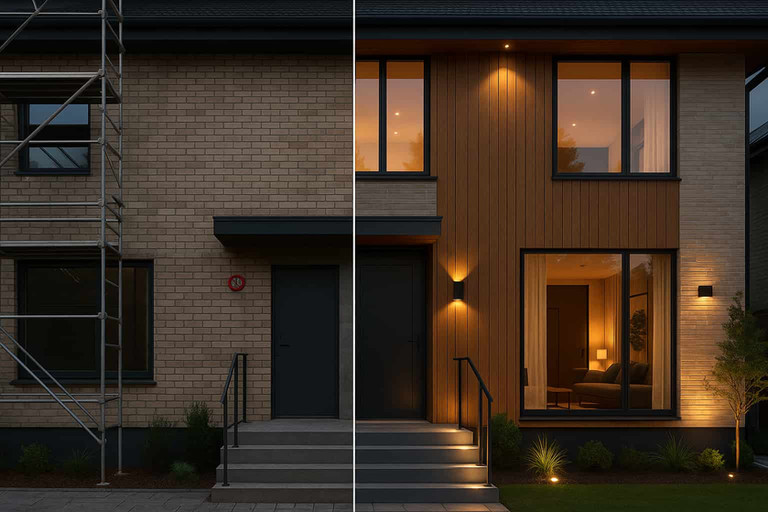
Las primeras impresiones determinan cómo se percibe, se siente y se valúa un edificio a lo largo del tiempo. La fachada es donde el confort, el rendimiento y la identidad se encuentran, a menudo revelando problemas ocultos o potencial sin explotar. Una renovación de fachada bien planificada puede mejorar silenciosamente la eficiencia energética y la durabilidad, mientras otorga al edificio una presencia más clara y segura en la calle.
Esta guía te lleva a través de una hoja de ruta clara para la renovación de fachada, cubriendo planificación, evaluación, materiales, aberturas, iluminación y mejoras de rendimiento para que puedas tomar decisiones con confianza.
¿Qué es la Renovación de Fachada?
La renovación de fachada es la reparación y mejora de la superficie exterior de un edificio. Se enfoca en restaurar o mejorar elementos externos como muros, acabados, ventanas y detalles arquitectónicos para garantizar durabilidad, seguridad y calidad visual.
El proceso típicamente incluye limpieza, reparación de áreas dañadas, renovación de acabados de superficie o actualización de componentes existentes para alinearse con los estándares de rendimiento actuales. A través de estas intervenciones, la renovación de fachada ayuda a proteger los edificios contra la exposición climática, el envejecimiento de materiales y el deterioro a largo plazo.
Más allá de su rol técnico, la renovación de fachada también contribuye al carácter general del edificio. Puede mejorar el rendimiento energético, extender la vida útil y aumentar el valor de la propiedad, todo mientras se preserva el sistema estructural principal del edificio.
¿Por Qué Importa la Renovación de Fachada?

La renovación de fachada ayuda a que un edificio se vea mejor y funcione mejor al mismo tiempo. Mejora la forma en que se percibe el exterior mientras hace espacios interiores más confortables.
A medida que los edificios envejecen, sus fachadas enfrentan exposición constante al clima y al desgaste diario. La renovación aborda estos problemas, ayudando a proteger el edificio y extender su vida sin intervención estructural mayor.
Cuando se planifica cuidadosamente, la renovación de fachada entrega resultados claros y consistentes. Permite que un edificio mantenga su carácter mientras se integra naturalmente en su entorno.
Planificador Rápido: Alcance, Presupuesto, Cronograma
Comienza por decidir qué realmente deseas cambiar. Esto podría limitarse a acabados de superficie, incluir ventanas y puertas, o extenderse a actualizaciones estructurales más grandes. Ser claro desde el inicio ayuda a mantener los costos predecibles y permite que el trabajo avance en etapas sensatas.
Establece un rango presupuestario cómodo y deja espacio para lo inesperado. Los pequeños cambios en los precios de materiales o la disponibilidad de mano de obra son comunes, y un poco de flexibilidad mantiene el proceso sin estrés. Planifica la cronología teniendo en cuenta el clima y las condiciones del sitio, para que las decisiones no sean apresuradas y se mantenga la calidad.
Actualización Ligera: Retoques de pintura o revestimiento, pequeñas mejoras de iluminación, cambios simples de herrajes.
Mejora Mediana: Nuevo revestimiento, reemplazo de ventanas y entrantes rediseñadas.
Renovación Completa: Aislamiento mejorado, nuevos sistemas de fachada, ventanas actualizadas y trabajos de paisajismo coordinados.
Consejo: Elige una prioridad clara, como mejorar el confort térmico, y deja que ese objetivo guíe el resto de las decisiones.
Evalúa tu Fachada: Estructura, Envolvente, Atractivo Visual
Camina lentamente alrededor de la fachada e intenta notar patrones en lugar de problemas aislados. La estructura debe verse sólida, la envolvente debe mantener el clima fuera, y el edificio debe leerse como un todo coherente desde la calle.
Si algo se siente fuera de lugar en términos de rendimiento, generalmente tiene sentido comenzar con la envolvente. Las mejoras visuales tienden a verse mejor una vez que los caminos de humedad, calor y aire están bajo control.
Lista de Control de Señales de Alerta
Grietas capilares en dinteles o antepechos que se repiten en un patrón a menudo sugieren movimiento continuo alrededor de las aberturas. Cuando las mismas grietas aparecen una y otra vez, la causa generalmente es más profunda que el desgaste superficial.
Revestimiento descascarado, pintura pelada o ampollas en la superficie suele ser señal de que la humedad está atrapada detrás del acabado. Con el tiempo, esto debilita la superficie y conduce a un fallo material más generalizado.
Eflorescencia o manchas de humedad en esquinas, antepechos o cerca de la base de las paredes indica que el agua se está moviendo a través de la pared. Estas áreas son puntos débiles comunes donde la impermeabilización puede haber dejado de cumplir su función.
Elementos de fachada abultados, desprendidos o sueltos indican que el material subyacente está perdiendo apoyo. Esto puede convertirse en un problema de seguridad si los fragmentos comienzan a desprenderse.
Marcos de ventanas o puertas deformados y aperturas atascadas generalmente resultan del movimiento estructural o envejecimiento del material. A menudo vienen acompañados de fugas de aire y reducción del confort interior.
Espacios visibles alrededor de ventanas o puertas permiten que el aire y el agua pasen a través de la envolvente. Incluso los espacios pequeños pueden ocasionar pérdidas significativas de energía con el tiempo.
Corrientes de aire percibidas cerca de ventanas, puertas o enchufes eléctricos señalan roturas en la envolvente del edificio. Estas fugas hacen que la calefacción y refrigeración sean menos eficientes y los espacios más difíciles de regular.
Espaciado irregular de juntas entre paneles de fachada o mampostería sugiere una instalación deficiente o movimiento a largo plazo. Las juntas desiguales suelen ser los primeros lugares donde comienza el deterioro.
Sellante agrietado, quebradizo o ausente en las juntas permite que la humedad entre en el sistema de fachada. Una vez que el sellante falla, los materiales circundantes tienden a degradarse más rápidamente.
Burletes faltantes, mal instalados o corroídos impiden que el agua se canalice adecuadamente lejos de los bordes sensibles. Esto a menudo ocasiona daño oculto por humedad detrás de los acabados.
Marcas de agua debajo de dintel de ventanas, antepechos o bordes de balcones generalmente trazan la trayectoria del agua que se filtra desde arriba. Estas manchas a menudo revelan problemas de detalle que requieren atención.
Manchas de óxido en las superficies de la fachada típicamente indican corrosión de elementos metálicos subyacentes. A medida que avanza la corrosión, los anclajes y sujetadores pueden perder resistencia.
Zonas frías o sobrecalentadas cerca de las paredes exteriores sugieren espacios de aislamiento o puentes térmicos. Estas áreas reducen el confort y aumentan el consumo de energía.
Condensación formándose en las superficies interiores cerca de la fachada puede indicar desequilibrio térmico o de humedad en la envolvente. Si no se trata, puede conducir al crecimiento de moho.
Moho visible u olores a humedad recurrentes cerca de elementos de fachada indican exposición prolongada a la humedad. Esto afecta la calidad del aire interior e indica problemas más profundos en la envolvente.
Decoloración o envejecimiento desigual de los materiales de fachada puede mostrar dónde el agua, el sol o la contaminación están afectando el edificio de manera desigual. Estos patrones a menudo se alinean con problemas de desempeño subyacentes.
La transmisión inusual de ruido desde el exterior puede sugerir puntos débiles en el conjunto de la fachada. El sellado deficiente o el aislamiento insuficiente a menudo permiten que tanto el sonido como el aire pasen a través.
Materiales y acabados: Ladrillo, Piedra, Madera, Revoque, Metal
Piensa en la fachada como un sistema, no como una colección de reparaciones puntuales. El revestimiento, el aislamiento, los anclajes y las juntas deben trabajar en conjunto para que el agua drene limpiamente y la fachada se mantenga en el tiempo sin necesidad de atención constante.
Las opciones de materiales funcionan mejor cuando reflejan el clima del edificio, su exposición y cuánto mantenimiento tiene sentido para ti. Planificar el cuidado a largo plazo desde el principio ayuda a evitar envejecimiento desigual y reparaciones innecesarias más adelante.
El ladrillo y la piedra ofrecen durabilidad a largo plazo, la madera añade calidez cuando el mantenimiento forma parte del plan, y el revoque ventilado o los sistemas de metal ayudan a gestionar la humedad. Generalmente, un material principal claro acompañado de uno o dos complementos discretos mantiene la fachada equilibrada, legible y más fácil de vivir.
En ArchiVinci, puedes subir una foto frontal y comparar ladrillo-más-madera, revoque-más-piedra, o paneles de metal claro como conjuntos A/B rápidos, incluyendo vistas de día y noche.
Una pequeña maqueta in situ y un kit simple dentro de tus herramientas de renovación del hogar (rastreador de muestras, notas de cantidad) te ayudan a confirmar el cambio de color, la escala de textura y el costo antes de hacer el pedido. Un material protagonista con dos complementos discretos generalmente mantiene la renovación de fachada frontal coherente y fácil de mantener.
Mejora de aberturas: Puertas, Ventanas, Marcos
Las aberturas juegan un papel importante en cómo se ve una fachada y cómo funciona. Los cambios pequeños en la profundidad del marco, los detalles del alféizar o el grosor del parteluz pueden mejorar discretamente las proporciones y hacer que el edificio se sienta más equilibrado desde la calle.
Cuando se están reemplazando ventanas o puertas, es útil alinearlas en todos los pisos para que la fachada se lea como un todo claro y consistente. Este tipo de alineación a menudo hace una diferencia visual más grande de lo esperado.
Probar algunas opciones al inicio te permite equilibrar el carácter con las necesidades de aislamiento y desempeño. También ayuda a evitar ajustes costosos más adelante, una vez que la fabricación ya ha comenzado.
Con AI Exterior Design de ArchiVinci, puedes subir una foto de fachada, solicitar marcos más delgados o puertas más altas, y previsualizar los resultados antes de ordenar.
Un breve conjunto A/B te ayuda a decidir cuál versión equilibra el carácter con las mejoras de aislamiento.
Ganancias Térmicas y Acústicas
Mejorar el acristalamiento y los sellos ayuda a mantener el calor dentro, reduce corrientes de aire y disminuye el ruido exterior. Incluso pequeñas mejoras que mejoren el valor U pueden rápidamente hacer que un espacio se sienta más cómodo y más fácil de habitar.
Detalles simples como ventilaciones, juntas y sellos de salidas a menudo se pasan por alto. Sin embargo, cuando se manejan correctamente, pueden tener un efecto sorprendentemente fuerte en la comodidad general.
Iluminación y Presencia Nocturna
Una fachada debe parecer tranquila e intencional después del anochecer, no excesivamente brillante. La luz cálida y la colocación cuidadosa ayudan a que los materiales se lean naturalmente y previenen el deslumbramiento en el acristalamiento.
Pensar en las vistas nocturnas desde el inicio facilita evitar decisiones de iluminación de último minuto que pueden eclipsar la arquitectura.
En ArchiVinci, genera variantes de día y noche desde la misma toma para comparar cómo se leen los materiales después del anochecer, luego ajusta las posiciones de los accesorios hasta que las sombras se sientan naturales. La planificación fotométrica es más fluida cuando tus herramientas de renovación del hogar incluyen simples calculadoras de lúmenes y listas de verificación de cableado que puedes compartir con el instalador.
Iluminación Exterior Estratificada
La iluminación estratificada añade profundidad sin hacer que la fachada se vea ocupada. Ayuda a definir el edificio de noche mientras mantiene la apariencia general tranquila y equilibrada.
Un suave lavado de pared, algunas luces de escalón o bollard, y un sutil acento en la entrada suelen ser suficientes para realizar el trabajo. Estas capas trabajan juntas para guiar la vista sin atraer demasiada atención a ningún elemento único.
Mantener la temperatura de color consistente, idealmente alrededor de 2700-3000K, ayuda a que el ladrillo, la madera y las superficies metálicas se vean naturales y combinen cómodamente. En ArchiVinci, bloquea la exposición y compara un cambio a la vez para evitar resultados sobreefectados.
Entrada, Escaleras, Barandillas y Paisajismo
La entrada es a menudo lo primero que las personas notan, por lo que las pequeñas decisiones aquí realmente importan. Alinear la altura de la puerta con las ventanas cercanas, iluminar los escalones de manera uniforme y elegir barandillas que sigan el ritmo de la fachada ayudan a crear una llegada clara y acogedora.
El paisajismo funciona mejor cuando apoya la arquitectura en lugar de competir con ella. Una franja de plantación delgada puede suavizar los bordes sin ocultar detalles. Con el módulo AI Landscape Design de ArchiVinci, puedes probar opciones como arbustos bajos versus pastos más altos y encontrar un equilibrio que se sienta tranquilo y bien considerado.
Cuando están involucrados múltiples oficios, las referencias visuales claras facilitan mucho la coordinación. Crear un paquete visual simple con Exact Render Generator de ArchiVinci ayuda a que todos sigan las mismas proporciones, materiales y acabados, manteniendo el resultado consistente en la obra.
Si estás coordinando oficios, crea un paquete visual rápido desde ArchiVinci para que los fabricantes sigan las mismas proporciones y acabados en la obra.
Usa IA para Diseñar tu Fachada
La IA hace que las decisiones tempranas sean más ligeras. Sube una foto frontal clara o una elevación ortográfica, establece un objetivo claro como "materiales más cálidos" o "marcos más esbeltos", y genera algunas variaciones tranquilas. Mantén la cámara, la exposición y el encuadre idénticos para que las diferencias sean fáciles de leer.
Compara versiones de día y noche, luego mantén la opción que equilibre carácter, costo y mantenimiento. Las herramientas de ArchiVinci pueden ayudarte aquí, pero úsalas como lápices, no como atajos: itera poco, decide firmemente.
Sube, Solicita, Itera
Sube la fachada, anota las restricciones que debes mantener, y escribe una solicitud breve que nombre materiales, temperatura de color e iluminación. Solicita 2-3 versiones solamente, luego cambia una sola variable por ronda, como revestimiento primero y aberturas después. Una pequeña cuadrícula A/B previene la edición excesiva y mantiene el estilo honesto con tu calle.
Ejemplo de solicitud: "Renovación de fachada frontal, mantén las posiciones de ventanas, prueba ladrillo claro con acentos de madera, iluminación nocturna suave, señalización mínima, juntas limpias, exporta día y noche."
De Moodboard a Opciones de Fachada
Arma un tablero compacto con 3-5 referencias que muestren escala de textura y ritmo de juntas. Genera variantes que respeten tus aberturas y línea de techo, luego prueba un material de acento contra una base tranquila. Si el contexto es fuerte, refleja ligeramente un tono del entorno en lugar de confrontarlo.
Planifica con Herramientas y Aplicaciones Digitales
Un sistema simple mantiene la planificación fluida. Usa un escaneo LiDAR en el teléfono para dimensiones rápidas, un muestreador de color para verificaciones de paleta, y una lista de verificación visual para rastrear accesorios y juntas. Para especificaciones y coordinación, tus herramientas de renovación del hogar pueden almacenar muestras, cantidades y exportar presets que compartes con tu contratista.
Sobre la marcha, las aplicaciones ligeras de renovación del hogar ayudan a registrar fotos del sitio, marcar problemas y comparar conceptos de IA con restricciones reales para que las decisiones se mantengan fundamentadas.
Medición: Los escaneos rápidos con LiDAR o basados en fotos ayudan a capturar dimensiones clave desde el principio. Estas mediciones no necesitan precisión de nivel topográfico, pero proporcionan una base confiable para proporciones, cantidades aproximadas y decisiones de diseño inicial.
Paleta: Las verificaciones con luz natural en muestras ayudan a revelar cómo se comportan realmente los colores. Revisar muestras bajo luz natural y en diferentes momentos del día reduce el riesgo de cambios inesperados una vez que los materiales se aplican.
Tablero de Tareas: Un tablero de tareas simple mantiene el alcance, cronograma y responsabilidades visibles de un vistazo. Desglosar el trabajo en acciones claras ayuda a la coordinación y evita que se pasen por alto pasos.
Presets de Exportación: Usar configuraciones de exportación consistentes como archivos PDF vectoriales y PNG a 300 DPI mantiene la comunicación clara. Un esquema de nomenclatura simple ayuda a contratistas y colaboradores a identificar rápidamente la versión correcta y evitar confusiones.
Cumplimiento y Permisos: Qué Revisar Temprano
Antes de decidirte por una dirección de diseño, vale la pena dedicar un momento a entender las normas que aplican. Las regulaciones locales, el estado de conservación o patrimonio, y los materiales aprobados pueden influir en lo que se te permite construir o modificar.
Los detalles importan más de lo que parecen a primera vista. Los reemplazos de ventanas pueden necesitar seguir perfiles específicos, y el aislamiento adicional puede afectar el grosor de la pared alrededor de las aberturas. Detectar estos problemas temprano ayuda a evitar retrabajos después.
La iluminación y la señalización también son parte importante. Los límites en dispersión luminosa, altura del edificio o retranqueos pueden determinar cómo se detalla la fachada, especialmente en áreas sensibles o densas.
Una breve llamada con las autoridades locales, respaldada por planos claros, a menudo ahorra tiempo a largo plazo. La clarificación temprana usualmente significa menos retrasos una vez que comienzan los trabajos.
Mantener una lista de verificación simple ayuda a que todo funcione sin problemas.
Lista de verificación rápida:Fotos del sitio, elevaciones existentes y propuestas, una leyenda de materiales, planos de iluminación, notas sobre edificios adyacentes e información básica de drenaje son a menudo todo lo que se necesita para comenzar.
Energía y Desempeño: Aislamiento, Estanqueidad al Aire, Sombreado
Ayuda pensar en la fachada como un sistema completo en lugar de un conjunto de mejoras individuales. El aislamiento continuo detrás del revestimiento, los detalles cuidadosos en dinteles y bordes de losa, y una cavidad ventilada trabajan juntos para gestionar el calor y la humedad a lo largo del tiempo.
La estanqueidad al aire a menudo depende de pequeños detalles. Una prueba simple de puerta soplante o incluso un recorrido con lápiz de humo puede revelar fugas alrededor de marcos y uniones. Sellar estas brechas menores usualmente mejora el confort mucho más que cambios superficiales.
El sombreado es más efectivo cuando se planifica donde el sol es más intenso. Las persianas exteriores, aletas o vuelos modestos pueden reducir el deslumbramiento y el calor estival mientras aún permiten que entre la luz invernal. Estos elementos no necesitan ser complejos para marcar una verdadera diferencia.
Las opciones de acristalamiento también juegan un papel. El vidrio de baja emisividad con un factor solar adecuado al clima local ayuda a equilibrar la ganancia de calor y la luz natural. Probar materiales en diferentes condiciones de luz, especialmente de día versus noche, ayuda a garantizar que los colores y la reflectividad se mantengan fieles.
Lista de Verificación de Ganancias Rápidas
Una línea de aislamiento continuo y clara, con membranas cuidadosamente selladas y detalles de impermeabilización limpios
Marcos de ventanas y puertas en escuadra, juntas en buen estado y trampillas de aire revisadas adecuadamente
Sombreado exterior ajustado a cada abertura, combinado con iluminación consistente de 2700-3000K para una presencia nocturna tranquila
Fases y presupuesto: Ligero, Medio, Completo
Dividir el trabajo en etapas claras ayuda a mantener tanto el presupuesto como el sitio bajo control. Los pasos más pequeños son más fáciles de gestionar, reducen las interrupciones y hacen que el flujo de caja sea más predecible.
Una fase ligera se enfoca en victorias rápidas. Refrescar la pintura o el mortero, ordenar el herraje y mejorar la iluminación nocturna pueden elevar el atractivo de la fachada sin intervenciones mayores.
Una fase media va un paso más allá. Se actualizan ciertas áreas de revestimiento, se reemplazan algunas ventanas y la entrada, y elementos como canaletas, barandillas y números de casa se alinean para que la fachada se lea como un todo coherente.
Una rehabilitación integral reúne todo junto. El aislamiento, sistemas de pantalla de lluvia, nuevos conjuntos de ventanas y paisajismo se abordan simultáneamente, ofreciendo las mayores ganancias de rendimiento y el mantenimiento a largo plazo más simple.
Mantener una hoja de presupuesto directa, permitir una pequeña contingencia y registrar decisiones con fotos ayuda a que todos se mantengan alineados. Un conjunto simple de herramientas de renovación del hogar puede contener muestras, cantidades y presets de exportación que sean fáciles de compartir con el contratista.
Consejos de faseamiento
Comience con la envolvente antes de pasar a los acabados. El aislamiento, la estanqueidad del aire y la protección contra la intemperie deben venir primero, ya que los acabados duran más tiempo y funcionan mejor una vez que los caminos de calor, aire y humedad están bajo control.
Agrupar los oficios por elevación de fachada para reducir el tiempo de andamios. Completar el trabajo un lado a la vez limita la configuración repetida, ahorra costos y mantiene el sitio más fácil de gestionar.
Aprobar un panel de maqueta antes de realizar pedidos a granel. Ver los materiales y los detalles juntos en condiciones reales ayuda a confirmar color, textura y proporciones, y evita cambios más adelante.
Exportación de conjuntos: de conceptos a láminas listas para cliente
Las exportaciones claras y consistentes facilitan las revisiones para todos los involucrados. Mantener formatos predecibles ayuda a evitar confusiones y acelera la retroalimentación. Un PDF vectorial funciona bien para marcas, unPNGa300 DPIes ideal para pantallas, y una leyenda breve identifica claramente materiales e iluminación.
La consistencia importa al comparar revisiones. Bloquear la cámara, exposición y escala garantiza que cada actualización pueda leerse respecto a la anterior sin distracciones. Esto facilita detectar cambios y hace las discusiones más enfocadas.
Al iterar con IA, es útil congelar la geometría y ajustar solo una variable por ronda. Esto mantiene juntas, marcos y colores íntegros.
Con ArchiVinci, las vistas de día y noche se pueden agrupar en un tablero simple para que los clientes decidan con confianza, sin especulaciones.
Entrega a Contratista: Especificaciones, Cantidades, Cronogramas
Una entrega fluida establece el tono para toda la obra. La información clara desde el inicio ayuda a evitar confusiones en el sitio y reduce sorpresas de último momento.
Comparte una especificación simple de una página que cubra revestimiento, aislamiento, fijaciones y juntas, junto con un resumen claro de cantidades. Un cronograma breve organizado por elevación de fachada ayuda a mantener el trabajo fluyendo y limita el andamiaje repetido.
Una lámina de fotografías con flechas que señalen posiciones de iluminación y bordes de drenaje facilita decisiones en sitio. Un conjunto digital compacto de tus herramientas de renovación de interiores ayuda a mantener las versiones alineadas y los cambios simples.
Errores Comunes a Evitar
Sobre-texturizar estudios iniciales, lo que dificulta ver juntas, bordes y lógica modular antes de establecer proporciones.
Permitir que texturas pesadas oculten problemas de alineación en lugar de revelarlos al inicio del proceso.
Mezclar demasiados materiales de fachada y romper el ritmo natural de la calle.
Omitir una jerarquía clara de materiales, en lugar de elegir una superficie principal apoyada por acompañantes más sutiles.
Ignorar caminos de agua como bordes de goteo, contraflashes y detalles de drenaje hasta que aparezcan problemas en obra
Tratar el drenaje como un detalle en lugar de un sistema que debe resolverse desde el inicio
Usar temperaturas de color duras o luminarias mal protegidas que crean deslumbramiento nocturno
Permitir que los reflejos en los acristalamientos dominen la fachada después del anochecer
Dejar que los planos, modelos y mediciones de sitio se desincronicen con el tiempo
Cambiar escala, nombres o referencias a mitad del proceso y crear confusión
Confiar en demasiadas aplicaciones de planificación y perder el rastro de dónde viven las decisiones
Usar un conjunto de herramientas abarrotado en lugar de un conjunto pequeño y enfocado que se mantenga consistente
Conclusiones clave
La fachada de un edificio es más que su apariencia exterior. Es donde el confort, el desempeño, la durabilidad y la identidad convergen, a menudo revelando tanto problemas ocultos como oportunidades de mejora.
La renovación exitosa de fachadas comienza con claridad. Definir claramente el alcance, prioridades y presupuesto desde el inicio ayuda a mantener las decisiones fundamentadas y previene cambios innecesarios más adelante.
La evaluación siempre debe preceder a las decisiones de diseño. Notar patrones en fisuras, humedad, infiltraciones de aire y envejecimiento de materiales proporciona mucha más información que reaccionar a problemas aislados.
La fachada debe tratarse como un sistema completo en lugar de un conjunto de elementos separados. El aislamiento, la estanqueidad al aire, las aberturas, el revestimiento y el drenaje deben funcionar juntos para garantizar un desempeño duradero.
Las estrategias de materiales más simples tienden a envejecer mejor con el tiempo. Elegir un material dominante apoyado por algunos elementos más discretos mantiene la fachada legible y más fácil de mantener.
Las pequeñas mejoras técnicas pueden generar ganancias significativas de confort. Mejorar los valores U, sellar las vías de aire y resolver las juntas suelen tener más impacto que las actualizaciones superficiales.
La iluminación y los detalles influyen fuertemente en cómo se experimenta un edificio de día y de noche. La iluminación tranquila y bien planificada, junto con proporciones consistentes, ayudan a que la fachada se sienta equilibrada y atemporal.
Una planificación clara y la coordinación reducen el riesgo en todo el proyecto. Dividir el trabajo en fases, revisar la normativa temprano y compartir referencias visuales claras mantienen el proceso en marcha desde el concepto hasta la construcción.
Preguntas frecuentes
¿Qué rangos de presupuesto debo esperar?
Los cambios cosméticos ligeros pueden ser 15-25% del costo de una renovación completa. Las mejoras intermedias rondan 40-60%. Las envolventes completas varían según la zona y el acceso. Obtén dos presupuestos e incluye una contingencia del 10%.
¿Cómo afectan el clima y la estación a la programación?
Las condiciones frías o húmedas ralentizan el curado del revoque, pinturas y selladores. Programa los trabajos exteriores principales durante meses templados y secos. Protege las juntas abiertas con entrepaños temporales si el clima se vuelve adverso.
¿Qué hay sobre garantías y planes de mantenimiento?
Solicita garantías escritas sobre revestimientos, membranas y recubrimientos, junto con un programa de cuidado simple. Anota los métodos de limpieza, intervalos de revestimiento y qué químicos evitar.
¿Cómo gestiono a los vecinos, el acceso y la estructura de andamios?
Comparte fechas, horarios de trabajo e información de contacto con anticipación. Confirma los puntos de amarre de andamios y permisos de pavimento. Planifica tareas silenciosas para las primeras horas y tareas ruidosas para la mitad del día.
¿Hay consideraciones de fuego y seguridad para el revestimiento nuevo?
Sí. Verifica las clasificaciones de fuego locales, barreras de cavidad y fijaciones. Utiliza sistemas probados con documentación y mantén una estrategia continua de sellado contra fuego en las líneas de piso.
¿Puedo integrar tecnología moderna como cámaras, timbres o sensores?
Planifica conductos antes de cerrar la fachada. Agrupa puntos de bajo voltaje cerca de las entradas, oculta fuentes de alimentación y prueba el deslumbramiento nocturno en las lentes después de colocar los accesorios.
¿Cuánto tiempo tarda una renovación de fachada típica?
La mayoría de actualizaciones ligeras se completan en 2-4 semanas. Los alcances medios requieren 6-10 semanas. Las retrofits completas con aislamiento y ventanas a menudo necesitan 10-16+ semanas.