Actualizado el: 29 de diciembre de 2025
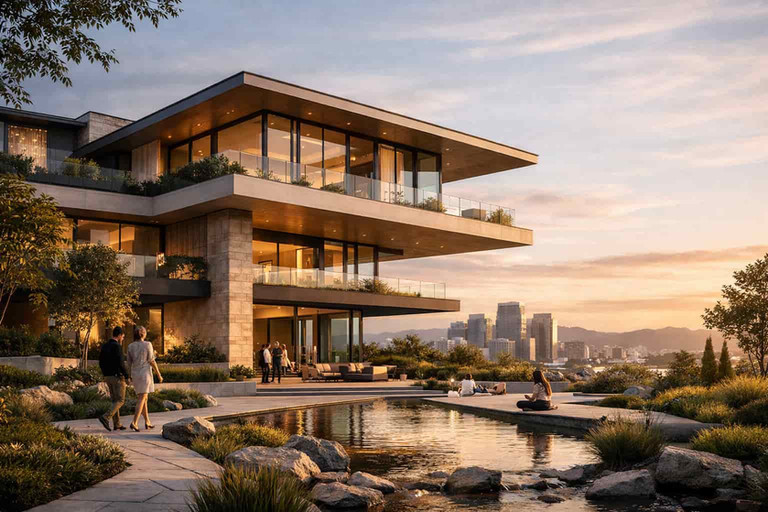
Un render de marketing juega un papel decisivo en cómo la arquitectura comunica valor, intención y experiencia. Transforma la información de diseño en narrativas visuales que moldean la percepción antes de que un proyecto exista físicamente. A través de imágenes cuidadosamente elaboradas, las ideas arquitectónicas se vuelven accesibles, aspiracionales y listas para el mercado. Como resultado, el rendering se ha convertido en un instrumento estratégico de narrativa visual dentro de la visualización arquitectónica.
Este artículo explica cómo los flujos de trabajo de render de marketing arquitectónico apoyan objetivos narrativos. Explora principios de narrativa visual, alineación con la audiencia y comunicación de diseño. También examina coherencia de marca, creación de atmósfera y aplicaciones inmobiliarias. Cada sección construye una comprensión clara de cómo los renders funcionan como activos de marketing.
El render de marketing arquitectónico como medio narrativo
Un render de marketing arquitectónico transforma la intención de diseño en una narrativa visual clara y atractiva. Comunica cómo se ve, se siente y funciona un edificio dentro de su contexto. A diferencia de los planos técnicos, los renders comunican significado a través de atmósfera, escala y composición, posicionándose como herramientas narrativas en lugar de documentos puramente técnicos.
La narrativa visual depende de estructura y secuenciación. Una imagen protagonista introduce el concepto central del proyecto, mientras que vistas exteriores e interiores de apoyo expanden y refuerzan la narrativa. Juntas, estas imágenes forman un lenguaje visual cohesivo que guía la percepción.
Los componentes clave de la narrativa incluyen:
Jerarquía visual para dirigir la atención y enfatizar ideas arquitectónicas primarias.
Escala humana para comunicar proporción, usabilidad e interacción en la vida real.
Modelado de contexto para situar el proyecto dentro de su entorno físico, social y ambiental.
Principios de narrativa visual en la visualización arquitectónica
La visualización arquitectónica aplica principios de narrativa visual para moldear la comprensión. Estos principios determinan cómo los espectadores interpretan el espacio y la intención. Un render narrativo prioriza la claridad y legibilidad. En consecuencia, cada decisión visual respalda la comunicación.
La atmósfera de iluminación y las opciones de hora del día en el render influyen en la percepción. Por ejemplo, un render de hora dorada sugiere calidez y aspiración. Un render nocturno destaca la iluminación artificial y el carácter urbano. La visualización de materiales asegura que las superficies se sientan creíbles y táctiles.
Las narrativas visuales efectivas en visualización arquitectónica se construyen sobre:
La presencia de personas y entorno para comunicar escala, estilo de vida y escenarios de uso real
La vegetación y elementos ambientales para suavizar volúmenes, agregar profundidad y contextualizar la arquitectura
La composición y encuadre de cámara para guiar la perspectiva, establecer jerarquía y controlar el enfoque del espectador
Estrategia de Render de Marketing para Promoción Inmobiliaria y de Bienes Raíces
En el marketing inmobiliario, un render de marketing funciona como herramienta de visualización de ventas. Respalda el marketing previo a la construcción, campañas de preventa y presentaciones a inversores. Estas imágenes a menudo aparecen antes de que comience la construcción. Por lo tanto, la credibilidad y claridad son esenciales.
La visualización inmobiliaria alinea las imágenes con una audiencia objetivo y persona de comprador definidas. Los proyectos residenciales de gama alta exigen calidad de render premium y postproducción refinada. Los desarrollos de escala media enfatizan funcionalidad y habitabilidad. En ambos casos, la comunicación visual impulsa el engagement.
Las aplicaciones comunes de renders de marketing incluyen:
Renders de folletos inmobiliarios preparados para distribución tanto impresa como digital, apoyando materiales de ventas y comunicación de marca.
Renders de sitios web y páginas de destino diseñados para crear impacto visual inmediato y comunicar claramente la propuesta de valor del proyecto.
Presentaciones de desarrolladores y materiales de pitch para clientes utilizados para apoyar decisiones de inversión y discusiones de preventa.
Branding, Consistencia y Visualización de Gama Alta
La visualización de marca garantiza que los renders se alineen con una identidad visual unificada. La gradación de color, el estilo de iluminación y la composición permanecen consistentes en todos los activos. Esta consistencia construye reconocimiento y confianza. En contraste con imágenes aisladas, las campañas requieren cohesión.
La visualización de alta gama describe calidad, no un estilo fijo. Se enfoca en el control de detalles, el realismo y el pulido. El renderizado fotorrealista es común, pero no obligatorio. Los elementos visuales minimalistas o estilizados también pueden cumplir estándares premium cuando se ejecutan con precisión.
Las consideraciones importantes de marca incluyen:
Consistencia visual en los resultados visuales de campaña y renders para redes sociales
Lenguaje de render cinematográfico para elevar la percepción
Ejecución de render premium para respaldar la confianza de los inversores
Visualización conceptual y comunicación de diseño
La visualización conceptual respalda la narración de diseño en etapas tempranas al comunicar la intención arquitectónica, la volumetría y la lógica espacial. Estos elementos visuales se utilizan comúnmente en envíos de concursos y revisiones de clientes, donde la claridad del concepto es más importante que el detalle técnico. Lo más importante es que articulan la intención del diseño antes de que se finalicen las decisiones de materiales y construcción.
Los renders conceptuales simplifican deliberadamente materiales, contexto y detalle. El enfoque permanece en la forma, la proporción y la estructura. Aunque son menos detallados, aún se basan en una narrativa visual sólida. En este contexto, la abstracción se convierte en una herramienta estratégica de comunicación más que en una limitación.
Los usos típicos de la visualización conceptual incluyen:
Renders de concursos arquitectónicos utilizados para comunicar ideas de manera clara y persuasiva.
Elementos visuales de pitch de cliente y revisión de diseño que respaldan la discusión y la alineación del diseño.
Imágenes de presentación para inversores que explican la visión a largo plazo y el potencial de desarrollo.
Aplicaciones estratégicas de renders de marketing arquitectónico
Desarrollo residencial sobre plano
En proyectos residenciales sobre plano, los renders de marketing a menudo se producen en la etapa de concepto para establecer la identidad antes de que comience la construcción. Una imagen exterior heroica única puede posicionar el desarrollo como aspiracional y listo para el mercado al combinar atmósfera de iluminación, referencias de estilo de vida y escala humana, apoyando las ventas tempranas y la comunicación con inversores.
Comunicación del diseño arquitectónico
En la práctica arquitectónica, renders narrativos se utilizan con frecuencia para alinear a los clientes en torno a una dirección de diseño. En lugar de depender únicamente de planos técnicos, los arquitectos utilizan imágenes cuidadosamente compuestas para comunicar atmósfera, intención espacial y visión general de manera clara y eficiente.
Marca y posicionamiento de gama alta
En desarrollos residenciales de gama alta, los renders de marketing se desarrollan en paralelo con estrategias de marca. La iluminación coherente, composición y lenguaje visual en todos los elementos visuales ayudan a posicionar el proyecto como premium mucho antes de que exista cualquier experiencia física.
Enfoque modular de ArchiVinci para renders de marketing fotorrealistas
Con un sistema modular diseñado para abordar múltiples personas y necesidades de proyectos, ArchiVinci permite la producción de renders fotorrealistas adecuados para comunicación de marketing. Estos elementos visuales soportan una amplia gama de casos de uso, desde presentación de concepto temprano hasta ventas sobre plano, iniciativas de marca y comunicación con inversores.
Arquitectos, promotores inmobiliarios, diseñadores y equipos de marketing pueden generar imágenes alineadas con sus objetivos distintos, permitiendo que la salida visual se adapte naturalmente a diferentes audiencias y contextos de toma de decisiones.
En lugar de ofrecer una única salida de renderizado genérica, la estructura modular de ArchiVinci permite que la producción visual responda a diferentes etapas de un proyecto. Esta flexibilidad garantiza que los renders fotorrealistas sigan siendo visualmente precisos mientras se alinean con la intención narrativa, posicionamiento de marca y objetivos de marketing.
Dentro de este ecosistema, los módulos de render seleccionados desempeñan un papel central en visualización orientada al marketing. Exterior AI y módulos de diseño interior AI respaldan imágenes de alta calidad para promoción de propiedades y comunicación de preventa.
A mayor escala, softwares de visualización de masterplan y paisaje ayudan a comunicar contexto, organización espacial y lógica de desarrollo de forma clara en fases iniciales, antes de que comience la construcción.
Además, los módulos de render orientados al concepto respaldan la creación de atmósfera y la narración visual. Estas herramientas permiten dar forma a los renders de marketing de acuerdo con la percepción de la audiencia, la escala del proyecto y la intención comunicativa, resultando en imágenes que se sienten aspiracionales, creíbles y listas para el mercado en diversos escenarios arquitectónicos.
Conclusiones clave
Un render de marketing es un instrumento estratégico de narración, no meramente una representación visual de la arquitectura.
Los flujos de trabajo de render de marketing arquitectónico traducen la intención de diseño en narrativas visuales coherentes que moldean la percepción y la toma de decisiones.
La narración visual efectiva depende de composición, atmósfera de iluminación, escala y presencia humana para comunicar ambiente y uso.
En bienes raíces y desarrollo de propiedades, la visualización desempeña un papel central en marketing fuera de planos, preventa y comunicación de ventas.
La visualización de marca asegura consistencia visual, reconocimiento y confianza en campañas, plataformas y canales de medios.
La visualización conceptual permite comunicación clara y persuasiva de ideas arquitectónicas durante fases iniciales de diseño, antes de que los detalles se finalicen.
Preguntas frecuentes
¿Qué es un render de marketing en arquitectura?
Un render de marketing es una visualización creada para promocionar proyectos arquitectónicos a través de una narración visual clara. Su objetivo principal es comunicar la idea, atmósfera y valor de un proyecto en lugar de solo su forma física.
¿Quién necesita renders de marketing arquitectónico?
Los renders de marketing arquitectónico son necesarios para cualquiera que deba comunicar, vender o evaluar un proyecto antes de que se construya. Los utilizan principalmente desarrolladores, arquitectos, equipos de marketing e inversores para traducir la intención de diseño en un mensaje visual claro y persuasivo.
¿Cuán temprano deben producirse los renders de marketing en la cronología de un proyecto?
Los renders de marketing deben producirse ya en la etapa de concepto o diseño esquemático, una vez que la idea principal y la volumetría se hayan definido. Crearlos temprano apoya el marketing sobre planos, presentaciones de inversores y posicionamiento estratégico mucho antes de que comience la construcción.
¿En qué se diferencia un render de marketing arquitectónico de los renders técnicos?
Los renders de marketing arquitectónico se enfocan en la percepción, el estilo de vida y la marca, mientras que los renders técnicos priorizan la precisión constructiva, las dimensiones, los materiales y la constructibilidad. Las imágenes de marketing están diseñadas para persuadir; las imágenes técnicas están diseñadas para informar a constructores y consultores.
¿Por qué se incluyen personas en los renders de estilo de vida?
Las personas aportan escala, contexto y conexión emocional. Ayudan a los espectadores a imaginar cómo se usan los espacios en la vida real, haciendo que el proyecto se sienta identificable y habitable en lugar de abstracto.
¿Siempre se requieren renders fotorrealistas para marketing?
No. Aunque el fotorrealismo es común, algunas estrategias de marketing utilizan imágenes estilizadas, ilustrativas o conceptuales. El enfoque correcto depende del público objetivo, la identidad de marca y los objetivos de comunicación.
¿Cuándo son más efectivas las imágenes render preventa?
Las imágenes render preventa son más efectivas durante el marketing sobre planos, antes de que comience la construcción. Permiten a los desarrolladores presentar el proyecto temprano, generar interés y apoyar las ventas cuando aún no existe edificio físico alguno.
¿Qué define la calidad de visualización de alta gama?
La visualización de alta gama se define por el control del detalle, la iluminación precisa e intencional, la composición sólida y la post-producción refinada. La calidad no se trata solo de estilo, sino de cuán convincente y claramente la imagen comunica su mensaje.