top of page

logging in...

video credits

You don't have enough credits.

Buy a plan to continue rendering

Open to download

You'll find this video in your DASHBOARD when it's ready

(about 10 mins)

Have a coffee break while we are proccessing your video

or you can continue generating renders

  IN PROGRESS...

See image

Animate image

Edit image

Upscale 4x

Variation

Iridescent, irregular pearl‑like sculptural form on a soft gray background—material inspiration a room designer might reference when exploring organic, luminous accents.
Organic, pearl-like object with soft iridescence resting on a muted gray surface—an abstract material study often used in ai room design free tools to inspire natural textures and lighting concepts.

Add paragraph text. Click “Edit Text” to customize this theme across your site. You can update and reuse text themes.

Side-by-side comparison of a minimalist apartment kitchen and living area before and after rendering, showing a transformation from a flat gray model to a realistic interior with warm wood flooring, textured walls, and natural lighting.

• Upload a photo, sketch, or 3D model screenshot of an interior space.
• Describe your desired environment with a text prompt (e.g., "modern living room, cozy ambiance").

• Select quick-pick objects to add to your scene, or specify custom items directly in your prompt.

• Fine-tune your render's lighting by selecting from various mood options.

Interior Render Generator

Select module

Input image*

UPLOAD IMAGE
Max File Size 5MB
An abstract, pearl-like form with soft iridescent hues placed against a neutral gray background—used as a visual reference in ai room planner tools to inspire organic shapes and material palettes.

Render engine*

Add object

(optional)

* To include additional objects, simply write them in your prompt.

Upload object

(optional)

UPLOAD OBJECT
Max File Size 5MB
An abstract, pearl-like form with soft iridescent hues placed against a neutral gray background—used as a visual reference in ai room planner tools to inspire organic shapes and material palettes.

Prompt

(optional)

Long prompts may lead to unexpected results. Keep it short for best results. Here is some tips about prompts: Learn more

Lighting

(optional)

Number of images*

Error

AI Interior Design Generator

Create stunning interior spaces in seconds with ArchiVinci’s AI Interior Design Generator, an advanced AI interior design software. Upload any photo or sketch and turn it into realistic, high-quality room visuals. Whether you're designing a living room, bedroom, or kitchen, our browser-based interior design tool gives you full creative control. No software or 3D experience required.

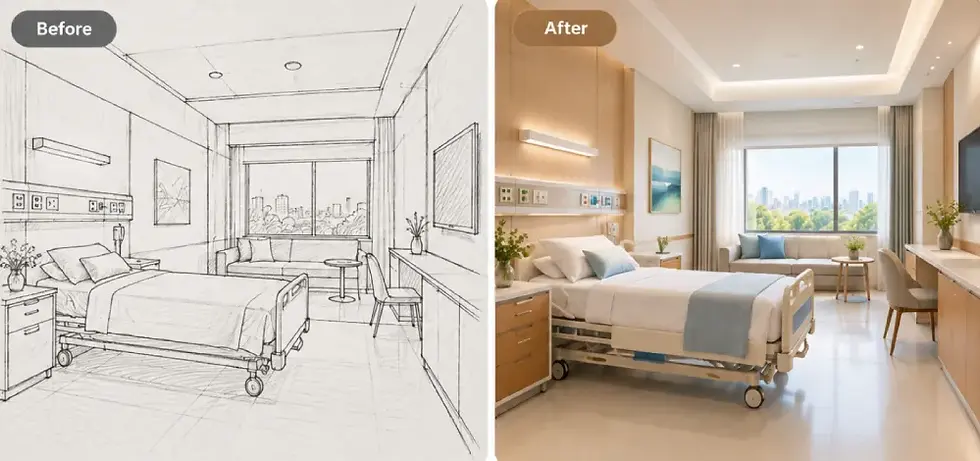
Before & After: Real AI Interior Space Transformations

Reading Nook Transformation: From Flat Sketch to Cozy Realism

Side-by-side comparison of a reading nook transformation. The left side shows a flat, hand-drawn sketch of a cozy corner with built-in shelves and cushions; the right side shows a photorealistic version with warm lighting, wooden textures, pillows, and wall art. ‘Before’ and ‘After’ labels are displayed at the top.

In this before-and-after, a sketch-style window seat is brought to life with warm wood tones, realistic textures, soft cushions, and layered lighting. The result is a reading area that feels inviting and architectural—perfect for modern apartments or quiet corners, showing the power of an interior render generator in action.

Open-Plan Space: From Basic Render to Fully Staged Interior

Before-and-after image of an open-plan kitchen and living area. The left side is a plain 3D render with muted colors and minimal detail; the right side is a realistic interior with lighting, wall art, and decor elements creating a bright and lived-in atmosphere.

A plain render of a kitchen and entry zone becomes a fully realized open-plan living space. Lighting, materials, and artwork come together to create a bright, contemporary atmosphere that feels lived-in and design-forward.

Living Room Makeover: From Line Drawing to Photorealistic Comfort

Transformation of a living room from a black-and-white line drawing to a realistic, comfortable space. The left side shows a simple sketch of furniture and layout; the right side shows the same scene rendered photorealistically, with natural lighting, a wooden floor, and a person relaxing on the couch.

What starts as a basic black-and-white sketch transforms into a cozy, photorealistic living room. Natural lighting, plush seating, and subtle materials elevate the scene into a space that feels personal and livable—ideal for homeowners or staging visuals.

What is an AI Interior Design Generator?

An AI Interior Design Generator is software that reimagines spaces from photos or sketches, offering AI-assisted interior design as a decision-making tool. By analyzing the existing layout, materials, and lighting, it can instantly reimagine the room in different styles, layouts, or color schemes. This makes it possible for anyone, from architects to homeowners, to explore realistic design possibilities without costly or time-consuming manual work.

How Does the AI Interior Design Tool Work?

Upload an Image or Sketch to Start Your AI-Powered Interior Redesign

Begin by uploading a high-quality image of your space, this could be a real photo, an architectural render, or even a simple sketch. The interior AI analyzes the layout, structure, and visual cues in the image to identify walls, furniture, lighting conditions, and key spatial elements. This helps the system build an accurate foundation for your redesign, ensuring that the final output respects the room's proportions and original layout.

Select the Input Type for Your Redesign

Start by choosing the type of input you’re uploading:

  • Photo: A real photograph of the space. The AI will analyze lighting, materials, and structure to generate a matching redesign.

  • Sketch: A hand-drawn or digital sketch. The AI interprets spatial relationships, outlines, and proportions from the drawing.

  • 3D Model Screenshot (SSI): A render or screenshot from your 3D model. You’ll also be asked to indicate:
    - Whether materials/textures are already defined in the model.
    - Whether the AI should preserve existing geometry or apply more creative freedom.
     

Choosing the right input type helps the AI tailor its process for the most accurate and realistic results.- Similar: Keeps the layout and furniture arrangement nearly identical—ideal for subtle upgrades.

  • Balanced: Offers a creative reinterpretation while respecting the core structure.

  • Creative: Gives the AI maximum freedom to completely redesign the space based on your prompt.

Use this feature depending on whether you want minimal tweaks or a bold transformation.

Add a Prompt to Describe Your Ideal Interior Style

Use this field to communicate your design intent to the AI. You can include:

  • Style preferences (e.g., Scandinavian, modern farmhouse, luxury minimalism)

  • Color schemes (e.g., warm neutrals, black and gold, pastel tones)

  • Materials (e.g., wood, marble, leather, concrete)

  • Atmosphere (e.g., cozy, bold, relaxed, high-end)
     

The more detailed your prompt, the more tailored and accurate the design output will be.

Select the Room Type You Want to Transform

From the dropdown menu, select the type of room you’re designing. Options may include living room, kitchen, bedroom, bathroom, and more. This helps the AI apply function-specific logic, like where to place a bed or sink, and generate context-aware layouts.

Pick a Render Style That Matches Your Vision

Choose a rendering style that matches your desired look and feel. You can opt for:

  • Photorealistic: For lifelike textures and lighting.

  • Artistic: For more stylized, mood-driven visuals.

  • Clean or Conceptual: For minimalist or sketch-style presentations.
     

This option allows you to align the render with your audience or purpose—whether it’s a client pitch, moodboard, or personal project.

Advanced Settings: Seed Number and Lighting Controls

Under "Advanced Settings," you’ll find tools for precision and consistency:

  • Seed Number: Entering a custom seed value ensures that multiple generations using similar prompts produce visually consistent results. This is helpful for:
    - Maintaining a cohesive visual identity
    - Comparing slight design variations side by side
    - Iterative refinement in professional workflows or client feedback loops
     

  • Lighting Settings: Adjust global lighting intensity, direction, and mood (e.g., natural light, evening light, soft shadows). These controls let you fine-tune how the space feels visually, enhancing realism or aligning with your design concept. Use these settings when visual control and iteration matter most.
    - Maintain a consistent visual identity
    - Compare variations more fairly
    - Refine designs iteratively without losing structure

This feature is especially useful for professional workflows or client revision cycles.

Generate Up to 4 Interior Design Options at Once

Use this feature to explore multiple design directions at once:

  • Select from 1 to 4 variations

  • Each render offers a unique take based on your prompt

  • Compare different styles, layouts, and moods side by side
     

This saves time and sparks creativity by giving you instant visual choices.

Key Benefits of AI in Interior Design

Automating Design Tasks

Save time by automating the repetitive parts of the design process, such as space planning, material selection, or theme generation.

Enhancing Creativity and Innovation

AI helps you explore new styles and combinations you might not have considered—fueling creative experimentation.

Improving Efficiency and Productivity

By generating options instantly, you can iterate and finalize designs faster, leaving more time for refinement and client engagement.

Reducing Errors and Improving Accuracy

AI detects spatial inconsistencies and improves layout logic, reducing the chance of human error.

Human–AI Collaboration in Design

AI acts as a co-pilot, not a replacement—giving designers full control while offering helpful suggestions.

Using AI for Space Planning and Layout Optimization

Space Analysis and Optimization

Our interior AI system analyzes the dimensions, flow, and proportions of your space to identify inefficiencies and missed opportunities. It provides suggestions to improve openness, maximize usable area, and enhance the overall spatial experience. This feature is especially helpful for tight spaces or unconventional layouts.The AI evaluates room dimensions, furniture proportions, and traffic flow to identify opportunities for better use of space. It offers layout suggestions that enhance openness, efficiency, and balance.

Optimizing Layout Functionality

The AI understands how different rooms function and adapts the furniture arrangement accordingly. It ensures proper zoning, circulation flow, and practical placements of key elements. Whether it’s improving kitchen workflows or bedroom comfort, functionality stays at the core of every redesign.ArchiVinci’s AI understands how different rooms function and recommends optimal placements of core furniture and key utilities. This ensures each room is not only beautiful but also highly functional.

Creating Custom Space Plans

With every input, the AI generates a layout tailored to your style, needs, and room type. It can handle open-plan concepts, studio setups, or multi-purpose zones with ease. You get custom plans that balance aesthetics and utility for both everyday use and showcase purposes.With intelligent layout generation, the tool adapts to your input and desired room type to produce space plans that align with your lifestyle or client needs—whether it’s open-concept living or compartmentalized zones.

Smart Furniture and Object Placement

Beyond aesthetics, the AI places furniture intelligently based on room dimensions, style, and usability. It respects symmetry, scale, and circulation paths to ensure the space looks great and feels natural to move through. The result is a well-balanced, livable environment. AI-powered object placement ensures furniture doesn’t just look good but fits logically within the space. The system considers scale, symmetry, and user flow to generate harmonious layouts.** AI evaluates proportions, layout flow, and balance to suggest more efficient arrangements.

What Makes a Good AI Interior Design Tool?

Key Capabilities to Look For

Prompt Customization

Enter detailed positive and negative prompts to guide design outcomes with precision.

Accurate Layout Interpretation

The AI understands room structure, furniture positioning, and flow, ensuring context-aware renders.

Realistic Materials & Lighting

Surfaces, shadows, and reflections are rendered to mimic real-world conditions with high fidelity.

Flexible Style & Output Options

Choose from multiple interior styles and generate up to 4 unique design options at once.

Advanced Control Tools

Utilize features like seed locking, lighting adjustments, and 3D model screenshot support for consistent, professional-grade results.

Why Realism and Control Matter Most

Design decisions rely on accuracy. With ArchiVinci, you get renders that reflect real-world proportions and textures, plus full control over inputs, styles, and constraints.:** Custom prompt input, realistic rendering, speed, variety, and control.

  • ArchiVinci vs Other AI Interior Tools: We focus on usability for professionals, better quality, and deeper customization.

  • Why Realism and Control Matter Most: A good AI tool should not only inspire but also support actual implementation.

Who Can Benefit from AI Interior Design?

Interior Designers

Quickly visualize multiple layout and styling concepts for clients, saving time and enriching your creative process.

Architects

Use realistic AI renders to validate spatial decisions, test material palettes, and create high-impact client presentations.

Real Estate Agents

Stage empty listings with compelling interior visuals in minutes—boosting buyer engagement without physical staging costs.

Homeowners & DIY Renovators

Experiment with interior ideas and furniture arrangements before making big purchases or renovation decisions.

Design Students & Creators

Build a professional portfolio, test design ideas, and explore visual storytelling with zero rendering software needed. Interior designers, architects, real estate agents, property developers, home stagers, DIY homeowners, students, and content creators.

Tips for Getting the Best Results from AI Interior Design Tool

  • Use high-quality input images with clear room outlines.

  • Be specific in your prompts about materials, colors, or themes.

  • Use the negative prompt to exclude elements you dislike.

  • Choose “Best Quality” mode when you need high-res outputs.

  • Adjust seed number for consistent results during multiple iterations.

  • Explore multiple outputs to discover unexpected yet inspiring ideas.

Why Choose ArchiVinci Over Other AI Interior Design Apps?

Realistic Render Quality

Unlike many interior design AI tools that generate flat or generic images, ArchiVinci focuses on photorealism rooted in architectural accuracy. Our renders reflect realistic textures, accurate lighting, depth, and scale—ideal for client presentations, moodboards, or visualization decks. This level of quality bridges the gap between conceptual design and real-world implementation.Our tool delivers photorealistic outputs that reflect real-world lighting, textures, and spatial relationships—perfect for client presentations or portfolio work.

Architectural Focus - Not Just Decorative

ArchiVinci is built with architects and interior designers in mind. While many AI tools stop at decorative suggestions, we go deeper—understanding spatial planning, construction logic, and layout optimization. This makes our tool a powerful companion from ideation to final visualization.Unlike tools focused on decor only, ArchiVinci understands spatial structure, scale, and materiality—making it ideal for architects and interior designers.

Advanced AI Models and Flows Behind the Scenes

At the core of ArchiVinci lies a blend of cutting-edge models like ControlNet, diffusion frameworks, prompt-to-render mapping and many more special AI workflows. These technologies allow our tool to accurately translate your sketches, photos, or prompts into meaningful, coherent designs, while maintaining control over layout and realism. Our backend uses advanced technologies like ControlNet and diffusion models to ensure results are accurate, style-consistent, and adaptable to your prompts.

Fast and Browser-Based - No Need to Train or Install Anything

ArchiVinci is a browser-based platform that works on Mac, Windows, tablets, and mobile devices without requiring installation or GPU setup. Users can upload an image, provide design preferences, and generate interior renders within seconds, making the tool accessible across different devices and workflows.

ArchiVinci continuously evolves with new modules that give you more power. Style Match enables AI style transfer from reference images. Exact Render ensures maximum fidelity to your uploaded input. And with V3 updates, rendering is faster, more consistent, and stylistically flexible—perfect for both rapid ideation and refined production.Access powerful modules that allow detailed control over style transfers, photorealistic rendering, and consistent design exploration—perfect for professionals who need flexibility.

Interior Style Options for AI Interior Design

Modern Sophistication

Modern Sophistication interior style living room render generated with ArchiVinci AI Interior Design, showing a spacious interior with neutral sectional sofa, round coffee table, warm wood flooring, and floor-to-ceiling windows.

Nordic Serenity

Nordic Serenity Scandinavian interior style render generated with ArchiVinci AI Interior Design, with light wood floors, white walls, minimalist décor, and cozy textiles.

Neo-Classical Grace

Neo-Classical Grace interior style living room render by ArchiVinci AI Interior Design, blending ornate wall paneling, tufted sofas, crystal chandeliers, and marble flooring in an elegant setting.

Glamour Grandeur

Glamour Grandeur interior style photorealistic render with ArchiVinci AI Interior Design, showcasing velvet armchairs, glossy surfaces, dramatic lighting, and an elegant ambiance.

Eclectic Harmony

Eclectic Harmony interior style photorealistic living room render created with ArchiVinci AI Interior Design, combining bold purple and gold accents, mixed furniture, and striking contemporary décor.

Bali Tranquility

Bali Tranquility interior style photorealistic render generated with ArchiVinci AI Interior Design, featuring rattan furniture, tropical plants, light wood flooring, and serene open design.

Minimalist Modernism

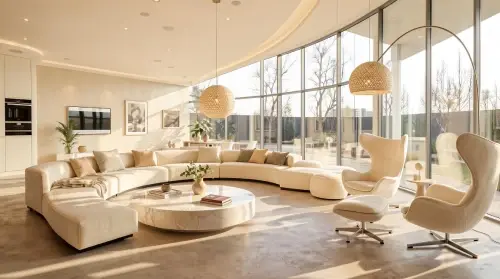
Minimalist Modernism interior style photorealistic render created with ArchiVinci AI Interior Design, featuring clean white walls, low-profile modern furniture, circular pendant lighting, and abundant natural daylight.

Urban Modernism

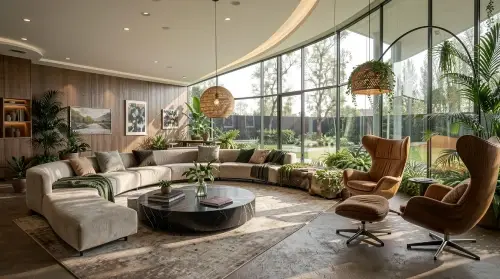
Urban Modernism interior style photorealistic render by ArchiVinci AI Interior Design, featuring sleek sofas, metal accents, dark wood flooring, and large city-view windows.

Transitional Style

Transitional interior style photorealistic living room render created with ArchiVinci AI Interior Design, mixing classic furniture forms with modern décor, soft lighting, and neutral color tones.

European Chic

European Chic interior style render created with ArchiVinci AI Interior Design, highlighting Parisian-style windows, elegant furnishings, muted pastel tones, and refined décor.

Southeast Oasis

Southeast Oasis interior style render generated with ArchiVinci AI Interior Design, showing tropical-inspired furniture, warm wood finishes, large windows, and greenery.

Wabi-Sabi Essence

Wabi-Sabi Essence Japanese interior style living room render created with ArchiVinci AI Interior Design, highlighting natural imperfections, earthy textures, raw wood elements, and minimalist aesthetics.

Contemporary Trends

Contemporary Trends interior style living room render by ArchiVinci AI Interior Design, highlighting sleek furniture, glass accents, modern chandeliers, and a balanced neutral color palette.

Industrial Forge

Industrial Forge loft-style interior render created with ArchiVinci AI Interior Design, showcasing exposed brick walls, steel beams, leather seating, and industrial pendant lighting.

Nature's Edge

Nature’s Edge interior style render by ArchiVinci AI Interior Design, showing natural textures, stone walls, wood finishes, indoor greenery, and earthy neutral furniture.

Eclectic Style

Eclectic Harmony interior style photorealistic living room render created with ArchiVinci AI Interior Design, combining bold purple and gold accents, mixed furniture, and striking contemporary décor.

Santorini Bliss

Santorini Bliss coastal interior style living room render with ArchiVinci AI Interior Design, featuring whitewashed walls, blue accent décor, light textiles, and open airy space.

Futuristic Vision

Futuristic Vision interior style render by ArchiVinci AI Interior Design, featuring neon accent lighting, futuristic curved furniture, glossy surfaces, and a high-tech aesthetic.

Creamy Delight

Creamy Delight interior style photorealistic render created with ArchiVinci AI Interior Design, showing a soft beige sofa set, light curtains, bright natural light, and creamy pastel décor tones.

Bohemian Oasis

Bohemian Oasis interior style render generated with ArchiVinci AI Interior Design, highlighting colorful patterned textiles, eclectic wooden furniture, lush indoor plants, and layered décor.

Art Deco Luxe

Art Deco Luxe interior style living room render generated with ArchiVinci AI Interior Design, featuring geometric décor patterns, gold accents, luxury lighting fixtures, and plush seating.

Country Comfort

Country Comfort interior style render by ArchiVinci AI Interior Design, featuring rustic wooden beams, cozy sofas, fireplace, and warm earthy tones for a homely feel.

Zen Japanese

Zen Japanese interior style living room render created with ArchiVinci AI Interior Design, showcasing tatami-inspired flooring, low wooden seating, shoji-style windows, and a minimalist natural atmosphere.

Retro Revival

Retro Revival interior style living room render generated with ArchiVinci AI Interior Design, showing vintage-inspired sofas, patterned rugs, bold warm tones, and wood-paneled walls.

Frequently Asked Questions (FAQ)

Can I generate interior designs for different room types like bedrooms, kitchens, or offices with AI?

Yes. ArchiVinci allows you to select the room type before rendering, such as living rooms, bedrooms, kitchens, bathrooms, home offices, or custom-defined spaces. This ensures the layout, furniture, and styling match the functional intent of the space.

AI Interior Design Tools vs Human Designers – Can they work together?

AI interior design tools and human designers are not in competition but in collaboration: AI speeds up ideation, visualization, and option testing, while designers bring context, creativity, and practicality, creating hybrid workflows where AI empowers professionals to focus on strategy, client needs, and final execution.

How accurate are the renders for interior spaces created by ArchiVinci’s AI?

ArchiVinci’s AI renders are visually realistic and reflect spatial logic, materiality, and lighting consistent with real interiors, delivering quality comparable to what is typically expected from professional online interior design tools. While they aren't dimensionally exact like CAD, they are ideal for concept visualization, moodboarding, or early-stage planning.

Can ArchiVinci be used for full-room AI interior design or just parts of a space?

Yes. ArchiVinci supports both full-room redesigns and partial updates. With the AI Interior Design Generator you can transform entire spaces, while the Modify Room Generator lets you selectively change elements like countertops, fabrics, or wall colors.

What room styles and aesthetics can the AI interior design tool generate?

You can generate a wide variety of interior styles including modern, minimalist, Scandinavian, industrial, bohemian, and coastal. You may also input your own custom prompt to generate niche or mixed-style interiors tailored to your vision.

How does ArchiVinci’s AI room design differ from basic AI image generators?

Unlike generic AI image tools, ArchiVinci is purpose-built for interior design. It understands spatial relationships, room functions, and furniture logic. The tool also allows for style prompts, render tuning, and consistent multi-view outputs.

Is it possible to render AI interiors from sketches or conceptual layouts?

Yes. You can upload freehand sketches, architectural layouts, or zoning diagrams. ArchiVinci interprets structure and layout to produce full AI-generated interiors that align with your initial concept.

Does ArchiVinci support batch rendering for multiple AI room designs at once?

Yes. The generator supports rendering up to four variations per prompt session. This allows users to explore multiple design directions for the same room type, layout, or style without starting from scratch.

Can AI-generated interior designs from ArchiVinci be used in real projects?

Yes, many users—interior designers, architects, homeowners—use ArchiVinci’s renders in client presentations, moodboards, and early-stage project planning. While not construction documents, the renders provide strong visual guidance.

How do I get the best results from Archivinci’s AI interior design generator?

Use clear input images or sketches, specify your room type, add descriptive style prompts, and choose the similarity level that fits your goal (e.g., Similar vs Creative). For refinement, pair the tool with ArchiVinci's advanced modules like Render Enhancer or Modify Room Generator.

What are the limitations of AI in interior design, and how can I work around them?

AI in interior design is great for fast idea generation and visuals, but it struggles with context, consistency, and technical accuracy—so the best workaround is to treat AI outputs as inspirational starting points, then refine them with real-world considerations, professional tools, and human judgment.

What Is AI Interior Design?

AI interior design is the process of using artificial intelligence to visualize, redesign, or improve interior spaces from images, sketches, renders, or 3D model screenshots. It helps users explore layouts, furniture arrangements, materials, colors, lighting, and interior styles without manual rendering or complex design software. 

It is also used for AI room design, online interior design visualization, and AI-generated interior design concepts for homes, apartments, and commercial spaces.

Why Choose AI Interior Design?

AI interior design helps you move from idea to visual much faster than traditional workflows. Instead of manually creating layouts, testing styles, and rendering scenes, you can generate realistic interior concepts in seconds from a single image.

Lower Design Exploration Costs

Traditional interior design and visualization workflows can become expensive, especially when you need multiple concepts, revisions, or staged visuals. AI interior design helps reduce the cost of early design exploration by letting you generate room ideas, furniture directions, and style options before committing to a full design process.

Faster Interior Design Results

Instead of waiting days or weeks to see different design directions, you can generate interior visuals in minutes. This makes it easier to test ideas quickly, compare styles, and move from inspiration to decision-making much faster.

More Design Variations

AI interior design gives you the freedom to explore multiple versions of the same space. You can test different layouts, colors, furniture styles, materials, and lighting conditions until you find the direction that works best.

Easier Iteration

If the first result is not exactly right, you can refine the prompt, change the lighting, add objects, or generate new variations. This makes the process more flexible than a single fixed concept.

Accessible for Everyone

You do not need advanced design software or rendering experience. A room photo, sketch, or render is enough to start exploring realistic interior design ideas.

How AI Interior Design Works

Using AI interior design does not require technical skills, 3D modeling knowledge, or previous design experience. With ArchiVinci, the process starts with a single image, such as a room photo, sketch, interior render, or model screenshot. That image becomes the base for a new design direction. You can then guide the result by choosing a render engine, adding objects, writing a prompt, selecting the lighting, and generating multiple visual options.

This makes it easy to design a room with AI from a real photo, rough sketch, or existing interior render.

1. Upload Your Input Image

Start by uploading the image you want to transform. This can be a real room photo, rough sketch, 3D model screenshot, or existing interior render. For better results, use a clear image where the room layout, walls, windows, and main furniture pieces are visible.

For photo-based workflows, ArchiVinci can turn a room photo into realistic interior design options while keeping the original space recognizable.

2. Choose a Render Engine

Select the AI model you want to use. ArchiVinci 4.0 and ArchiVinci 3.0 are ideal for realistic interior design results, while Nano Banana 2, GPT Image 2, Seedream 5.0 Lite, and Qwen Image 2 can help you explore alternative styles, visual directions, and quick design variations.

3. Add Objects If Needed

If you want to include extra elements, write them in the Add Object field. You can add furniture, plants, lighting, wall art, rugs, decor pieces, or other interior details. This is useful for AI furniture placement, room decoration, and testing how new objects fit into the existing layout.

4. Describe Your Design Direction in Prompt Field

Use the prompt field to explain what you want to create. You can describe the room style, colors, materials, mood, furniture type, or specific changes you want to see.

5. Select the Lighting Mood

Choose a lighting option that matches the atmosphere you want. Studio light works well for clean presentations, warm light creates a cozy feeling, golden hour adds drama, and daylight gives a bright realistic look.

6. Choose the Number of Images
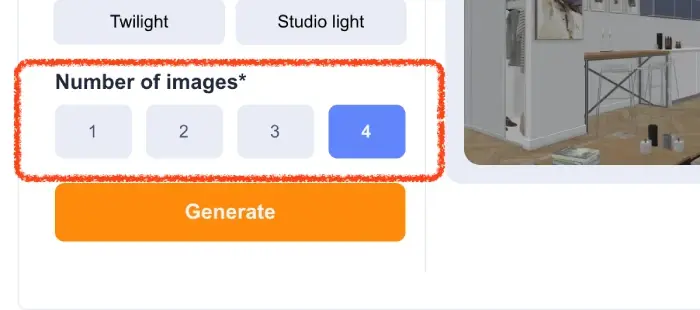
Select how many variations you want to generate. Creating multiple outputs helps you compare different interior design ideas from the same input.

7. Generate Your AI Interior Design Renders

Click Generate to create your interior visuals. ArchiVinci will use your image, selected engine, objects, prompt, and lighting choice to produce realistic interior design options based on your selected settings.

Who Can Benefit from AI Interior Design?

AI interior design can support different users at different stages of the design process, from early inspiration to client-ready visualization.

Interior Designers

Interior designers can quickly generate multiple room concepts, material directions, furniture styles, and layout ideas for clients. This helps speed up early ideation and makes it easier to compare different design options visually.

Architects

Architects can use AI interior renders to test spatial atmosphere, material palettes, lighting conditions, and interior concepts before moving into detailed visualization. It is especially useful for presentations, concept reviews, and early-stage client communication.

Real Estate Agents and Home Stagers

Real estate agents and home stagers can turn empty or outdated rooms into furnished, styled interiors. This makes listings more attractive and helps potential buyers understand how a space could look after furnishing or renovation.

Homeowners and DIY Renovators

Homeowners can explore interior ideas before buying furniture, repainting walls, or starting a renovation. AI interior design makes it easier to test styles, colors, layouts, and decor choices before making expensive decisions.

Design Students and Content Creators

Students and creators can use AI interior design to test ideas, build visual concepts, create portfolio images, and explore different styles without advanced rendering software.

Key Benefits of AI in Interior Design

Automating Design Tasks

AI interior design helps reduce repetitive visual tasks such as generating room concepts, testing styles, placing furniture, exploring color palettes, and creating design variations. This allows users to move faster from idea to visual direction without starting every concept manually.

Enhancing Creativity

AI interior design makes it easier to explore design ideas that may not come up in a traditional workflow. Users can test different interior styles, moods, materials, and furniture combinations in seconds, making the creative process more open and experimental.

Improving Efficiency

Instead of spending hours creating one visual option, users can generate multiple interior design directions from the same input image with AI interior design tool. This helps speed up early ideation, client discussions, moodboard creation, and design decision-making.

Reducing Errors

AI interior design can help maintain visual consistency by working from the uploaded room image, sketch, or render. It supports better alignment between the original space and the generated design direction, reducing mismatches in layout, proportion, and atmosphere during early visualization.

Supporting Human-AI Collaboration

AI interior design works best as a interior design assistant, not a replacement for human creativity. Designers, architects, and homeowners can use AI-generated interior visuals as starting points, then refine the best ideas with their own judgment, functional needs, and project context.

AI Interior Design for Different Room Types

AI interior design can be used for many types of spaces, from living rooms and bedrooms to kitchens, bathrooms, offices, and commercial interiors. Each room type has different functional needs, so the AI should generate results based on the purpose of the space, not only the visual style.

For example, a living room design may focus on seating, comfort, and atmosphere, while a kitchen design needs to consider cabinets, surfaces, lighting, and workflow. Bedroom interiors may prioritize calm colors and soft materials, while office interiors often require practical layouts and better focus zones.

AI Interior Design Features: What Makes Good an AI Interior Design Tool?

A good AI interior design tool should do more than generate visually appealing room images. It should help users understand, explore, and refine real spaces by combining image analysis, layout awareness, style control, realistic rendering, and fast visual iteration.

To achieve this, a strong AI interior design tool should include the following features:

  • A good AI interior design tool should understand the uploaded room image accurately by recognizing walls, windows, furniture, proportions, lighting, and existing architectural features.

  • It should preserve layout and spatial logic by understanding circulation, furniture placement, room function, and the relationship between objects instead of generating random designs.

  • It should support different room categories, including living rooms, bedrooms, kitchens, bathrooms, dining areas, offices, kids rooms, and custom interior spaces.

  • It should offer ready-to-use interior style directions such as modern, Scandinavian, industrial, minimalist, bohemian, traditional, contemporary, and mid-century.

  • It should give users control over the design direction through prompts, style options, materials, color palettes, furniture preferences, and mood descriptions.

  • It should help users explore color palettes by testing neutral tones, warm schemes, cool palettes, earthy colors, and material-based combinations.

  • It should allow object-level editing so users can add, remove, or replace specific elements such as furniture, lighting, flooring, wall art, decor, plants, and accessories.

  • It should allow users to define custom requirements, such as preferred furniture, materials, objects to add, elements to avoid, functional needs, or mood direction.

  • It should generate realistic materials and lighting with believable textures, shadows, reflections, surface finishes, and lighting options such as daylight, warm light, studio light, twilight, or golden hour.

  • It should support fast iteration and multiple variations by generating several design options from the same input, making it easier to compare styles, layouts, colors, furniture arrangements, and moods.

  • It should be simple to use while offering professional control so beginners can generate designs quickly, while designers, architects, and real estate teams can fine-tune results with prompts, object edits, lighting controls, render engines, and variation settings.

Tips for Getting the Best Results

Getting better AI interior design results depends on the quality of your input, the clarity of your prompt, and how well you guide the tool. A clean image, focused instructions, and controlled lighting choices usually lead to more realistic and consistent renders.

Start with a Clean Input Image

Upload a clear room photo, sketch, render, or model screenshot. Avoid screenshots with guides, grids, extra marks, toolbars, or visual noise, because the AI may treat them as part of the space. A clean image helps the tool read the room structure more accurately.

Use a Short and Clear Prompt

Keep your prompt focused on the main design goal. Instead of writing a long paragraph, describe the most important style, material, object, or mood. 

For example: “warm modern living room, beige sofa, oak wood, soft daylight.”

Be Specific About Objects

If you want to add or replace something, name it clearly. You can write prompts like “add a modern sofa on the right,” “replace the dining table with a round wooden table,” or “add plants near the window.” Specific object instructions usually give more controlled results.

Choose Lighting Intentionally

Lighting changes the mood and realism of the result. Use daylight for bright realistic interiors, warm light for cozy spaces, studio light for clean presentations, twilight for softer evening scenes, and golden hour for a more dramatic atmosphere.

Keep Layout Goals Clear

Decide whether you want to preserve the original room or explore a more creative redesign. If you need a realistic transformation of the same space, keep the prompt controlled and avoid asking for too many major changes at once.

Generate Multiple Variations

Create several outputs from the same input when comparing styles, furniture arrangements, or moods. Multiple variations help you see which direction works best before refining the final result.

Refine Step by Step

Use the first result as a starting point. Adjust the prompt, lighting, objects, or render engine to improve the design. Small changes usually produce better results than trying to solve everything in one generation.

AI Home Design vs AI Interior Design

AI home design and AI interior design are closely related but serve different purposes within the design process. While both use artificial intelligence to generate visual concepts and design ideas, they focus on different scales of the project. AI home design covers the entire property. This includes exterior design, architectural concepts, floor plans, site layout, landscaping, and overall house form. It is typically used in early-stage planning when exploring how a building should look, how spaces are organized, and how the house fits into its environment.

AI interior design focuses specifically on indoor spaces. It is used to redesign rooms, test furniture arrangements, explore materials and colors, adjust lighting, and create realistic interior visuals for presentations or decision-making. It works directly with room photos, sketches, or renders and helps refine how a space looks and feels inside.

If your goal is to redesign a room, test different interior styles, or visualize furniture and materials, AI interior design is the more precise and practical approach. If you want to explore the full house, including architecture, layout, and exterior appearance, AI home design is the broader category.

Key Differences

Aspect

Scope

Focus

Inputs

Output

Use Case

Detail Level

Users

AI Interior Design

Indoor spaces only

Rooms, furniture, decor, materials, lighting

Room photos, sketches, interior renders

Interior renders, room redesigns, styled spaces

Room redesign, visualization, presentation

More detailed at room level

Interior designers, homeowners, real estate

AI Home Design

Full property (inside + outside)

Architecture, exterior, layout, site planning

Floor plans, site plans, massing, exterior images

House concepts, exterior visuals, layouts

Early planning, concept development

Broader, conceptual

Architects, developers, planners

When to Use Each

  • Use AI interior design when you want to redesign a room, test furniture placement, explore styles, or create realistic interior visuals from an existing space.

  • Use AI home design when you are planning a house, exploring architectural ideas, testing layouts, or visualizing the exterior and overall structure.

AI Interior Design Use Cases

AI interior design is used to solve practical design tasks, from redesigning a single room to preparing visuals for presentations or listings. It helps users quickly explore options, test decisions, and communicate ideas visually without complex tools. 

Common use cases include:

Redesigning Existing Rooms

Upload a room photo and explore different interior styles, furniture arrangements, materials, and lighting conditions. This is useful for homeowners, designers, and renovators who want to see how a space could look before making changes.

Furniture Placement and Layout Planning

Test different furniture arrangements, seating layouts, and circulation flows. AI helps evaluate how objects fit within the space and whether the layout feels balanced and functional.

Interior Design from Sketches or Concepts

Turn rough sketches, layout ideas, or early concepts into realistic interior visuals. This is useful in early design stages when detailed 3D models are not available.

Interior Design from Floor Plans

Turn 2D floor plans into more understandable interior visuals and styled room concepts. This helps clients better understand technical drawings and spatial relationships.

Virtual Staging for Real Estate

Transform empty or outdated rooms into fully furnished interiors. This helps real estate agents present properties more effectively without physical staging.

Before and After Visualizations

Create visual transformations that show how a room changes from its original state to a redesigned interior. This is useful for presentations, marketing, and design storytelling.

AI Interior Design from Empty Rooms

Upload an empty space and generate furnished interior concepts. This is useful for rentals, new homes, unfinished properties, and listing visuals.

Style Exploration and Mood Testing

Generate multiple versions of the same room in different styles, such as modern, Scandinavian, industrial, minimalist, or bohemian. This helps users compare design directions before choosing one.

Material and Finish Testing

Compare different materials such as wood, marble, fabric, concrete, metal, paint colors, flooring, and wall finishes within the same space.

Interior Design for Small Spaces

Test layout and furniture solutions for compact rooms, studio apartments, narrow spaces, or multi-functional interiors where space optimization matters.

Rental and Short-Term Stay Styling

Create visually appealing interior concepts for rental properties and short-term stays. AI interior design helps furnish empty or outdated spaces, define a clear style, and present the property in a more attractive way for listings and guests.

Commercial Interior Design

Generate concepts for offices, cafes, restaurants, retail stores, hotel rooms, co-working spaces, and other commercial interiors.

Client Presentations and Visual Communication

Create realistic interior renders that help clients understand design ideas more easily than technical drawings or moodboards.

Renovation and Pre-Purchase Decisions

Test materials, colors, furniture, and layout ideas before starting a renovation or buying new items. This helps reduce uncertainty before making costly decisions.

Product Visualization for Furniture and Decor

Place furniture, lighting, rugs, or decor products inside realistic room scenes for catalogs, e-commerce, ads, or product marketing.

Frequently Asked Questions (FAQ)

Can AI do interior design?

Yes. AI can support interior design by generating room concepts, testing layouts, suggesting furniture and materials, and creating realistic interior visuals. It works best as a tool for ideation and visualization rather than replacing professional design decisions.

How is AI technology applied in interior design?

AI technology is applied in interior design by analyzing room images, layout structure, furniture placement, materials, lighting, and user prompts to generate realistic design options. It can support space planning, style exploration, color and material testing, virtual staging, lighting simulation, and photorealistic interior rendering.

How do I design my room with AI for free?

Start by uploading a room photo, sketch, or render, then describe the style, furniture, colors, and lighting you want. Tools like ArchiVinci 3 free credits so users can test the AI interior design workflow before choosing a paid plan.

How much does AI interior design cost?

The cost of AI interior design depends on the tool and features offered. Many platforms provide a free version or trial with limited generations, while paid plans typically range from around $20 to $100 per month depending on rendering quality, credits, and advanced features.

ArchiVinci offers individual subscriptions, one-time payment options, and team plans. Its plans are not limited to a single module, so users can access multiple AI rendering and design tools under the same plan. For full details, check our Pricing page.

Do I need design experience to use AI interior design?

No. You can upload an image, write a simple prompt, choose lighting or style options, and generate interior design visuals without 3D modeling or rendering experience.

What inputs can I use for AI interior design?

You can use room photos, sketches, interior renders, floor plans, or 3D model screenshots as input for AI interior design.

What image formats does the AI interior design module support?

The AI interior design module works with standard image files like JPG and PNG. For more consistent results, use a bright, high-quality image that clearly shows the room layout and key elements.

Can I create AI interior design from a photo or sketch?

Yes. ArchiVinci can turn room photos, rough sketches, hand-drawn layouts, and concept drawings into realistic AI interior design renders.

What room types can AI interior design generate?

AI interior design can generate living rooms, bedrooms, kitchens, bathrooms, dining rooms, offices, kids rooms, apartments, and custom indoor spaces.

What interior styles can AI interior design module generate?

ArchiVinci AI interior design module can generate modern, Scandinavian, minimalist, industrial, bohemian, contemporary, traditional, mid-century, Japandi, coastal, luxury, and many other interior styles.

Users can also define custom styles in the prompt field, allowing them to generate niche, mixed, or highly specific interior design directions beyond predefined categories.

Can AI interior design generator help with room layout and furniture placement?

Yes. AI interior design generator can help test room layouts, furniture arrangements, seating plans, storage positions, circulation paths, and functional zones.

Can AI redesign only part of a room?

Yes. You can redesign a full room or update selected elements such as furniture, flooring, wall colors, decor, lighting, plants, or accessories.

Can AI interior design tool suggest colors, materials, and lighting ideas?

Yes. AI interior design can help explore color palettes, materials, finishes, and lighting moods such as daylight, warm light, ambient light, twilight, and golden hour.

Does ArchiVinci Interior AI module generate multiple room design options?

Yes. Interior AI module can generate multiple AI room design variations from the same input so users can compare different styles, layouts, colors, and furniture options.

How accurate are AI interior design renders?

AI interior renders are visually realistic and useful for moodboards, concepts, presentations, and early planning, but they aren’t technical CAD drawings.

Will my AI interior design renders contain any artefacts?

AI-generated interior designs can sometimes include minor artefacts, such as small distortions in objects, textures, or fine details. These are more common in complex scenes or when the input image is unclear.

With a clean input image, clear prompts, and controlled settings, most results are highly realistic. If artefacts appear, they can usually be improved by refining the prompt, adjusting objects or lighting, or generating a new variation.

Can I take a picture of a room and redesign it?

Yes. You can upload a photo of your room and use AI interior design to generate new versions of the same space. The ArchiVinci AI reads the layout, furniture, and lighting, then redesigns the room based on your selected style, materials, and prompt.

Can AI interior design generate realistic room renders?

Yes. AI interior design can generate realistic room renders with believable materials, lighting, shadows, textures, and spatial atmosphere.

Can AI interior design be used for renovation planning?

Yes. AI can help test materials, colors, layouts, furniture, and lighting before renovation decisions are made.

Is AI interior design useful for homeowners?

Yes. Homeowners can use AI interior design to test furniture, colors, materials, lighting, and room styles before renovating or buying new items.

Can AI interior design be used for real estate?

Yes. AI interior design can be used for virtual staging, helping empty or outdated listings look furnished, styled, and easier to understand.

Can AI interior design be used for commercial spaces?

Yes. AI can generate interior concepts for offices, restaurants, cafes, retail stores, hotels, co-working spaces, and other commercial environments.

Can AI interior design be used for moodboards and client presentations?

Yes. AI-generated interiors can support moodboards and client presentations by turning abstract ideas into realistic room visuals.

Can AI interior design help me decorate my room?

Yes. AI interior design can help you decorate your room by testing furniture, wall colors, rugs, lighting, plants, artwork, and decor styles before making real changes. You can upload a room photo and explore different design directions visually.

Can AI interior design generate home decor ideas?

Yes. AI interior design can generate home decor ideas based on your room image, preferred style, color palette, materials, and mood. It can suggest visual directions for furniture, accessories, lighting, wall decor, and overall room atmosphere.

Can AI interior design support product visualization?

Yes. Furniture and decor brands can use AI interior design to place products inside realistic room scenes for catalogs, ads, or e-commerce visuals.

Can AI interior design create before-and-after visuals?

Yes. AI interior design can create before-and-after room transformations by comparing the original input with the generated redesign.

Can AI interior design be used online?

Yes. ArchiVinci is browser-based and provides cloud rendering, so users can generate AI interior design renders online without installing software or setting up a GPU.

What sets ArchiVinci AI interior design module apart from other tools?

ArchiVinci is built specifically for interior and architectural visualization, not general image generation. It understands room structure, furniture placement, spatial relationships, and lighting conditions, allowing it to generate more realistic and context-aware interior designs.

It also provides more control through render engines, object-level editing, prompt guidance, and multiple variations, making it suitable for both quick ideation and more precise design exploration.

Can AI interior design replace an interior designer?

No. AI interior design is best used as an online interior design assistant. It speeds up ideation and visualization, while human designers still guide strategy, function, taste, and final execution.

What is the best AI interior design app?

The best AI interior design app should deliver accurate, photorealistic results, preserve room layout and geometry, and generate renders fast without complex setup.

ArchiVinci stands out as a strong option because it offers the most accurate AI renderer on the market, combining render precision, speed, and flexibility in one platform. It produces photorealistic interior renders in seconds while preserving material textures, surface details, and spatial structure.

A functional image for processing watermarks
bottom of page