Aggiornato il: 16 dicembre 2025
Progettazione spaziale determina il modo in cui le persone si muovono, si sentono e interagiscono negli ambienti costruiti. Integra forma, funzione, esperienza sensoriale e comportamento umano per creare spazi che supportano le attività quotidiane. Quando i progettisti coordinano volume, circolazione, luce e materiali, producono spazi che funzionano sia praticamente che esperienzialmente. In altre parole, l'ambiente costruito diventa un framework strutturato che guida il comfort e le prestazioni.
Questa guida introduce i concetti fondamentali della progettazione spaziale e spiega cosa i lettori troveranno nelle sezioni successive. Inizia con definizioni essenziali e prosegue con esempi interni ed esterni. In seguito, il testo esamina fattori progettuali fondamentali, strumenti analitici e deliverable professionali. Le sezioni successive esplorano la tecnologia, i trend e le opportunità di carriera che influenzano la pratica contemporanea.
Che cos'è la Progettazione Spaziale?
La progettazione spaziale è una disciplina concettuale che integra forma e funzione per organizzare gli spazi intorno al movimento, all'uso e all'esperienza dell'utente. Attinge da architettura, interior design, paesaggistica, exhibition design e pianificazione urbana. I professionisti considerano il comportamento, l'ergonomia, il contesto culturale, la sostenibilità e le esigenze operative per supportare le attività con chiarezza ed efficienza. L'obiettivo è allineare la logica spaziale alle aspettative umane.
Per illustrare, immagina di entrare in una biblioteca dove la luce soft ti guida verso zone di studio più tranquille prima ancora di notare l'arrangiamento della scaffalatura. Questa coreografia sottile risulta da una pianificazione spaziale intenzionale. I progettisti spaziali organizzano volume, transizioni e circolazione per supportare l'orientamento e il comfort. In pratica, ciò richiede la collaborazione con architetti, ingegneri, ricercatori e artigiani per assicurare che ogni decisione contribuisca a un tutto coerente.
Componenti Chiave della Progettazione Spaziale
La progettazione spaziale si basa su diversi componenti fondamentali che determinano il funzionamento degli ambienti e il modo in cui gli utenti li sperimentano. Ogni componente contribuisce alla chiarezza, al comfort e alle prestazioni in diversi contesti spaziali.
Forma e Volume
Forma e volume definiscono la logica strutturale di un ambiente e influenzano il modo in cui gli utenti percepiscono l'incapsulamento o l'apertura. Stabiliscono il ritmo spaziale e determinano come un'area transisce in quella successiva.
Un ingresso di museo che si apre in un atrio alto dimostra come il volume espanso può creare orientamento e impatto. Le gallerie adiacenti più piccole quindi spostano l'atmosfera verso l'intimità e la concentrazione, guidando gli utenti attraverso una sequenza calibrata di esperienze.
Modelli di Circolazione
La circolazione descrive il modo in cui le persone si muovono nello spazio e il modo in cui questi percorsi comunicano chiaramente la direzione. Quando i percorsi di movimento sono intuitivi, gli utenti navigano con fiducia e ridotto carico cognitivo.
In un ospedale, le stanze di trattamento posizionate vicino ai corridoi principali illustrano come una circolazione ben organizzata può ridurre le distanze di percorrenza e rafforzare l'efficienza operativa.
Zonizzazione e Gerarchia
La zonizzazione organizza le attività in raggruppamenti intenzionali, mentre la gerarchia stabilisce quali spazi funzionano come ancoraggi o zone secondarie. Insieme aiutano gli utenti a formare aspettative accurate prima di entrare in uno spazio.
Un ufficio che posiziona i hub collaborativi lontano dalle aree tranquille illustra come la zonizzazione riduce la propagazione del rumore e migliora la concentrazione. Gli utenti comprendono istintivamente quali comportamenti appartengono a quale luogo.
Luce e Materiale
La luce modella l'atmosfera, la profondità e la visibilità, mentre il materiale influenza la texture, il calore e l'acustica. La loro interazione definisce gran parte del carattere di uno spazio.
Una biblioteca che combina la luce naturale diffusa con finiture in legno tenero mostra come questi elementi possono produrre un'atmosfera stabile e calma. Il materiale assorbe il suono in eccesso, mentre la luce controllata incoraggia la lettura e la concentrazione.
Tali combinazioni dimostrano che le decisioni relative a luce e materiale non sono mai isolate; si rafforzano a vicenda per modellare l'esperienza sensoriale.
Ergonomia e Antropometria
L'ergonomia si concentra sul comfort e sulla facilità d'uso, e l'antropometria fornisce i dati del corpo umano necessari per dimensionare correttamente gli elementi. Questi principi ancorano il progetto alla realtà fisica.
Gli spazi di lavoro progettati con altezze corrette della scrivania, portate di accesso e spazi di circolazione adeguati riducono l'affaticamento e supportano un uso più lungo e più sano. Anche piccoli aggiustamenti nelle dimensioni possono migliorare significativamente il comfort.
Strategie Ambientali
Le strategie ambientali affrontano la luce naturale, la circolazione dell'aria, il comportamento acustico e l'equilibrio termico. Queste condizioni influenzano il benessere e sostengono prestazioni durature.
Un'aula con ventilazione naturale controllata e pannelli acustici illustra come le misure ambientali possono migliorare direttamente l'insegnamento e l'apprendimento. Gli studenti rimangono confortevoli, attenti e meno colpiti dal rumore esterno.
Quando queste strategie sono coordinate anticipatamente, riducono i carichi meccanici e rafforzano i risultati di sostenibilità nel ciclo di vita dell'edificio.
Analisi spaziale
L'analisi spaziale valuta adiacenza, visibilità, flussi e prestazioni all'interno di un layout. Aiuta i progettisti a testare come uno spazio si comporta prima di essere realizzato.
Gli ambienti commerciali spesso analizzano i modelli di movimento dei clienti per riposizionare le vetrine o i percorsi di circolazione. Questo approccio basato sui dati supporta una navigazione più chiara e aumenta il coinvolgimento degli utenti.
Di conseguenza, l'analisi spaziale diventa uno strumento decisionale che collega l'intuizione alla conoscenza misurabile, migliorando sia l'efficienza che l'esperienza.
Come differisce la progettazione spaziale dalla progettazione d'interni?
La progettazione d'interni si concentra su finiture, arredamenti, colore e carattere visivo all'interno di ambienti chiusi. La progettazione spaziale affronta un quadro più ampio che include flussi, proporzioni e relazioni volumetriche. Tratta lo spazio come un sistema che guida l'esperienza da un'area all'altra.
Di conseguenza, la progettazione spaziale opera più vicino al pensiero architettonico.
La progettazione d'interni migliora l'atmosfera, mentre la progettazione spaziale modella la struttura, la logica sensoriale e le prestazioni a lungo termine. Questa distinzione è importante perché un'organizzazione spaziale ben pianificata può migliorare l'orientamento, ridurre lo stress e supportare migliori interazioni sociali.
In pratica, la progettazione spaziale stabilisce il fondamento che la progettazione d'interni successivamente affina.
Esempi di Progettazione Spaziale
La progettazione spaziale si manifesta in una vasta gamma di ambienti, ognuno dei quali richiede una risposta distinta alle esigenze degli utenti, al contesto e alla funzione. Questi esempi illustrano come i progettisti traducono i principi fondamentali in strategie spaziali pratiche e significative.
Ambienti Interni
Gli ambienti residenziali organizzano zone living, dining e riposo per creare chiarezza, comfort e flusso funzionale nelle routine quotidiane.
Gli interni commerciali per uffici, spazi retail, hotel e ristoranti rafforzano l'identità del brand mentre supportano operazioni efficienti e un coinvolgimento positivo degli utenti.
Gli edifici pubblici come musei e teatri guidano le persone attraverso sequenze spaziali variegate che accolgono molteplici attività e tipologie di visitatori.
Strutture sanitarie danno priorità alla sicurezza, al comfort dei pazienti e alla circolazione fluida del personale per migliorare sia l'esperienza che le prestazioni operative.
Spazi educativi utilizzano la luce naturale, layout adattabili e zonizzazione chiara per supportare la concentrazione, la collaborazione e metodi di apprendimento flessibili.
Luoghi di intrattenimento come cinema e sale concerti creano esperienze immersive attraverso illuminazione controllata, acustica e forme spaziali scolpite.
Ambienti esterni
Spazi paesaggistici come parchi, cortili e giardini bilanciano il valore ecologico con l'usabilità, offrendo luoghi per il riposo, la socializzazione e la ricreazione.
Ambienti urbani inclusi piazze, vie pedonali e fronti d'acqua incoraggiano l'interazione, la percorribilità e l'identità civica.
Aree ricreative come parchi giochi e campi sportivi sono strutturate per promuovere attività, sicurezza e partecipazione inclusiva.
Hub di trasporto coordinano percorsi, visibilità e accessibilità per supportare il movimento intuitivo e ridurre la congestione.
Sviluppi commerciali integrano la circolazione esterna, zone sociali e wayfinding per creare ambienti coesi e accoglienti per visitatori e inquilini.
Spazi civici circostanti istituzioni governative o culturali esprimono l'identità della comunità e rafforzano il ruolo simbolico di questi edifici.
Queste scene dimostrano come la progettazione spaziale si adatta a contesti diversi mantenendo un focus coerente su funzione, esperienza e logica ambientale.
Fattori chiave da considerare nella progettazione spaziale
La progettazione spaziale efficace dipende da una serie di fattori fondamentali che modellano il funzionamento degli ambienti, il supporto agli utenti e la comunicazione del significato. Queste considerazioni guidano le decisioni nel corso del processo progettuale e aiutano a garantire che gli spazi rimangano sia funzionali che coinvolgenti.
Funzionalità
La funzionalità garantisce che gli spazi supportino le attività previste senza attriti inutili. I progettisti valutano i comportamenti comuni, le esigenze operative e i modelli di utilizzo mentre definiscono il layout.
Quando la funzionalità è ben integrata, gli utenti si muovono più naturalmente e l'ambiente supporta i compiti piuttosto che ostacolarlo.
Chiarezza estetica
La chiarezza estetica combina forma, colore e composizione per creare un linguaggio visivo coerente. Questo influenza non solo l'aspetto, ma anche l'orientamento e il comfort emotivo.
Gli spazi che mantengono l'ordine visivo risultano più intuitivi da navigare. La chiarezza aiuta gli utenti a comprendere quali comportamenti appartengono a ciascuna zona.
Disposizione spaziale
La disposizione spaziale organizza le relazioni tra funzioni, percorsi di circolazione e zone di attività. L'obiettivo è guidare il movimento in modo che risulti senza sforzo.
Quando i layout riducono i attraversamenti non necessari o i vicoli ciechi, gli utenti sperimentano transizioni più fluide. Questo contribuisce a un senso di continuità che rafforza la logica spaziale.
Scala e proporzione
Scala e proporzione definiscono il rapporto di uno spazio con il corpo umano. Quando le dimensioni si allineano con le aspettative umane, il comfort aumenta.
I volumi ampi possono comunicare apertura e attività condivisa, mentre le proporzioni più ridotte favoriscono l'intimità. I progettisti equilibrano questi effetti per modellare l'atmosfera e l'identità spaziale.
Illuminazione
L'illuminazione controlla la visibilità, l'atmosfera e la profondità. La luce naturale fornisce variazione e orientamento, mentre l'illuminazione artificiale regola finemente l'intensità e la messa a fuoco.
Una strategia di illuminazione ben ponderata supporta sia il comfort che la funzionalità. Guida l'attenzione visiva e chiarisce le transizioni tra le zone.
Materiali e finiture
I materiali influenzano il comportamento tattile e acustico mentre modellano il tono emotivo di uno spazio. Le finiture durevoli e ben abbinate supportano le prestazioni a lungo termine.
La scelta della palette di materiali influenza anche l'identità. Le superfici calde possono invitare la calma, mentre le texture riflettenti introducono energia e vivacità.
Accessibilità
L'accessibilità garantisce che gli ambienti siano utilizzabili da persone con diverse capacità fisiche. Questo include una circolazione chiara, spazi liberi appropriati e una navigazione intuitiva.
Quando l'accessibilità è integrata sin dall'inizio, lo spazio diventa più inclusivo e affidabile per tutti gli utenti.
Impatto Ambientale
Le considerazioni ambientali affrontano il consumo energetico, la ventilazione, l'acustica e la sostenibilità dei materiali. Queste decisioni influenzano sia le prestazioni dell'edificio che la salute degli utenti.
I progettisti spesso valutano l'esposizione solare, la circolazione dell'aria e il comfort termico nelle fasi iniziali. Questo porta a soluzioni che riducono l'impatto ambientale migliorando il benessere.
Comfort Psicologico
Il comfort psicologico riguarda la privacy, la sicurezza e l'agio emotivo. Elementi come i livelli di rumore controllati, l'apertura equilibrata e le soglie ben progettate influenzano come gli utenti si sentono.
Gli spazi che supportano il comfort mentale incoraggiano un coinvolgimento più lungo e positivo. Stabiliscono il tono per il comportamento e l'interazione sociale.
Allineamento Contestuale
L'allineamento contestuale garantisce che uno spazio risponda significativamente al suo contesto culturale, storico e geografico. Questo rafforza l'autenticità e la connessione.
Quando le scelte progettuali riflettono l'identità locale, gli utenti sperimentano un senso di appartenenza. L'ambiente sembra radicato piuttosto che imposto.
Questi fattori operano collettivamente per creare ambienti chiari, funzionali e significativi. Quando affrontati consapevolmente, la progettazione spaziale diventa uno strumento per migliorare l'esperienza umana e definire il carattere del mondo costruito.
Comprendere la pianificazione dello spazio nella pratica
La pianificazione dello spazio è centrale nella progettazione spaziale perché organizza le attività all'interno di una superficie definita. Supporta la circolazione, l'adiacenza, la visibilità e le relazioni ergonomiche. I progettisti valutano come stanze, arredi e zone interagiscono, quindi perfezionano i layout per migliorare la chiarezza. In pratica, una pianificazione equilibrata porta a una maggiore efficienza e comfort.
Consideriamo un piano ufficio dove le sale riunioni si trovano troppo distanti dalle aree di lavoro. Questo arrangiamento può sembrare innocuo, ma nel tempo crea frustrazione e riduce la produttività. La pianificazione dello spazio previene tali problemi testando molteplici configurazioni e confrontando i loro pregi. Pertanto, il processo assicura che le decisioni supportino sia l'esperienza che le prestazioni.
Primi passi quando si inizia un processo di pianificazione
La fase iniziale di un processo di pianificazione stabilisce le fondamenta per tutte le successive decisioni progettuali. Una definizione chiara e un'analisi strutturata in questa fase sono fondamentali per assicurare che lo spazio funzioni efficacemente e sia allineato sia alle esigenze degli utenti che agli obiettivi del progetto.
I primi passi tipici includono:
Definire gli obiettivi del progetto, le attività primarie e l'ambito generale
Raccogliere misurazioni accurate e revisionare le condizioni esistenti del sito o dell'interno
Valutare i modelli di comportamento degli utenti e i requisiti funzionali
Analizzare i vincoli contestuali e le opportunità relative al sito o all'edificio
Ricercare progetti comparabili, benchmark e standard rilevanti
Stabilire criteri per la flessibilità, la sostenibilità e l'accessibilità
Consolidare i risultati in un documento di briefing chiaro e strutturato
Insieme, questi passaggi creano un framework affidabile per lo sviluppo spaziale consapevole, supportando la pianificazione efficiente, il processo decisionale coordinato e le prestazioni a lungo termine.
Principi di Layout Funzionale
Un layout funzionale organizza lo spazio affinché le attività possano svolgersi agevolmente e senza interruzioni inutili. I progettisti stabiliscono una zonizzazione chiara basata sulle relazioni d'uso, assicurando che le funzioni correlate siano posizionate l'una vicino all'altra. I percorsi di circolazione sono strutturati per supportare il movimento intuitivo e per minimizzare i conflitti tra utenti, servizi e arredi.
I layout efficaci dipendono anche dalla disposizione dei mobili che supporta sia il comfort che il flusso operativo. I mobili dovrebbero rafforzare la circolazione piuttosto che ostacolarla, permettendo agli utenti di navigare l'ambiente in modo efficiente. Quando il movimento e l'uso sono ben allineati, le persone trascorrono meno tempo a superare ostacoli spaziali e più tempo dedicandosi alle loro attività previste.
Le soluzioni di stoccaggio ben integrate svolgono un ruolo critico nel mantenere la chiarezza e l'usabilità. Riducendo il disordine visivo e fisico, lo stoccaggio supporta un'organizzazione spaziale più ordinata e migliora la funzionalità quotidiana. In parallelo, strategie di pianificazione flessibili come elementi modulari o zone adattabili permettono agli spazi di rispondere a esigenze mutevoli nel tempo.
Infine, l'accessibilità è un principio fondamentale della progettazione di layout funzionali. Gli spazi liberi, le zone di raggiungimento e i percorsi privi di ostacoli garantiscono che tutti gli utenti possano muoversi in modo indipendente e confortevole. Quando l'accessibilità viene considerata insieme alla circolazione, alla flessibilità e allo stoccaggio, l'ambiente risultante funziona in modo affidabile nelle condizioni quotidiane e supporta un'ampia gamma di utenti.
Strumenti Analitici per Organizzare lo Spazio
Gli strumenti analitici aiutano a chiarire come gli ambienti si comportano nella pratica rivelando i pattern che influenzano il flusso, la percezione e l'accesso. I progettisti si affidano a questi strumenti per testare ipotesi, affinare layout e migliorare le prestazioni spaziali prima dell'implementazione. Sia i metodi analogici che digitali svolgono un ruolo nel tradurre l'intento spaziale in organizzazione funzionale.
La zonizzazione organizza le funzioni correlate in gruppi chiari, mentre la pianificazione dell'adiacenza valuta quali spazi dovrebbero essere posizionati l'uno vicino all'altro per supportare un uso efficiente. La gerarchia spaziale identifica le aree primarie, secondarie e di supporto, aiutando gli utenti a comprendere l'orientamento e la sequenza.
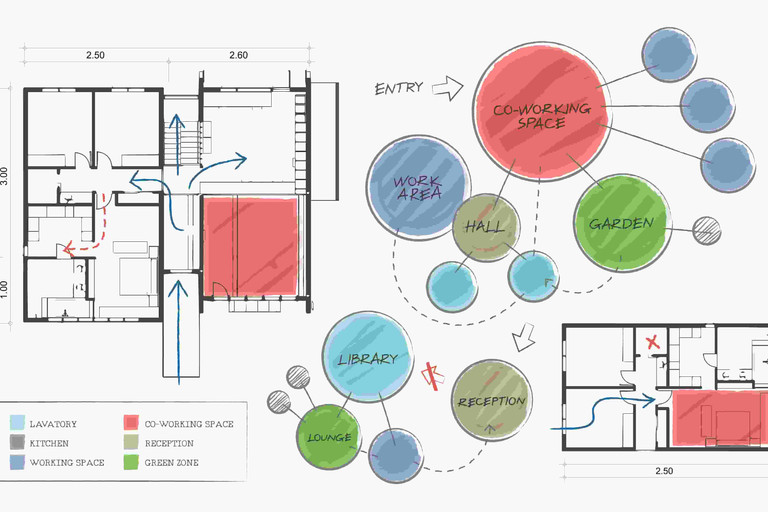
Questi principi sono spesso esplorati attraverso matrici di adiacenza e diagrammi a bolle, e supportati digitalmente utilizzando strumenti come AutoCAD, Revit e ArchiCAD, dove le relazioni spaziali possono essere testate e regolate sistematicamente.
Zonizzazione, Adiacenza e Gerarchia Spaziale
La zonizzazione divide gli ambienti secondo il tipo di attività, riducendo i conflitti e rafforzando la chiarezza. La pianificazione dell'adiacenza definisce le relazioni funzionali e supporta l'efficienza operativa, in particolare in ambienti complessi come uffici, strutture sanitarie e edifici educativi.
La gerarchia spaziale contribuisce a leggibilità e orientamento, consentendo agli utenti di comprendere dove si trovano e dove possono spostarsi successivamente. Queste relazioni sono spesso visualizzate attraverso strumenti di pianificazione schematica e flussi di lavoro basati su diagrammi in piattaforme come Revit e Rhino.
Diagrammi e Valutazione Volumetrica
I diagrammi semplificano idee spaziali complesse illustrando percorsi, nodi e transizioni. I diagrammi di circolazione aiutano a identificare i colli di bottiglia e informano i miglioramenti del layout, mentre la valutazione volumetrica esamina altezza, larghezza e profondità per valutare il comfort, l'accesso alla luce naturale e il comportamento acustico.
I progettisti utilizzano spesso Rhino con Grasshopper per studi volumetrici, e SketchUp per l'esplorazione rapida dei volumi. Insieme, l'analisi basata su planimetrie e volumetrica rivela come l'organizzazione spaziale funziona sia nelle dimensioni orizzontali che verticali.
Atmosfera, Materialità e Percezione
L'atmosfera emerge dall'interazione di luce, materiale, suono e temperatura. I progettisti regolano questi elementi per supportare attività specifiche e risposte emotive. Ad esempio, uno spazio di studio può dare priorità all'illuminazione attenuata e alle superfici fonoassorbenti, mentre un ambiente commerciale può richiedere condizioni più luminose e un contrasto visivo più elevato.
La visualizzazione e i test dei materiali sono spesso supportati da strumenti di rendering come Enscape, V-Ray e Lumion per visualizzare in anteprima l'atmosfera spaziale.
La materialità influenza fortemente la percezione tattile e visiva. I materiali da costruzione come calcestruzzo, legno, pietra e metallo trasmettono ciascuno qualità distinte e influenzano il modo in cui lo spazio viene esperito. L'espressione materica guida l'attenzione, supporta l'identità e, se combinata con l'illuminazione controllata, arricchisce la percezione spaziale complessiva.
Luce, Materialità e Atmosfera Architettonica
La luce naturale plasma il carattere spaziale durante il giorno, influenzando l'orientamento e l'umore. I progettisti posizionano aperture, lucernari e corti per gestire la luminosità e il contrasto. L'interazione tra luce e materiale è spesso testata utilizzando simulazioni di luce naturale e rendering all'interno di strumenti come Revit, DIALux o motori di visualizzazione in tempo reale.
Le superfici dei materiali influenzano il modo in cui la luce si comporta all'interno di uno spazio. Le finiture ruvide diffondono la luce, mentre le superfici lisce la riflettono, permettendo ai progettisti di controllare la profondità, l'enfasi e l'atmosfera attraverso una selezione consapevole dei materiali.
Colore, Progettazione Sensoriale e Spazi di Transizione
Il colore influisce sull'emozione, l'attenzione e la chiarezza spaziale, ed è frequentemente utilizzato per definire zone e assistere l'orientamento. I principi della psicologia del colore spiegano come diverse tonalità influenzano la percezione, l'umore e la risposta comportamentale, permettendo ai progettisti di guidare l'esperienza emotiva all'interno di uno spazio. La progettazione sensoriale integra suono e tatto per migliorare il comfort, in particolare negli ambienti che richiedono concentrazione o calma.
Gli spazi di transizione aiutano gli utenti ad adattarsi tra diverse condizioni, come il passaggio da aree pubbliche luminose a zone private più tranquille. I cambiamenti graduali nella temperatura del colore, nella saturazione e nel tono del materiale supportano questa transizione psicologica riducendo lo shock sensoriale e rafforzando la leggibilità spaziale. Queste qualità sono sempre più testate attraverso strumenti di visualizzazione immersiva, inclusi ambienti VR e percorsi in tempo reale.
Progressi Tecnologici nella Progettazione Spaziale
I progressi tecnologici nella progettazione spaziale introducono nuovi modi per analizzare, testare e visualizzare gli ambienti prima che vengano costruiti. Questi sviluppi riducono l'incertezza e supportano decisioni più consapevoli in tutto il processo progettuale.
Ampliando il modo in cui le prestazioni spaziali e l'esperienza dell'utente vengono valutate, la tecnologia migliora il coordinamento tra i team e gli stakeholder. Consente inoltre di testare le intenzioni progettuali in fase iniziale e perfezionarle in modo più efficiente.
Analisi Guidata dall'IA e Riconoscimento di Pattern
I progressi nell'intelligenza artificiale (IA) consentono ai progettisti di identificare pattern spaziali, valutare relazioni ed esplorare più scenari in modo efficiente. L'IA supporta la valutazione nelle fasi iniziali rivelando insight relativi alla circolazione, all'adiacenza e all'organizzazione spaziale.
Questi insight potrebbero non essere immediatamente evidenti attraverso metodi manuali. Di conseguenza, i progettisti ottengono una comprensione più chiara di come gli spazi funzionano prima che inizi lo sviluppo dettagliato.
Modellazione Parametrica e Computazionale
Gli strumenti di progettazione parametrica e computazionale consentono ai progettisti di esplorare variazioni geometriche regolando i parametri definiti. Questo supporta il test rapido di proporzioni, configurazioni e logica spaziale.
Mantenendo il controllo su vincoli e l'intento progettuale complessivo, questi strumenti rafforzano la flessibilità senza compromettere la coerenza. Permettono ai progettisti di valutare alternative preservando la consistenza del sistema spaziale.
Gemelli digitali e simulazione delle prestazioni
L'utilizzo di gemelli digitali rappresenta un avanzamento significativo nei flussi di lavoro della progettazione spaziale. Le rappresentazioni virtuali degli ambienti fisici permettono di testare l'utilizzo spaziale e il comportamento ambientale.
Questi modelli supportano la valutazione continua durante il ciclo di vita del progetto. Consentono inoltre ai team di rispondere più efficacemente a cambiamenti e adattamenti.
Tecnologie di visualizzazione avanzate
I progressi nelle tecnologie di visualizzazione migliorano il modo in cui le idee spaziali vengono comunicate e valutate. Il rendering in tempo reale, la visualizzazione immersiva e le immagini supportate da AI permettono ai team di comprendere meglio come gli spazi potranno funzionare e sentirsi prima dell'inizio della costruzione.
Riducendo l'ambiguità, questi strumenti aiutano ad allineare le aspettative tra progettisti, clienti e stakeholder. Supportano inoltre discussioni più chiare riguardo all'intento spaziale e alle prestazioni.
Il ruolo della visualizzazione AI nella progettazione spaziale degli interni
La visualizzazione AI gioca un ruolo sempre più importante nella progettazione spaziale contemporanea degli interni supportando il modo in cui i progettisti esplorano, testano e comunicano idee spaziali. Piuttosto che fungere semplicemente da strumento di presentazione, la visualizzazione basata su AI contribuisce al processo decisionale durante tutto il processo di progettazione.
Chiarendo le relazioni spaziali, le proporzioni e le qualità ambientali, la visualizzazione AI rafforza il ragionamento spaziale. Permette di valutare le decisioni di progettazione visivamente prima di finalizzarle.
Esplorazione in fase concettuale e iterazione rapida
Durante la fase concettuale, la visualizzazione architettonica AI abilita l'esplorazione rapida di layout interni, volumi e atmosfere. I progettisti possono generare rapidamente interpretazioni visive delle idee spaziali, consentendo un confronto e un perfezionamento iniziali.
Questa velocità supporta l'iterazione creativa riducendo l'incertezza nelle fasi iniziali. Aiuta inoltre i team a procedere con maggiore sicurezza prima dell'inizio dello sviluppo dettagliato.
Percezione spaziale, luce e simulazione dei materiali
Il rendering interno basato su AI migliora la percezione spaziale approssimando visivamente come la luce, i materiali e la profondità interagiscono all'interno di uno spazio. Attraverso rappresentazioni del comportamento della luce naturale, delle texture superficiali e delle finiture dei materiali, i progettisti acquisiscono una comprensione più chiara delle qualità esperienziali.
Questi indicatori visivi supportano decisioni spaziali più consapevoli. Inoltre, aiutano ad allineare l'intento progettuale con l'esperienza utente prevista.
Strumenti di visualizzazione AI nei flussi di lavoro della progettazione d'interni
Strumenti di visualizzazione AI come il modulo di progettazione d'interni di ArchiVinci dimostrano come la visualizzazione AI può supportare la progettazione spaziale interna producendo rendering che comunicano volume, illuminazione e relazioni tra materiali. Questi strumenti integrano la visualizzazione direttamente nel flusso di lavoro progettuale.
Facendo così, gli strumenti di visualizzazione AI rafforzano la comprensione spaziale. Migliorano inoltre la collaborazione tra progettisti, clienti e stakeholder del progetto.
Ultimi trend nella progettazione spaziale
Diversi trend influenzano la pratica attuale della progettazione spaziale, riflettendo cambiamenti nella tecnologia, nelle aspettative degli utenti e nella consapevolezza ambientale.
Integrazione dei principi biofili
Ambienti ibridi a supporto dell'attività sia digitale che fisica
Layout flessibili e sistemi modulari
Ottimizzazione assistita da IA e test spaziali
Visualizzazione immersiva attraverso VR e rendering avanzato
Design spaziale incentrato sull'esperienza e l'utente
Ambienti focalizzati sul benessere informati da ricerca basata su evidenze
Processi decisionali spaziali basati sui dati
Nel complesso, questi trend indicano un chiaro movimento verso ambienti adattabili, responsivi e basati sui dati che danno priorità sia alla performance che all'esperienza umana.
Elaborati tipici nel Design Spaziale
I designer spaziali producono vari elaborati per comunicare idee e guidare l'implementazione.
Rendering concettuali con atmosfera e intento
Planimetrie che mostrano disposizioni e circolazione
Prospetti che illustrano relazioni verticali
Sezioni che rivelano profondità e struttura
Modelli 3D che supportano la visualizzazione
Tavole materiali con finiture e qualità tattili
Piani di illuminazione per strati ambientali, funzionali e decorativi
Piani di arredo con posizionamento e quantità
Specifiche che definiscono materiali e installazione
Disegni costruttivi per un'esecuzione accurata
Questi materiali assicurano che tutti gli stakeholder comprendano chiaramente il progetto.
Come diventare un progettista di spazi?
Diventare un progettista di spazi richiede la comprensione di come le persone interagiscono con lo spazio in contesti diversi. Il ruolo combina il pensiero progettuale con considerazioni tecniche e incentrate sull'uomo.
I progettisti di spazi di successo equilibrano la creatività concettuale con la risoluzione di problemi pratici in una gamma di contesti. L'educazione, l'esperienza pratica e lo sviluppo continuo delle competenze svolgono tutti ruoli essenziali in questo processo.
Costruisci una solida base educativa
La formazione formale in architettura, architettura degli interni, design degli interni o design ambientale costituisce la base della pratica di progettazione spaziale. Questi programmi sviluppano il pensiero spaziale, la cultura progettuale e una comprensione di come le persone interagiscono con gli ambienti costruiti.
Attraverso corsi di formazione in ergonomia, materiali, illuminazione e sistemi costruttivi, i progettisti imparano come le decisioni spaziali influiscono sulla prestazione e l'esperienza. Questa conoscenza costituisce la base teorica e tecnica necessaria per la pratica professionale. Una solida formazione educativa supporta inoltre la collaborazione efficace con architetti, ingegneri e consulenti.
Sviluppare competenze tecniche e digitali fondamentali
Le competenze tecniche solide sono essenziali per tradurre le idee spaziali in proposte chiare e funzionali. I progettisti devono essere a proprio agio nel lavorare con disegni, modelli spaziali e rappresentazioni visive per comunicare l'intento.
La padronanza di modellazione 3D, rendering e strumenti di analisi spaziale rafforza la capacità progettuale. La familiarità con le tecnologie emergenti, inclusa la visualizzazione e l'analisi supportate da IA, consente ai progettisti di lavorare in modo più efficiente e adattarsi ai flussi di lavoro contemporanei. Queste competenze aiutano a colmare lo sviluppo del concetto e l'applicazione nel mondo reale.
Acquisire esperienza attraverso la pratica e la collaborazione
L'esperienza pratica svolge un ruolo critico nel diventare un progettista spaziale. Tirocini, progetti basati su studio e ambienti collaborativi espongono i progettisti a vincoli reali, timeline e coordinamento interdisciplinare.
Lavorare in contesti professionali aiuta i progettisti a comprendere come le decisioni spaziali interagiscono con i sistemi tecnici, i budget e i requisiti degli utenti. Sviluppa inoltre le competenze di problem-solving e la fiducia nella gestione di processi progettuali complessi. Nel tempo, questa esperienza trasforma la conoscenza teorica in expertise applicata.
Creare un portfolio che mostri il vostro modo di pensare
Un portfolio solido è uno degli strumenti più importanti per lo sviluppo professionale nella progettazione spaziale. Deve dimostrare il ragionamento spaziale, la chiarezza di pensiero e una comprensione del design centrato sull'utente.
Piuttosto che concentrarsi solo sulle immagini finali, i portfolio efficaci presentano diagrammi, schizzi di processo e fasi di sviluppo. Questi elementi mostrano come le decisioni progettuali vengono formate e affinate. La narrazione chiara all'interno di un portfolio aiuta i datori di lavoro e i collaboratori a comprendere l'approccio di un progettista.
Impegnarsi nell'apprendimento continuo e nell'adattamento
La progettazione spaziale è un campo in evoluzione plasmato dal cambiamento tecnologico, ambientale e culturale. L'apprendimento continuo è essenziale per rimanere rilevanti ed efficaci come progettista.
Sviluppare competenze in flussi di lavoro AI, strategie di sostenibilità, fabbricazione digitale e visualizzazione immersiva sostiene la crescita professionale a lungo termine. Mantenersi impegnati nella ricerca, negli strumenti e nel dibattito industriale consente ai designer di adattarsi alle nuove sfide. Questo impegno verso l'apprendimento rafforza sia la pratica individuale che la disciplina più ampia della progettazione spaziale.
Esempi di ruoli professionali nella progettazione spaziale
La progettazione spaziale comprende diversi ruoli specializzati.
1. Ruoli principali della progettazione spaziale
Progettisti di spazi di lavoro
I Progettisti di spazi di lavoro sono responsabili della pianificazione e dell'organizzazione di ambienti uffici e aziendali. Il loro lavoro affronta l'efficienza spaziale, il benessere dei dipendenti e i requisiti dei modelli di lavoro contemporanei.
I professionisti in questo ruolo in genere possiedono una laurea in progettazione spaziale, architettura d'interni, design d'interni, architettura o design ambientale.
La progressione di carriera generalmente inizia con ruoli di design junior e si sviluppa verso posizioni quali progettista o stratega di spazi di lavoro, consulente senior di spazi di lavoro e design lead. Alcuni professionisti si spostano verso ruoli di consulenza organizzativa o immobiliare.
Progettisti di interni per l'ospitalità
I Progettisti di interni per l'ospitalità lavorano su hotel, ristoranti e spazi leisure, concentrandosi sull'organizzazione spaziale, l'atmosfera e l'esperienza dell'utente in relazione all'identità del marchio.
Generalmente hanno una formazione in architettura d'interni, design d'interni, progettazione spaziale o architettura.
I percorsi di carriera solitamente progrediscono da posizioni junior di designer per l'ospitalità a ruoli di designer senior, design manager o creative director all'interno di studi di design o organizzazioni focalizzate sull'ospitalità.
Progettisti di Retail
I Progettisti di Retail sviluppano ambienti commerciali che supportano la comunicazione del brand, la circolazione dei clienti e le strategie di merchandising negli spazi retail fisici.
In genere possiedono una laurea triennale in progettazione spaziale, interior design, architettura d'interni o discipline correlate
Lo sviluppo della carriera procede generalmente da ruoli di progettista retail junior a posizioni di progettista senior e responsabile della progettazione retail, con opportunità nei team di brand environment o experience design.
Progettisti di Esposizioni e Musei
I Progettisti di Esposizioni e Musei creano ambienti interpretativi per contenuti culturali ed educativi attraverso la sequenziazione spaziale, i sistemi di allestimento e la circolazione dei visitatori.
Le formazioni accademiche includono comunemente progettazione spaziale, architettura d'interni, architettura, exhibition design o scenografia.
Le traiettorie di carriera iniziano spesso con ruoli di assistente o junior in ambito espositivo e avanzano verso posizioni di progettista senior, responsabile della progettazione espositiva o consulente indipendente.
2. Ruoli di Progettazione Spaziale Esperienziale
Designer d'Interni
I designer d'interni pianificano e progettano ambienti interni integrando layout spaziale, materiali, illuminazione e arredamento. Quando affrontato attraverso la user experience e la percezione spaziale, questo ruolo si interseca con la pratica della progettazione spaziale.
La maggior parte dei professionisti completa una laurea triennale in interior design o architettura d'interni, e l'accreditamento professionale potrebbe essere richiesto a seconda della normativa regionale.
I percorsi di carriera in genere progrediscono da posizioni di interior designer junior a ruoli senior, leadership dello studio o gestione del design.
Progettisti di Allestimenti e Ambienti Esperienziali
I Progettisti di Allestimenti e Ambienti Esperienziali sviluppano ambienti temporanei o immersivi per spettacoli, eventi, mostre ed esperienze brandizzate, dove la configurazione spaziale supporta la narrazione e l'interazione.
Comunemente possiedono lauree in design dello spazio, scenografia, allestimenti, interior design o discipline legate al teatro.
La progressione di carriera solitamente procede da ruoli di assistente a posizioni di designer senior, con ulteriori opportunità come creative director o consulenti indipendenti.
Punti Chiave
Il design dello spazio affronta come le persone si muovono, percepiscono e interagiscono all'interno degli ambienti costruiti coordinando forma, circolazione, luce, materiale e comportamento umano.
Il campo opera a livello sistemico, organizzando relazioni spaziali, gerarchia e transizioni prima che vengano introdotti elementi di interior design dettagliati.
I componenti fondamentali come forma e volume, circolazione, zonizzazione, luce, materiali, ergonomia e strategie ambientali determinano funzionalità, comfort e chiarezza spaziale.
Il design dello spazio si differenzia dall'interior design affrontando la logica spaziale e il flusso piuttosto che concentrarsi principalmente su finiture e arredi.
La disciplina si applica in contesti sia interni che esterni, inclusi ambienti residenziali, commerciali, pubblici, sanitari, educativi, paesaggistici e urbani.
Un design dello spazio efficace dipende da fattori chiave quali funzionalità, accessibilità e scala, oltre che dalle prestazioni ambientali e dal comfort psicologico.
La pianificazione dello spazio è una pratica centrale del design dello spazio, supportata da strumenti analitici come diagrammi di zonizzazione, studi di adiacenza, analisi della circolazione e valutazione volumetrica.
Strumenti digitali, inclusi BIM, modellazione parametrica e analisi basata su AI, supportano il test spaziale, il processo decisionale e la comunicazione durante l'intero processo di progettazione.
La visualizzazione AI supporta l'esplorazione nelle fasi iniziali e la percezione spaziale, rafforzando lo sviluppo concettuale e l'allineamento degli stakeholder.
La progettazione spaziale comprende una gamma di ruoli professionali, dalle posizioni di progettazione spaziale fondamentali alle pratiche esperienziali e interdisciplinari.
L'istruzione, le competenze tecniche, l'esperienza pratica e l'apprendimento continuo supportano lo sviluppo professionale nella progettazione spaziale.
Nel complesso, la progettazione spaziale funziona come un framework per migliorare l'esperienza umana e l'usabilità a lungo termine nell'ambiente costruito.
Domande frequenti
Come influenza la progettazione spaziale i layout interni oltre al posizionamento dei mobili?
La progettazione spaziale modella i layout interni organizzando le relazioni spaziali e i percorsi di circolazione prima dell'introduzione dei mobili. Invece di concentrarsi su singoli oggetti, definisce come gli spazi si collegano, come gli utenti si muovono e come le attività sono distribuite. Questo approccio crea chiarezza funzionale, consentendo ai mobili e alle finiture di rafforzare un framework spaziale già coerente.
Qual è la relazione tra architettura degli interni e il pensiero della progettazione spaziale?
La progettazione spaziale e l'architettura degli interni sono discipline strettamente correlate che operano a diverse scale. La progettazione spaziale si concentra su movimento, gerarchia e sequenziamento spaziale in una fase concettuale iniziale, mentre l'architettura degli interni traduce queste idee in interni realizzabili attraverso materiali, illuminazione e sistemi costruttivi.
Come può l'AI supportare le decisioni di pianificazione dello spazio nei progetti di interior design?
L'intelligenza artificiale (AI) supporta la pianificazione dello spazio generando e valutando multiple opzioni di layout basate su requisiti di area, adiacenze ed efficienza di circolazione. Elaborando rapidamente vincoli spaziali complessi, l'AI aiuta i progettisti a identificare configurazioni ottimali mantenendo il controllo creativo e strategico.
Come funziona l'AI con la percezione visiva, il rendering e le immagini nella progettazione spaziale?
L'intelligenza artificiale contribuisce alla progettazione spaziale migliorando i flussi di lavoro di visualizzazione, inclusi rendering e generazione di immagini. Attraverso modelli addestrati, l'IA può approssimare le condizioni di illuminazione, il comportamento dei materiali e la profondità spaziale, supportando lo sviluppo di concetti nella fase iniziale e una comunicazione più chiara dell'intento spaziale.
Come la progettazione spaziale contribuisce alla flessibilità negli ambienti interni contemporanei?
La progettazione spaziale consente flessibilità dando priorità a layout adattabili e zone multifunzionali. Invece di assegnare usi fissi a ogni spazio, i progettisti creano ambienti che possono rispondere a esigenze mutevoli nel tempo, supportando l'evoluzione dei modelli di lavoro e l'usabilità a lungo termine.
Come le strategie di progettazione spaziale possono migliorare il benessere degli utenti negli spazi interni?
La progettazione spaziale migliora il benessere degli utenti migliorando l'orientamento e la leggibilità riducendo lo stress cognitivo. La circolazione chiara, le proporzioni bilanciate e l'accesso alla luce naturale contribuiscono a il comfort fisico e psicologico, creando ambienti che risultano accoglienti e intuitivi.
Come i tool di visualizzazione AI stanno cambiando il modo in cui i progettisti testano gli scenari spaziali?
I tool di visualizzazione AI consentono ai progettisti di testare scenari spaziali digitalmente prima dell'inizio della costruzione. Producendo rappresentazioni visive di layout, illuminazione e relazioni spaziali, questi tool supportano la valutazione anticipata e il processo decisionale, riducendo l'incertezza e migliorando la collaborazione lungo tutto il processo progettuale.