Updated on: 27 October 2026
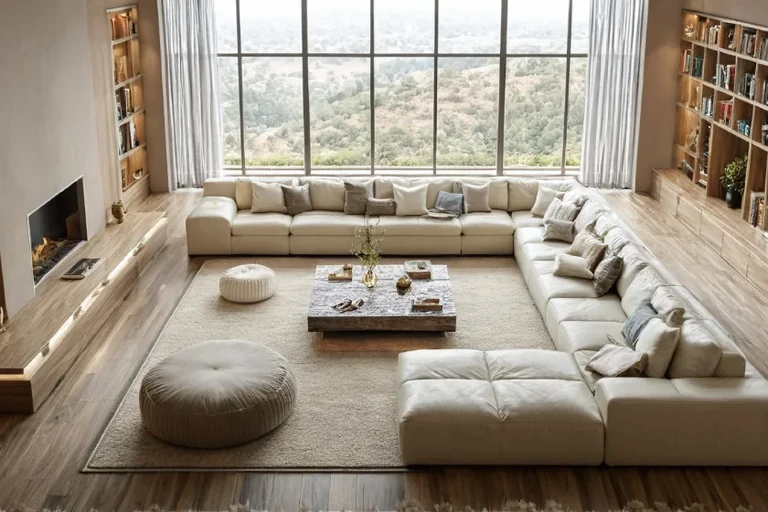
A neutral color palette is a set of low-saturation colors that sit easily together: whites, creams, beiges, taupes, greiges, grays, browns and soft blacks. True neutrals (white, gray and black) have almost no undertone; warm neutrals lean yellow, red or orange, and cool neutrals lean green, blue or violet. Most neutral rooms use one dominant neutral, one or two secondary neutrals and a small accent, with texture and light keeping them from looking flat.
This guide explains which colors count as neutral and gives 10 neutral color palettes for interiors with their main colors and screen swatches (hex codes), paint colors to start from, how light changes a neutral and how to test a palette on a photo of your own room before you buy paint. For the moods colors carry, see our guide to color psychology in interior design.
What Are Neutral Colors?
Neutral colors are colors with little or no saturation: they carry almost no hue of their own, so they stay in the background and go with nearly everything. The five basic neutral colors are white, gray, black, beige (with ivory and cream) and brown. Around them sit the near-neutrals, such as taupe, greige, tan, sand and stone, which mix a neutral with a touch of color and so lean warm or cool.
Pure Neutrals and Near-Neutrals
Pure neutrals, white, gray and black, have almost no undertone, which makes them the most adaptable base. Near-neutrals such as beige, ivory, cream, taupe, greige, tan and brown carry a slight warm or cool undertone that gives a room more warmth or depth. Both create balance, comfort and visual harmony, which is why neutral interior design remains a favorite across styles and eras: a calm foundation that supports both subtle and bold décor without overwhelming a space.
Why Designers Use Neutral Palettes
Designers reach for neutral palettes for practical reasons:
They are timeless and do not date as quickly as strong colors.
They work with natural materials such as wood, rattan, wool and stone.
Light neutrals reflect daylight, so rooms feel more open.
They let furniture, art, textures and accessories stand out without competing for attention.
They suit pared-back interiors in the spirit of minimalist architecture as well as layered, decorative ones.
Whether you prefer warm or cool neutrals, the same few choices make a neutral room work: a clear undertone, enough texture and the right light, all covered below.
Warm, Cool and True Neutrals
Every neutral leans somewhere. Benjamin Moore describes warm neutrals as having undertones of yellow, red or orange, for a cozy feel, and cool neutrals as having undertones of green, blue or purple, for a more open, airy one. True neutrals sit in between with almost no visible undertone. The undertone is why two beiges or two grays look different on the same wall, and it shifts with the lighting conditions, so compare samples side by side in the room itself.
Neutral Color Categories at a Glance
Category | Undertone | Common shades | Best for | Overall effect |
|---|---|---|---|---|
Warm neutrals | Yellow, red or orange | Beige, taupe, sand, warm white | Living rooms, bedrooms, rooms with cool or little daylight | Inviting, calm |
Cool neutrals | Green, blue or violet | Cool gray, charcoal, stone | Modern and minimalist spaces, sunny rooms | Balanced, fresh |
True neutrals | Almost none | Pure gray, soft black, classic white | A base layer for any neutral interior | Timeless, adaptable |
Earthy naturals | Mostly warm, taken from natural materials | Mushroom, linen, ecru, clay | Organic and Scandinavian interiors | Grounded, natural |
Greige family | Gray mixed with beige | Greige, mist, oatmeal | Transitional and contemporary rooms | Flexible, layered |
Dark neutrals | Deep, warm or cool | Charcoal, espresso, deep taupe | Accent walls, contrast details, well-lit rooms | Dramatic, structured |
What Is Greige?
Greige is a mix of gray and beige: warmer than a gray and cooler than a beige, so it sits well with both warm wood and cooler stone or metal. Because it sits between the two, it changes with the light: Benjamin Moore describes its Revere Pewter HC-172 as a classic greige that can appear as beige, gray or off-white as the light changes through the day.
How to Use Each Category
Designers mix these groups to build palettes that feel harmonious and timeless. Warm neutrals balance cool or weak daylight, while cool neutrals stay crisp in rooms that already get warm sun (more in the section on light below). Earthy neutrals suit natural materials and relaxed, textural spaces, and greige is the middle ground for anyone who wants subtle variation without a clear lean to warm or cool.
Together, these categories help you build neutral color schemes that layer tones, balance light and texture and keep a calm continuity from room to room.
Try these neutrals on your own walls Upload a photo of your room to ArchiVinci's Edit module and describe the change, for example "paint the walls warm greige": the editor is asked to keep everything else as it is. Each run generates a new image, and screen colors are not paint colors, so confirm your choice with a real sample. A new account starts with 3 free credits. |
10 Neutral Color Palettes With Hex Codes
Each palette below lists its main colors, the rooms it suits and, for most, a design tip. The table sums them up with screen swatches: standard web colors (CSS color names) close to each palette's main colors, handy for a mood board or a digital mock-up.
Palette | Main colors | Screen swatches (hex) | Best rooms |
|---|---|---|---|
Soft neutral | Ivory, soft white, pale gray, light beige | ivory #FFFFF0, gainsboro #DCDCDC, beige #F5F5DC | Bedrooms, reading corners |
Warm greige | Greige, mushroom, oat, warm taupe | wheat #F5DEB3, tan #D2B48C, dark gray #A9A9A9 | Living and dining rooms |
Earthy brown | Chocolate brown, clay, camel, rust, deep taupe | tan #D2B48C, sienna #A0522D, saddle brown #8B4513 | Cozy living rooms, studies |
High-contrast monochrome | Charcoal, soft black, crisp white, dove gray | white #FFFFFF, light gray #D3D3D3, dim gray #696969, black #000000 | Kitchens, home offices, open-plan spaces |
Coastal calm | Sand, seafoam gray, light stone, warm white | linen #FAF0E6, wheat #F5DEB3, gainsboro #DCDCDC | Bright bedrooms, summer houses |
Desert hues | Terracotta, ecru, sunbaked beige, muted clay | antique white #FAEBD7, burlywood #DEB887, sienna #A0522D | Boho living rooms, lounges |
Cool modern grays | Cool gray, slate, steel, pale charcoal | silver #C0C0C0, light slate gray #778899, slate gray #708090 | Home offices, modern kitchens, bathrooms |
Classic cream | Cream, warm ivory, butter beige | ivory #FFFFF0, cornsilk #FFF8DC, beige #F5F5DC | Living rooms, kitchens, guest rooms |
Deep neutral | Deep charcoal, espresso, dark taupe, soft black | dim gray #696969, dark slate gray #2F4F4F, black #000000 | Libraries, studies, entryways, accent walls |
Linen and jute | Linen, jute beige, stone, wheat, bleached sand | linen #FAF0E6, wheat #F5DEB3, tan #D2B48C | Scandinavian living rooms |
Swatches are screen approximations: greige, taupe, mushroom and other mixed neutrals have no standard web value, and no screen shows paint exactly, so choose paint from a real sample.
1. Soft Neutral Palette
(Main colors: Ivory, soft white, pale gray, light beige)

Soft neutrals are perfect for bright, quietly elegant spaces. They work well in neutral interior design because they visually open up a room and make it feel calm without looking empty. Ivory and pale gray soften harsh light, while soft white is a flexible backdrop for natural textures. This palette is ideal for bedrooms, reading corners and any area that aims for a serene, airy feel.
2. Warm Greige Palette
(Main colors: Greige, mushroom, oat, warm taupe)

Warm greige blends warmth with a sophisticated neutrality, which makes it a favorite for modern neutral interiors. Its subtle undertones add depth without overpowering the space and let furniture and natural materials stand out.
Design tip: A mushroom-toned rug grounds the room and works well with oat-colored curtains for a soft, cohesive look. This palette suits living rooms and dining areas that aim for understated elegance.
3. Earthy Brown Palette
(Main colors: Chocolate brown, clay, camel, rust, deep taupe)

Earthy browns bring warmth, richness and comfort. These shades suit spaces that aim for natural, earthy tones and a grounded feel. Chocolate brown or deep taupe can serve as strong foundation colors, while clay and camel add approachable warmth.
Design tip: Rust throw pillows or a clay-toned vase add depth without breaking the neutral harmony. This palette is ideal for cozy living rooms, studies and spaces with warm wood accents.
4. High-Contrast Monochrome
(Main colors: Charcoal, soft black, crisp white, dove gray)

High-contrast monochrome is bold yet timeless. The crisp play of black, gray and white creates structure and clarity, which makes it a natural fit for contemporary neutral design. This palette sharpens architectural lines, highlights modern furniture silhouettes and works very well in open-plan spaces. Perfect for sleek kitchens, home offices or dramatic living rooms where clean visuals matter.
5. Coastal Calm
(Main colors: Sand, seafoam gray, light stone, warm white)

Coastal calm brings ease and relaxation into interiors. These tones reflect natural light well and suit softer neutral color schemes. Sand and warm white set a soothing base, while seafoam gray adds a subtle coastal freshness.
Design tip: A sand-colored jute rug reinforces the breezy, beach-inspired mood. This palette is excellent for summer houses, bright bedrooms and airy living rooms.
6. Desert Hues
(Main colors: Terracotta, ecru, sunbaked beige, muted clay)

Desert hues have a warm, sun-washed character that feels both modern and earthy. They bring a gentle personality into a neutral space without overwhelming it. Terracotta accents add life, while ecru and muted clay keep everything soft and grounded. Ideal for boho living rooms, relaxed lounges and spaces that benefit from a warm, natural glow.
7. Cool Modern Grays
(Main colors: Cool gray, slate, steel, pale charcoal)

Cool modern grays are crisp, clean and contemporary. This palette suits anyone drawn to cool neutral palettes and minimalist color concepts, because these shades sharpen lines and create structure. Use it in home offices, modern kitchens, urban apartments or bathrooms where clarity and subtle sophistication matter; for the bathroom itself, see our bathroom design tips.
8. Classic Cream
(Main colors: Cream, warm ivory, butter beige)

Classic cream is elegant, versatile and timeless. It blends well with both traditional and modern neutral interiors. Cream and warm ivory soften the room's overall look, while butter beige adds gentle warmth.
Design tip: A cream wool rug paired with warm ivory curtains creates a soothing, welcoming backdrop that complements almost any furniture style. This palette is ideal for living rooms, kitchens and guest rooms.
9. Deep Neutral Palette: Charcoal and Espresso
(Main colors: Deep charcoal, espresso, dark taupe, soft black)

Deep neutrals bring a dramatic, high-end feel to interiors and frame a space with confidence. Deep charcoal or espresso on an accent wall makes architectural features stand out. Because dark neutrals reflect little light, they work best in rooms with plenty of daylight or as one wall next to lighter neutrals. This palette suits libraries, studies, moody living rooms and entryways that aim for bold character.
10. Linen and Jute
(Main colors: Linen, jute beige, stone, wheat, bleached sand)

This palette is about natural textures and warm subtlety. Linen and jute beige create an inviting base, while stone and wheat tones add gentle contrast. It suits Scandinavian and modern neutral interiors that embrace organic simplicity, and it pairs naturally with sustainable materials such as linen, jute, wool and untreated wood.
Design tip: A jute or sisal rug combined with stone-toned pillows adds texture and depth without breaking the neutral harmony.
How to Build a Neutral Color Palette
Designers and paint makers describe much the same steps; the furniture maker King Living, for example, breaks the process into ten. The core of it:
Pick one dominant neutral for the largest surfaces, usually the walls, and check its undertone against the floor, the sofa and the wood already in the room.
Add one or two secondary neutrals, lighter or darker shades of the first or a different neutral, for furniture, textiles or a single wall.
Choose one accent color and use it sparingly, in cushions, art or a vase.
Layer textures such as wood, stone, linen, wool and plaster, so the palette does not look flat.
Balance warm and cool: with a warm dominant color, a cooler secondary neutral adds contrast, and the other way round.
Test the palette in the room's own light before you commit (see the next section).
The 60-30-10 Rule
For proportions, Benjamin Moore points to the classic 60-30-10 rule: about 60 percent dominant color, 30 percent secondary color and 10 percent accent. In a neutral room, that could be warm white walls, greige and oat in the sofa, rug and curtains, and a few rust or black accents. The "three-color rule" is a related guideline: build a room around about three colors, often in these proportions.
Accented Neutral Color Scheme
An accented neutral color scheme usually means a neutral base with one accent color used sparingly, so the room stays calm but has a focal point. Muted accents such as sage, terracotta, dusty blue or black keep the neutral character. For furniture, layout and lighting ideas to go with it, see our interior design tips.
Neutral Colors and Light: LRV and Room Orientation
Neutrals are particularly sensitive to light, as Benjamin Moore puts it, so check two things before you buy paint. The first is light reflectance value (LRV), which Sherwin-Williams gives on a scale from 0 to 100: 0 reflects no light and 100 reflects all light. On its page of neutral paint colors, it suggests an LRV of about 50 to 60 for a crisp, airy look and 60 or more for rooms that get little daylight, while dark neutrals have a lower LRV and may not work in a room with little natural light.
The second is the direction the windows face. In the Northern Hemisphere, Sherwin-Williams explains that north-facing rooms get the least light, and cool light at that, so a warm neutral balances them and cool undertones make them look colder. South-facing rooms get warm light most of the day, so neutrals look warmer there and cool-toned colors can read as neutral. East-facing rooms are warm in the morning and cool toward evening, west-facing rooms the other way round, so choose for the time of day you use the room most. In the Southern Hemisphere, in Australia, New Zealand, South Africa, Argentina or Chile, swap north and south.
Artificial light changes the picture too: warm light makes a room feel cozier, while white and cool light suits spaces that need more light, such as a bathroom or a home office. Benjamin Moore's advice is to test each color from morning to evening under both natural and artificial light, and our practical guide to lighting design covers how to plan the light itself.
Neutral Paint Colors to Start From
If you prefer named paints to screen swatches, these neutrals come from the makers' own neutral guides, read in October 2026. The names and codes are Benjamin Moore's and Sherwin-Williams'; the descriptions sum up what each maker says about them.
Look | Paint colors (brand and code) | What the maker says |
|---|---|---|
Warm beige | Benjamin Moore Jute AF-80 | A warm beige, matched to a room rich in wood tones |
Greige | Benjamin Moore Revere Pewter HC-172 | A classic greige that can look beige, gray or off-white as the light changes |
Bedroom neutrals | Benjamin Moore Wish AF-680, Pashmina AF-100, Clay Beige OC-11 | Favorite bedroom neutrals |
Barely-there living room neutrals | Benjamin Moore Ashen Tan 996, Halo OC-46 | Barely-there hues; Halo is a silvery neutral |
Deeper earthy neutral | Benjamin Moore Saddle Soap 2110-30 | An earthy color with more saturation that still goes with anything |
Crisp and airy (LRV about 50–60) | Sherwin-Williams Grayish SW 6001, Front Porch SW 7651, Worldly Gray SW 7043 | Work well in most light; suggested for a kitchen, bathroom or small guest bedroom |
Light, warm neutrals for north-facing rooms (south-facing in the Southern Hemisphere; LRV 60 or more) | Sherwin-Williams Rivers Edge SW 7517, Drift of Mist SW 9166, Olympus White SW 6253 | Reflect enough light for rooms that get the least daylight |
Dark neutrals (lower LRV) | Sherwin-Williams Virtual Taupe SW 7039, Iron Ore SW 7069, Attitude Gray SW 7060 | Add drama; best with plenty of light, or as a darker accent next to lighter neutrals |
Mid-tone neutral | Sherwin-Williams Universal Khaki SW 6150 | Its 2026 Color of the Year: a mid-tone neutral with a slight yellow undertone |
Both are US paint lines, and not every color is sold in every country, so treat the list as a starting point and look for a close match in your local brand's fan deck. Whatever you choose, follow Benjamin Moore's advice and paint a sample on the wall before you buy: seeing the color on the wall is the only way to know it suits the room.
Test a Neutral Palette Before You Paint
Paint samples are still the final test, but you can narrow the choice first on a photo of your own room. In ArchiVinci's Edit module, the editor is asked to make the change you describe and keep everything else as it is:
Upload a clear photo of the room (JPG, PNG or WebP, up to 5 MB). You need an account; a new account starts with 3 free credits.
In the Prompt box, describe the change in one sentence of under 200 characters, for example "Paint the walls warm greige and make the sofa taupe linen". To change only one surface, mark it first with Select and confirm with Done.
Optional: for a wall or floor finish, Apply texture lets you pick a material from the library or upload a sample of your own.
Click Generate. Each run draws a new image (on a free account it uses one credit), so details can change: run two or three versions, compare them and confirm the final color with a real paint sample in your own light, because screen colors are not paint colors.
That way you compare neutral versions of your own room before you buy a single sample pot.
No Photo Yet? Plan the Room in 3D
If the room does not exist yet, or you are planning a renovation, start from the plan instead. In Floor Plan Maker you draw the plan or upload one for the AI to read, then choose finishes for floors, walls and ceilings (wood, tile, stone, concrete, paint colors and fabrics) and see them in 2D and 3D, with a sun direction control, or walk through the room in first person. Drawing, finishes, 3D and the walkthrough are free in a desktop browser; reading an uploaded plan with AI costs 1 credit on a free account and is refunded if the conversion fails.

Try neutral finishes on your own plan Draw the room or start from a plan you upload, give walls, floors and ceilings neutral finishes and walk through it in 3D. Drawing, finishes and 3D are free in a desktop browser; reading an uploaded plan with AI costs 1 credit on a free account. |
Show a Client Two Palettes Before Anything Is Painted
If the room is still a sketch or a 3D model view, describe the palette in the prompt instead. With AI rendering in ArchiVinci, you upload the drawing or a screenshot of the view, write the colors and materials in a sentence and get a photorealistic image that follows your upload, in seconds. Run it again with a second palette and show both side by side; using the images for client work needs an active plan (plans are on the pricing page).

Left: the uploaded drawing. Right: the result of the prompt "Warm modern living room with an oak floor, a beige linen sofa, a low travertine coffee table and sheer curtains." with the Daylight button, on the default engine.
Try it in ArchiVinci
Upload a photo of a room and describe the look in a sentence: ArchiVinci generates a new image that follows your photo. A new account starts with 3 free credits.
For your own room: AI room designer
Frequently Asked Questions
1. Can neutral color palettes work in rooms with very little natural light?
Yes. In low-light rooms, choose neutrals with subtle warmth and a higher LRV (light reflectance value), such as warm ivory or pale greige, so the space does not look flat or dim. Sherwin-Williams suggests warm neutrals with an LRV of 60 or more for north-facing rooms (south-facing in the Southern Hemisphere), which get the least daylight.
2. Do neutral color schemes look good with bold artwork or statement pieces?
Absolutely. Neutral walls and furniture create a clean backdrop that lets bold art, sculptural lighting or patterned rugs become focal points without clashing.
3. How many neutral tones can I combine in one room without it looking messy?
Usually three or four: one dominant neutral, one or two secondary neutrals and an accent, ideally sharing one undertone. For the proportions, Benjamin Moore's 60-30-10 rule (60 percent dominant color, 30 percent secondary color, 10 percent accent) keeps the room balanced, and texture adds depth without adding more colors.
4. Are neutral palettes suitable for households with kids or pets?
Yes, but choose forgiving textures and materials. Performance fabrics, washable slipcovers and medium toned neutrals hide wear better than very light or very dark colors.
5. Can I mix warm and cool neutrals together?
You can, as long as there is a clear “dominant” temperature in the room. Introduce the opposite temperature in small accents to keep the palette balanced.
6. Do neutral interiors always have to be minimal?
Not at all. Neutral palettes work beautifully with layered textures, vintage pieces, patterned textiles and detailed millwork. Neutrals calm the room, not the personality.
7. How do I prevent a neutral room from feeling too plain or empty?
Incorporate variation in texture: matte and glossy finishes, natural fibers, stone surfaces, layered textiles and subtle patterns. Texture is the key to dimension in a neutral space.
8. What colors go best with neutral colors?
Almost any color works with neutrals, which is their main strength. Muted, earthy accents keep a calm look: sage or olive green, dusty blue, terracotta, rust or mustard, with black for contrast. Keep the accent to about a tenth of the room, as in the 60-30-10 rule, and repeat it two or three times so it looks planned.
9. What color is replacing beige in 2026?
No single color is replacing beige: the colors of the year point to mid-tone neutrals and whites for 2026 and to soft greens for 2027. As of October 2026, Sherwin-Williams' 2026 Color of the Year is Universal Khaki (SW 6150), which it describes as a mid-tone neutral with a slight yellow undertone, and Pantone's color for 2026 is Cloud Dancer (11-4201), a white. For 2027, Sherwin-Williams has chosen Celery (SW 6421), an airy, herbal green, and Benjamin Moore Webster Green (HC-130), a mid-tone green. For the wider picture, see our interior design trends.