
Updated on: 04 February 2026
Architecture rarely gets a second chance to make a first impression. Before plans are read or spaces are entered, the facade already communicates intent, quality, and attitude. In contemporary practice, home facade design has moved beyond surface treatment to become a critical architectural decision where performance, identity, and context converge.
This guide examines why facade design matters in contemporary architecture, explores distinct facade strategies drawn from modern residential projects, and looks at how AI supports early facade decisions through conceptual exploration. Together, these sections connect architectural thinking, material behavior, and emerging design tools into a clear framework for understanding today’s residential facades.
Why Facade Design Matters in Contemporary Architecture?
Facade design matters in contemporary architecture because it defines how a building performs, communicates, and relates to its surroundings. No longer treated as a secondary layer, the facade has become an active architectural system that mediates between interior space, environmental conditions, and urban context.
Today’s facades are expected to respond precisely to climate, daylight, and energy performance. Material behavior, surface articulation, opening ratios, and shading depth directly influence thermal comfort and operational efficiency. As sustainability standards and building regulations become more demanding, facade design plays a central role in achieving performance through architectural decisions rather than technical add-ons.
Beyond performance, the facade establishes the architectural identity of a building. It shapes first impressions, expresses scale and proportion, and signals design intent before one enters the space. In dense cities and diverse landscapes, the facade often determines whether a building integrates with its context or deliberately contrasts it.
Advances in digital tools and AI-assisted workflows have further elevated the importance of facade design at the earliest stages of a project. Architects can now test massing, materials, and light interaction during concept development, allowing the facade to guide spatial and formal logic rather than simply respond to it.
In contemporary architecture, facade design matters because it operates simultaneously as an environmental interface, a spatial boundary, and a primary expression of architectural intent shaping today’s built environment.
Signature Facades in Modern Architecture: Home Facade Ideas
Full White Minimalist Façade

This home uses pure white surfaces to create a calm and geometric exterior. The façade relies on clear lines that highlight shadow and proportion. Large glass openings soften the mass and improve interior daylight.
Full Black Timber Façade

Charred black timber wraps the building with a strong monolithic look. The dark color increases contrast as sunlight moves across the surface. Thin vertical lines create a subtle rhythm along the façade.
Brutalist Architecture Home Façade
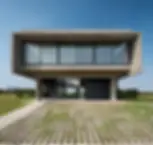
Exposed concrete defines the exterior with a heavy and sculptural presence. Deep recesses help create controlled shade and emphasize geometry. The material gives the house a raw and structured form.
All Glass Façade

A fully glazed skin surrounds the home with open views and continuous light. Thin framing elements make the volume appear light. Reflections blend the building with the surrounding landscape.
Stone-Clad Mountain House

Natural stone anchors the house into the sloped terrain. The textured surface provides durability and a strong visual link to the site. Window openings sit quietly inside the stone mass.
Corten Steel House

Weathered corten panels create warm and earthy tones on the exterior. The metal surface changes over time due to natural oxidation. Panel joints add a precise and industrial character to the façade.
Timber Screen Façade

Vertical timber slats form a filtered shading layer around the building. The screen protects the interior from direct sunlight while allowing airflow. Natural wood adds warmth and a soft visual texture.
Vertical Timber Façade

Tall timber boards reinforce the verticality of the building form. The repeating pattern creates balance across the façade. Light passing between the boards produces gentle shadow variation.
Metal Mesh Façade

Perforated metal panels act as a lightweight protective layer. The mesh filters natural light and creates a semi transparent surface. The façade changes appearance under different lighting conditions.
Rammed Earth Façade

Compressed earth walls offer warm natural tones and a textured finish. The high thermal mass helps stabilize interior temperatures. Horizontal layers reveal the craftsmanship behind the construction.
How AI Supports Early Facade Decisions?
In the early stages of architectural design, AI broadens facade exploration without adding technical burden. Architects can test multiple facade directions and study how variations in massing and proportion influence architectural character.
AI also helps clarify design intent. Abstract qualities such as solidity, transparency, rhythm, or restraint can be explored through material behavior, surface depth, and opening composition, making early ideas more legible.
Comparison becomes easier at concept stage. AI-generated alternatives allow subtle differences in scale, alignment, and geometric clarity to be evaluated side by side before decisions are fixed.
Another key contribution lies in perception. Facades can be assessed from distance, at street level, and in relation to surrounding buildings or landscape, strengthening contextual awareness.
By keeping facade design conceptual for longer, AI allows architectural intent to guide decisions. Platforms such as ArchiVinci AI support this process by focusing on atmosphere, light behavior, and overall expression, helping establish a coherent facade strategy before technical resolution begins.
Exploring Conceptual Facades with ArchiVinci
ArchiVinci supports early exterior studies by generating fast conceptual renders through its dedicated exterior facade module. The tool reads massing, form, and context with clear accuracy, which strengthens early evaluations of intended geometry. It produces rapid visual outputs that help test direction before detailed modeling. This makes it highly useful for exploring broad ideas in house facade design without technical constraints.
ArchiVinci focuses on atmosphere, light behavior, and overall expression rather than full photorealism. This approach helps reveal how a façade responds across different lighting moods and conceptual massing variations. Users can experiment with bold compositions or uncommon material combinations with stable visual feedback. In other words, the module supports broad conceptual thinking that shapes the identity of a future exterior.
The video can demonstrate interface behavior, adjustment panels, and conceptual output modes. Readers gain a clear visual understanding of the workflow while the text highlights the design potential of the tool. When combined with AI-generated facades, ArchiVinci becomes a strong partner for early ideation and layered façade exploration.
To understand how AI exterior design tools compare and how they enhance visualization speed, visit our overview of how AI helps visualize facades quickly.
20 Enhanced and Detailed ArchiVinci Façade Prompts
1. White Minimalist Floating Volume

A two-story white minimalist house with a floating upper volume, seamless white stucco, thin black aluminum window frames, full-height corner glazing, large concrete terrace, Mediterranean coast vegetation, soft golden hour light, high-contrast shadows.
2. Black Timber Scandinavian Cabin

A modern cabin clad in charred black timber (shou sugi ban), vertical slatted texture, gabled roof, minimal glass openings, set in a Scandinavian pine forest, morning fog, diffused natural light, calm atmosphere.
3. Brutalist Concrete Residence

A heavy brutalist concrete home with raw textured concrete walls, deep recessed windows, strong cantilevered block, exposed slab edges, harsh sunlight creating deep shadows, arid landscape.
4. Fully Glazed Steel Frame Pavilion

A contemporary pavilion house with full glass façade, structural steel frame, seamless curtain wall glazing, reflections of surrounding landscape, ultra thin mullions, sunset lighting.
5. Corten Steel Box House

A corten steel clad residence with weathered rusted panels, perforated metal inserts for shading, clean rectangular geometry, gravel courtyard, warm late afternoon light enhancing orange tones.
6. Stone-Clad Mountain Retreat
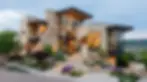
A mountain house with heavy natural stone walls, irregular stone texture, dark metal frames, cantilevered glass corner, alpine vegetation, cool and crisp mountain light.
7. Timber Screen Shading Façade

A two-level home wrapped with a vertical timber louver façade, filtered sunlight entering interior, concrete base, lush green garden, warm ambient lighting.
8. Vertical Timber Nordic House

A Nordic modern house clad entirely in vertical natural timber planks, minimalist massing, wide glass openings, soft northern daylight, misty forest background.
9. Metal Mesh Contemporary Residence

A rectangular home wrapped in perforated metal mesh panels, semi-transparent façade, indirect warm lighting, smooth concrete walkway, minimal landscaping.
10. Rammed Earth Desert House

A rammed earth residence with layered earthy textures, thick monolithic walls, deep window reveals, desert plateau setting, warm sunrise creating long shadows.
11. Modern White Cubic House

A cubic white contemporary house with cantilevered upper floor, smooth stucco, full-height sliding glass doors, minimalist desert garden, crisp evening light.
12. Dark Concrete House with Reflective Pool

A dark pigmented concrete home with frameless glass windows, reflecting pool in front, soft night lighting, clean horizontal lines.
13. Mediterranean White Stucco Villa

A Mediterranean modern villa with white stucco façade, natural stone accents, slim black windows, olive trees, warm sunlight and long soft shadows.
14. Tropical Timber Louver House

A tropical modern home with dense horizontal and vertical timber louvers, open ground level, lush tropical plants, humid daylight atmosphere.
15. Glass + Corten Composite Façade

A hybrid façade combining corten steel plates and large glass panels, angular form, industrial backdrop, overcast lighting for soft reflections.
16. Japanese Hillside Minimalist Residence

A minimalist home set on a Japanese hillside, pale concrete walls, slender vertical windows, soft diffused morning light, subtle vegetation.
17. Rustic Stone Forest House

A rustic modern house with heavy natural stone walls, dark timber accents, forest hillside location, autumn foliage, sharp afternoon sunlight.
18. High-Tech Curved Glass Façade

A futuristic residence with curved glass façade panels, thin aluminum ribs, panoramic glazing, ocean horizon background, reflective sunset tones.
19. Black Steel Horizontal House

A low modern house clad in matte black steel panels, long horizontal strip windows, flat terrain, stormy dramatic sky.
20. Clay Tile and Earth-Tone Home
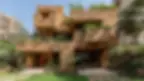
A warm earth-tone house with clay tile cladding, soft beige stone foundation, minimal openings, clean garden, clear morning light.
Key Takeaways
Facade design establishes a building’s first impression by conveying architectural intent, quality, and character before any spatial experience begins.
In contemporary architecture, the facade functions as an active system that mediates between interior space, environmental conditions, and its surrounding context.
Material selection shapes both visual identity and performance, influencing light, shadow, proportion, and durability over time.
Facade strategies must respond to context, with urban settings prioritizing scale and presence while natural environments emphasize material continuity and landscape integration.
Early facade decisions play a defining role in massing, spatial logic, and the overall architectural concept.
AI expands the range of facade exploration at the concept stage without adding technical complexity to the design process.
Conceptual facade renders clarify design intent by focusing on atmosphere, light behavior, and material expression rather than final detailing.
Comparing multiple AI-generated facade options enables more informed and confident early design decisions.
Extending the conceptual phase of facade design allows architectural intent to lead before technical constraints narrow design possibilities.
Today, facade design stands as a strategic architectural decision where performance, identity, and context converge.
Frequently Asked Questions
What is the most durable material for a home façade?
Stone, fiber cement, and high-quality brick are among the most durable façade materials. They resist weathering, moisture, and temperature changes over long periods with relatively low maintenance requirements.
How do materials influence facade identity?
Materials shape how a building is perceived through texture, color, and surface depth. They determine whether a facade feels solid, light, warm, or restrained, often communicating architectural intent before form details are fully read.
Why is material choice critical in early facade design?
Material decisions influence proportions, opening sizes, and shadow behavior from the beginning. Choosing materials early helps establish a clear facade logic that guides form development rather than reacting to it later.
How does material behavior affect light and shadow on a facade?
Rough and matte surfaces absorb light and emphasize mass, while smooth or reflective materials increase contrast and visual sharpness. This interaction strongly affects how depth and geometry are perceived throughout the day.
How does facade design influence architectural concept development?
Facade design often evolves together with massing and spatial logic. Early facade strategies can reinforce or weaken the architectural concept by shaping proportion, rhythm, and the balance between solid and void.
What is the relationship between facade design and building massing?
Facade articulation affects how mass is visually read. Depth, openings, and surface subdivision can reduce or emphasize perceived volume without changing the structural footprint.
How do facade strategies differ between urban and natural contexts?
Urban facades often respond to alignment, scale, and street presence, while facades in natural settings tend to emphasize material continuity, horizontality, and integration with landscape or topography.
How does facade depth affect spatial and environmental performance?
Depth provides shading, creates thermal buffering, and introduces visual hierarchy. Recesses, screens, and layered surfaces improve comfort while adding architectural richness.
Can facade design influence interior spatial quality?
Yes. Window placement, facade rhythm, and material thickness directly affect daylight, views, privacy, and the overall atmosphere of interior spaces.
How does facade design communicate scale to human perception?
Joint patterns, opening proportions, and repetition help relate large building volumes to the human body. Facades play a key role in making architecture readable at eye level.
How much does it cost to redesign a house façade?
Costs vary widely, but most façade redesigns range from moderate cosmetic updates to full structural changes. The budget typically depends on building materials, labor conditions, and design complexity.
Do façade upgrades increase property value?
In most cases, yes. Strong facade design improves curb appeal and perceived quality, which often translates into higher resale value and market interest.
Is it necessary to hire an architect for a façade renovation?
It is not mandatory to hire an architect for a façade renovation, but their expertise in proportions, materials, and structural considerations can help ensure a coherent design and prevent costly construction errors.
What factors should be considered when choosing exterior lighting for a façade?
Key considerations include fixture placement, light temperature, energy efficiency, and how lighting reinforces architectural features without glare or over-illumination.
How can AI assist in updating an existing façade?
AI exterior design tools can support façade renovation by testing new materials, adjusting proportions, and refining overall visual balance. These systems are especially helpful during early design stages where transforming facades with AI allows designers to quickly explore different aesthetic and structural possibilities based on the existing building form.
How does AI change the way facade decisions are made?
AI allows faster iteration and side-by-side comparison of facade ideas, shifting early design from a linear process to an exploratory one. This helps architects refine intent before technical constraints narrow options.