Updated on: 16 December 2025
Renaissance architecture marked a clear shift in how European buildings were conceived, proportioned, and experienced. Architects looked back to ancient Rome to create a new language of symmetry, geometry, and human scale. Guided by humanism and revived classical theory, they designed churches, palaces, and civic buildings that still define many historic city centers today.
In this guide, you will find the historical context of the movement, followed by its core principles, materials, and architectural vocabulary. You will also explore regional variations, urban planning ideas, and the role of patronage and architectural treatises. The article concludes with key figures, landmark buildings, comparisons with Gothic and later movements, and final takeaways.

What is Renaissance Architecture?
Renaissance architecture is a European building tradition that developed in the early fifteenth century as architects revived the forms, proportions, and principles of classical antiquity. It is defined by symmetry, geometric clarity, and the use of classical orders in a controlled and rational manner.
Designers applied mathematical proportion, linear perspective, and humanist ideas to create churches, palaces, and civic spaces that emphasized balance and order. The style marked a departure from the vertical complexity of Gothic architecture and established a new architectural language that shaped urban environments across Italy and later much of Europe.
Origins and Historical Context of Renaissance Architecture
The new style emerged in early fifteenth century Florence. Scholars and builders studied surviving Roman structures and texts to develop a fresh architectural vocabulary. In contrast to gothic architecture, they pursued balanced forms and clear geometry. Political stability and economic growth in Italian city states supported this experimentation.
Humanism provided an important intellectual framework. Thinkers emphasized reason, education, and the study of antiquity. Vitruvius’s treatise De architectura became a central reference. The invention of printing allowed architectural ideas to circulate across Italy and then through France, Spain, England, and Central Europe.
Core Principles of the Renaissance Architectural Style
Renaissance architecture arose within an intellectual climate deeply engaged with classical scholarship and empirical reasoning. Architects sought to anchor design in geometric clarity, proportional discipline, and humanist inquiry.
Their work reflects a mindset that viewed architecture not as an intuitive craft but as a field whose principles could be studied, demonstrated, and refined. Within this structured approach, a quiet aesthetic sensitivity persisted. This interplay between method and subtle expressiveness shaped the period’s distinct visual identity.
Geometry, Order, and Symmetry
Geometry served as the fundamental organizing tool of Renaissance architecture. Regular forms such as squares and circles were used to structure plans, elevations, and even volumetric relationships. These shapes were valued for their inherent clarity and their ability to create recognizable spatial systems.
Symmetry strengthened this clarity. Architects aligned openings along stable axes, producing façades that conveyed predictability and rationality. Occasionally, this order was softened by subtle modulations of rhythm, allowing mathematically governed structures to adopt a gentle visual cadence.
A single deviation from symmetry was rare and, when present, carefully justified. This reveals how strongly Renaissance designers believed in the intellectual authority of balanced form.
Proportion and Mathematical Harmony
Proportion formed the central theoretical pillar of the period. Renaissance architects embraced ratio systems drawn from classical texts and contemporary mathematics, using them to regulate the dimensions of rooms, columns, piers, and entire façades.
Through these relationships, architecture gained a coherence that could be measured and verified rather than merely perceived.
The human body provided a secondary but influential model of order. Its perceived harmony guided the establishment of scale, ensuring that architectural compositions aligned with human experience. By grounding spatial design in both abstract mathematics and bodily proportion, architects created environments that felt simultaneously rigorous and resonant.
Sometimes these proportional strategies were articulated explicitly in treatises, while in other cases they remained embedded within the design process itself.
Revival of Classical Elements
The Renaissance brought a systematic reengagement with the vocabulary of antiquity. Columns, pilasters, entablatures, and pediments reappeared not as decorative references but as components governed by the classical orders. Their consistent use allowed architects to articulate structural hierarchies with clarity.
Arches, vaults, and domes were also studied directly from surviving Roman monuments. This empirical investigation led to a renewed understanding of structural mechanics and material performance. A dome, for instance, was not merely an aesthetic symbol but a form whose stability derived from a long historical lineage of observed technique.
In many cases, designers adapted classical forms to new contexts. Such adaptations reveal the Renaissance not as a mere revival but as a critical reinterpretation of antiquity.
Perspective and Spatial Logic
Developments in linear perspective had a substantial impact on architectural thinking. Interiors were organized along axial sequences that emphasized depth and direction, ensuring that spatial experience adhered to a coherent visual logic.
This perspectival framework extended to exterior compositions. Façades were shaped through calculated projections and recesses that responded to the viewer’s expected vantage point. Such calibrations allowed buildings to appear visually stable and intellectually ordered.
At times, the manipulation of perspective introduced a restrained form of visual drama, producing the sense of a space unfolding gradually rather than immediately revealing itself.
Controlled and Purposeful Ornamentation
Ornamentation in Renaissance architecture was applied with deliberate restraint. Decorative motifs articulated structural divisions and clarified proportional systems, rather than obscuring them. Ornament served logic before it served embellishment.
When used carefully, ornament introduced a quiet expressive dimension. It enriched surfaces without diminishing the underlying geometric clarity. The resulting balance between structural discipline and controlled visual detail stands as one of the defining achievements of Renaissance design.
Some buildings employ ornament so sparingly that its presence becomes almost subliminal, contributing to the overall harmony without ever demanding attention.
Characteristics of Renaissance Architecture
Renaissance architecture is defined by a set of formal characteristics that reflect the revival of classical antiquity and the emerging humanist worldview of the fifteenth and sixteenth centuries.
Architects organized buildings with clear geometric logic, measurable proportions, and orderly visual rhythms. These characteristics distinguished the style from the vertical emphasis of Gothic design and established a new architectural vocabulary based on rational clarity.
Key Characteristics
Symmetry and balanced composition
Plans and elevations follow mirrored arrangements that align windows, openings, and structural elements along central axes. This symmetry creates façades that appear coherent and mathematically ordered.
Geometric clarity in plans and forms
Architects employed simple geometric shapes such as circles, squares, and polygons to structure spaces. These geometries guided both floor plans and the massing of buildings, producing consistent architectural logic.
Use of classical orders
Columns and pilasters followed the Doric, Ionic, Corinthian, Composite, and Tuscan orders. These systems defined proportions, decorative profiles, and structural hierarchy across façades and interiors.
Proportional harmony based on mathematical ratios
Designers used numerical relationships to relate widths, heights, and depths. These ratios, derived from Vitruvian principles, ensured harmony between individual components and the whole building.
Round arches and hemispherical domes
Renaissance architects revived Roman arch construction and dome engineering. These elements replaced Gothic pointed arches and ribbed vaults, emphasizing structural clarity and horizontal alignment.
Articulated façades with horizontal divisions
Entablatures, cornices, and string courses created clear horizontal bands that organized elevation layers. This approach contrasted with the verticality of Gothic architecture.
Controlled ornamentation
Decoration supported structure rather than overwhelming it. Carved details, moldings, and sculptural elements emphasized form, proportion, and classical vocabulary instead of intricate Gothic tracery.
Central plan and basilica plan typologies
Centralized schemes, inspired by classical temples and early Christian buildings, expressed ideas of harmony and unity. Basilica plans remained common for churches but incorporated Renaissance spatial order and clarity.
Integration of courtyards and loggias
Open courtyards organized palaces and civic buildings, providing light and ventilation. Loggias connected interior and exterior space while framing controlled architectural views.
Use of rustication at ground levels
Heavy masonry bases reinforced urban palaces and emphasized structural stability. The contrast between rusticated ground floors and refined upper stories expressed hierarchy within façades.
Each characteristic reflects the broader Renaissance pursuit of intellectual order, classical revival, and human-centered design. Together, these features formed a coherent architectural language that shaped buildings across Italy and later throughout Europe.
Proportion in Renaissance Architecture
Proportion served as a central design tool. Architects used simple numerical ratios to relate width, height, and depth. In other words, they treated buildings as measurable systems where each part relates to the whole.
Leon Battista Alberti codified many of these ideas in De re aedificatoria. Andrea Palladio refined them in I quattro libri dell’architettura with measured drawings and model projects. Their writings linked architectural harmony to geometric constructions and human body analogies.
Perspective and Spatial Clarity
Developments in linear perspective in painting influenced architectural design. Aligned doorways, long axes, and framed views guided movement and sight. This produced spatial sequences that felt coherent and directed.
Architects used modular grids to structure interiors. Repeated bays defined by columns or pilasters established rhythm. Ceiling heights and vault types varied with the function of each space, creating a clear spatial hierarchy.
Materials and Construction Techniques in the Period
Builders used familiar building materials but applied them in controlled ways. Stone and brick formed the main structure of walls and vaults. Marble often provided visible cladding for façades and interior details. Terracotta ornaments and stucco elements completed the decorative system.
Construction methods combined traditional craft with new engineering. The dome of Florence Cathedral by Brunelleschi used an innovative double shell structure. Masonry techniques like rustication emphasized the base of urban palaces. Vaults and arches followed geometric rules that could be set out with simple tools.
Architectural Vocabulary and Key Elements
Renaissance architecture relied on a clear and codified set of architectural elements that helped designers create coherent buildings. These elements came from direct study of ancient Roman structures and from renewed interest in classical theory. Understanding this vocabulary explains how architects organized façades, structured interiors, and expressed hierarchy through form.
Typical elements include:
Column and pilaster used as vertical supports that follow classical orders such as Doric, Ionic, Corinthian, Composite, and Tuscan. They provided structural rhythm and visual measure across façades.
Entablature divided into architrave, frieze, and cornice, which created a continuous horizontal band that tied openings and floors together.
Pediment positioned above doors, windows, or porticoes to emphasize important entrances or central axes.
Loggia serving as an open, roofed gallery that connected interior and exterior space while framing views.
Cornice projecting at the top of the wall to give a clear visual termination to the elevation.
Architects also used plan types that supported classical ideals.
Central plan churches, often based on circles, squares, or polygons, embodied ideas of harmony and unity. They appeared alongside the longitudinal basilica plan, which remained suitable for large congregations. Courtyards, another key feature, provided controlled outdoor space that brought light and air into dense urban settings. Their proportions and arcades followed the same rules that governed interior rooms.
Each element contributed to a consistent architectural language defined by proportion, order, and clarity. This vocabulary allowed Renaissance designers to compose buildings with predictable relationships between parts. It also distinguished the style from Gothic forms by replacing vertical complexity with measured geometry and horizontal alignment.
Together, these elements formed the basis of the movement and shaped its lasting influence on European architectural practice.
Regional Variations of the Renaissance Architectural Style
Italian examples remain the most studied, but the style spread across Europe with regional adaptations. In France, it merged with steep roofs, dormers, and local stone traditions. Loire Valley châteaux combined Italian detailing with tall silhouettes. In Spain, El Escorial represents a more austere interpretation.
In England, continental models gradually influenced court and country house design. Inigo Jones played a key role in translating Palladian principles. Central European regions also adopted the style, blending it with local traditions in town halls and castles.
Urban Planning and the Ideal City Concept
Urban planning became an important field of experimentation. The ideal city, known as città ideale, linked geometry, defense, and civic order. Designers proposed regular street grids, star shaped fortifications, and proportioned squares.
Existing medieval cities rarely transformed completely. However certain interventions applied these ideas at smaller scales. New piazzas, straightened streets, and ordered façades improved key urban spaces. In parallel to this, architects created unified building fronts along rivers or civic axes.
Patronage and Socio Political Background
Patronage shaped project locations and outcomes. Wealthy families such as the Medici commissioned palaces and churches that reflected piety and status. City governments financed town halls and loggias for administrative and commercial use.
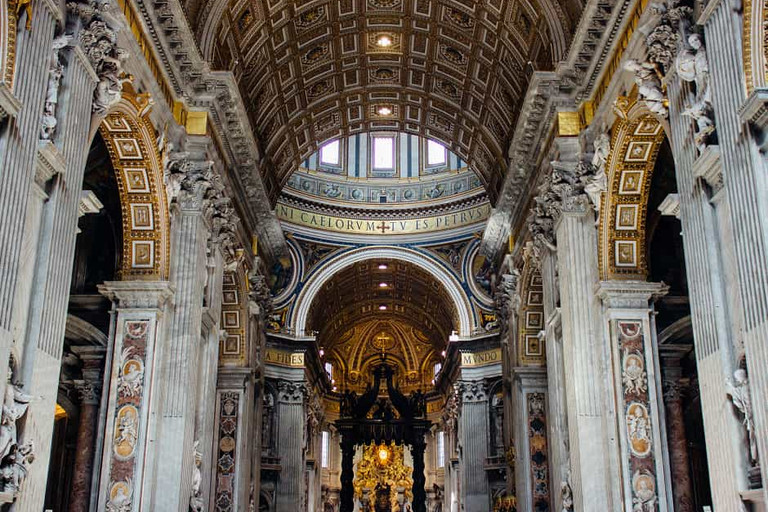
In Rome, the papacy sponsored major works including St Peter’s Basilica. Monarchs in France and Spain used the style for royal residences and religious foundations. Therefore, the spread of the movement aligned closely with political and religious ambitions.
Architectural Treatises and the Spread of Ideas
Architectural treatises helped systematize and export the style. Alberti’s work established architecture as a discipline based on rules and theory. Serlio’s illustrated books made classical elements easier to understand.
Palladio’s volumes organized villas, palaces, and churches into clear types with measured drawings. He also documented ancient Roman structures. These publications allowed distant architects to study consistent models. For example, Inigo Jones and later Palladian designers relied strongly on Palladio’s work.
Key Figures in the Development of the Style
Several famous architects shaped the development of the Renaissance architecture movement. Each contributed ideas about structure, space, or urban form.
Important figures include:
Filippo Brunelleschi, pioneer of early Renaissance architecture and designer of the dome of Florence Cathedral
Leon Battista Alberti, theorist and architect known for Palazzo Rucellai and major treatises
Donato Bramante, creator of the Tempietto and designer of early plans for St Peter’s Basilica
Michelangelo Buonarroti, architect of the Laurentian Library and contributor to St Peter’s dome
Andrea Palladio, influential architect of villas, palaces, and public buildings in Vicenza and Venice
Giacomo Barozzi da Vignola, author of a key treatise on the classical orders and architect of Villa Farnese
Giorgio Vasari, court architect and designer of the Uffizi complex
Raphael (Raffaello Sanzio), architect and planner involved in projects at St Peter’s and various palaces
Baldassare Peruzzi, designer of Villa Farnesina and master of perspective based planning
Giulio Romano, leading Mannerist architect known for Palazzo Te in Mantua
Michelozzo di Bartolomeo, architect of Palazzo Medici and early Florentine civic buildings
Bernardo Rossellino, principal designer of the urban plan of Pienza
Jacopo Sansovino, architect active in Venice and designer of the Biblioteca Marciana
Bartolomeo Ammannati, influential in late Renaissance palace and civic design
Sebastiano Serlio, whose illustrated treatises spread Renaissance ideas across Europe
Antonio da Sangallo the Younger, architect involved in major works at St Peter’s and in fortification design
Giuliano da Sangallo, architect of early Renaissance churches and palaces in Florence and Rome
Francesco di Giorgio Martini, architect, engineer, and theorist known for his work on fortification and architectural principles
Landmark Buildings and Their Characteristics
Key buildings demonstrate how principles became built form. Their plans and façades remain central to architectural education.
Notable works include:
Early Renaissance (15th Century Italy)
The dome of Florence Cathedral by Filippo Brunelleschi
Ospedale degli Innocenti in Florence by Brunelleschi
Pazzi Chapel in Florence by Brunelleschi
San Lorenzo Basilica interiors by Brunelleschi
Palazzo Medici Riccardi in Florence by Michelozzo
Palazzo Rucellai in Florence by Leon Battista Alberti
Santa Maria Novella façade by Alberti
Sant’Andrea in Mantua by Alberti
High Renaissance (Early 16th Century Italy)
The Tempietto at San Pietro in Montorio by Donato Bramante
Cortile del Belvedere in the Vatican by Bramante
St Peter’s Basilica early and central-plan phases by Bramante
St Peter’s Basilica dome redesigned by Michelangelo
Laurentian Library in Florence by Michelangelo
Piazza del Campidoglio redesign in Rome by Michelangelo
Late Renaissance and Mannerism (Mid to Late 16th Century Italy)
Villa Rotonda near Vicenza by Andrea Palladio
Villa Foscari (La Malcontenta) by Palladio
Basilica Palladiana in Vicenza by Palladio
Teatro Olimpico in Vicenza by Palladio
Uffizi complex in Florence by Giorgio Vasari
Villa Farnese (Caprarola) by Vignola
Palazzo Farnese in Caprarola by Vignola
Biblioteca Marciana in Venice by Jacopo Sansovino
Procuratie Nuove in Venice by Sansovino and Scamozzi
Northern and Western European Renaissance
Château de Chambord in France
Château de Chenonceau in the Loire Valley
Château d’Amboise Renaissance additions
El Escorial near Madrid, representing Spanish Renaissance monumentalism
University of Salamanca façade in Plateresque style
Seville City Hall in Spain
Banqueting House at Whitehall in London by Inigo Jones
Queen’s House in Greenwich by Inigo Jones
Krasiczyn Castle in Poland
Litomyšl Castle in the Czech Republic
Comparison with Gothic and Later Movements
Renaissance architecture occupies a pivotal position between Gothic and later architectural styles such as Baroque and Neoclassicism. Renaissance architecture marked a decisive departure from the structural logic and symbolic language of Gothic architecture. Gothic buildings emphasized verticality, pointed arches, and intricate ornament intended to direct the viewer’s gaze upward. In contrast to this approach, Renaissance designers pursued spatial balance and geometric clarity rooted in classical antiquity. Their use of round arches, hemispherical domes, and proportional modules created buildings that appeared measured and harmonious.
The relationship between Renaissance and later movements followed a sequence of reinterpretation. Baroque architecture adopted classical elements but arranged them in more dynamic and theatrical compositions. Curved forms, layered surfaces, and dramatic lighting replaced the restraint of High Renaissance design.
In parallel to this, Neoclassical architects reacted against Baroque exuberance by returning to archaeological accuracy and stricter classical orders. Palladianism expanded these ideas through standardized villa and palace types that spread across Britain and North America.
Because of this lineage, Renaissance architecture stands at a pivotal point in the evolution of architectural styles. It bridges medieval Gothic experimentation and the rational methods later associated with modern architecture and contemporary architecture. Its focus on proportion, symmetry, and clarity continues to inform educational theory and remains a persistent reference for architects exploring order and composition.
Architectural Theme | Gothic Architecture | Renaissance Architecture | Baroque Architecture |
|---|---|---|---|
Overall Intent | Spiritual elevation and vertical emphasis | Human scale, balance, and classical harmony | Emotional impact, drama, and theatrical movement |
Structural Forms | Pointed arches, rib vaults, flying buttresses | Round arches, domes, and proportional modules | Curved walls, broken pediments, complex spatial sequences |
Spatial Composition | Verticality with upward focus | Symmetry and horizontal divisions | Dynamic movement and layered geometry |
Decorative Approach | Elaborate tracery and sculptural detail | Controlled ornament based on classical orders | Rich decoration with dramatic contrasts |
Urban Influence | Organic medieval street patterns | Regular grids and ideal city concepts | Large plazas, monumental sequences, axial planning |
Lasting Influence on Modern Architectural Thought
Concepts from this period still shape architectural education. Proportion, symmetry, and classical orders remain core topics. Methods such as measured drawings and systematic documentation continue to guide practice.
Modern and contemporary architects sometimes reject classical form but still address questions of scale and order. Urban designers apply ideas of structured streets and framed public spaces. The period therefore endures as a reference point for adaptation or critique.
Key Takeaways
Renaissance architecture emerged in early fifteenth century Florence from the study of Roman structures and classical texts.
The style is defined by symmetry, geometric clarity, classical orders, and mathematically based proportion systems.
Builders used stone, brick, and marble with controlled detailing and improved construction techniques.
Architectural vocabulary included columns, pilasters, entablatures, pediments, loggias, courtyards, and rustication.
Regional variations appeared across France, Spain, England, and Central Europe with strong local adaptations.
Ideal city concepts influenced squares, streets, fortifications, and civic ensembles.
Patronage from merchant families, governments, monarchs, and the papacy enabled many of the major commissions.
Treatises by Alberti, Serlio, and Palladio systematized theory and spread the style internationally.
Key figures included Brunelleschi, Alberti, Bramante, Michelangelo, Palladio, Vignola, Raphael, and Vasari.
Landmark buildings such as Florence Cathedral, the Tempietto, St Peter’s Basilica, Palazzo Rucellai, Villa Rotonda, and the Uffizi remain central case studies in architectural history.
Frequently Asked Questions
How did Renaissance architects achieve larger and more stable domes?
Renaissance architects studied ancient Roman engineering, especially the Pantheon, to understand large-span dome construction. Filippo Brunelleschi applied these principles and introduced innovations such as a double-shell dome, herringbone brick patterns, and tension chains in Florence Cathedral.
These methods reduced weight, improved stability, and allowed domes to be built without full wooden centering. The success of Brunelleschi’s dome became a structural reference for later architects across Europe.
How did Renaissance architecture shape the development of public squares and civic spaces?
Renaissance designers applied geometric planning, symmetry, and axial alignment to civic spaces. Squares were often framed by uniform façades, arcades, and civic buildings to create visual order.
Examples such as Piazza del Campidoglio in Rome show the use of perspective and controlled proportions to guide movement and establish hierarchy. These ideas influenced later European urbanism and contributed to the evolution of planned city centers.
What role did proportion systems play in daily architectural practice?
Proportional systems guided relationships between lengths, heights, and depths in building components. Many architects referenced ratios described by Vitruvius, such as 1:2 or 2:3, to maintain harmony between parts.
While not every builder used these ratios rigorously, leading architects like Alberti and Palladio used proportion as a conceptual tool to ensure clarity and coherence. Their treatises show measured applications rather than speculative theory.
How did Renaissance architects source and transport materials like marble?
Marble was commonly quarried in regions such as Carrara in northern Tuscany. Blocks were extracted using iron tools and wedges, then transported by oxen, sledges, or waterways to construction sites.
Coastal shipments and river routes were essential for long-distance transport. Renaissance workshops developed specialized techniques for cutting, polishing, and carving marble, which supported the precision demanded by classical detailing.
What distinguishes early Renaissance from High Renaissance design?
Early Renaissance architecture focused on rediscovering classical vocabulary, applying modest geometric clarity and relatively restrained ornament, as seen in Brunelleschi’s Florentine works.
High Renaissance architecture, exemplified by Bramante and Michelangelo, embraced grander scale, more unified spatial compositions, and increased use of monumental forms. High Renaissance buildings often display stronger centrality, clearer axial planning, and more mature mastery of proportion.
How did the Counter Reformation influence architectural design?
The Counter Reformation encouraged architecture that supported clarity of liturgical function and greater engagement with congregations. Churches used more focused spatial organization, prominent altars, and improved acoustics.
Architects such as Vignola introduced designs like Il Gesù in Rome, which became influential for later Catholic architecture. The movement favored legible plans and controlled decoration to reinforce religious messaging.
How did Renaissance palaces differ from medieval castles?
Renaissance palaces shifted from defensive structures to residential and civic buildings centered on comfort, symmetry, and ordered façades. They featured open courtyards, regular window alignments, and carefully proportioned rooms rather than fortifications.
Stone rustication defined strong ground floors, while upper levels displayed classical orders. This reflected a change in social priorities as urban elites emphasized status and representation over military defense.
How were perspective drawing techniques taught and applied in architecture?
Perspective theory, formalized by artists like Brunelleschi and Alberti, became part of architectural training in workshops. Architects used perspective to design façades, frame views, and structure interior axes.
Drawings helped communicate spatial intent to patrons and builders. Treatises, including Alberti’s works, explained methods for constructing vanishing points and grids that architects adapted to plan and elevation design.
Which Renaissance ideas influenced later global colonial architecture?
Colonial architecture often adopted classical orders, symmetrical layouts, and proportion systems promoted in Renaissance treatises. Palladian models, spread through pattern books, strongly influenced British colonial buildings in North America, the Caribbean, and India.
Spanish and Portuguese colonial cities integrated Renaissance-inspired grid plans, central plazas, and civic geometry, demonstrating the movement’s wide geographic reach.
How did patrons select architects during the Renaissance?
Patrons evaluated architects based on reputation, previous commissions, technical expertise, and connections within civic or court networks. Wealthy families such as the Medici also valued humanist learning and familiarity with classical theory. Architects often presented drawings or models to secure commissions.
Patronage networks influenced not only hiring but also architectural innovation, as clients funded experimentation in design and engineering.